What Bill Didn't Want You to Know About the Colby Family
Hello Friends! I’m not going to pull any punches here, I believe William Egan Colby was an American like Benedict Arnold. Therefore it gives me schadenfreude to spill a few genealogical beans ‘ole Bill didn’t want spilled. In this post you will learn how Bill’s ma was a gangster moll and his pa was a Ringstrasse agent in Serbia working alongside Prussian intelligence interests in 1915.
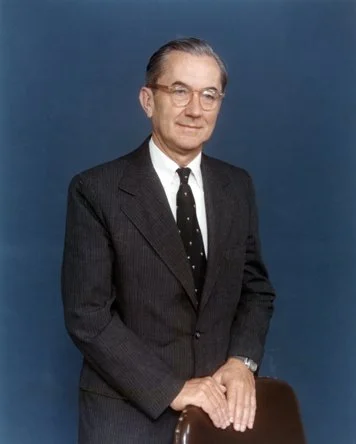
William Egan Colby was the CIA director who in 1975 forced out his other Midwestern peer, James Jesus Angleton, because Angleton was making discomfiting sounds about Soviet agents in US intelligence. Colby was a product of Minnesota’s Galician Gang/Soviet nexus, so Angleton’s warnings set Colby’s teeth on edge. Angleton’s view of our counterintelligence problems— that the CIA was widely open to Soviet double agents— was labeled “sick think” by the director. Colby’s view of Angleton is now orthodoxy at the CIA, a place where out-of-the-box thinking is not recommended, although history has proven Angleton’s viewpoint to be correct.
I’ve written a fair amount about Colby already: his Franklin Scandal ties; his proximity to Leon Goetz’s Galician Gang drug dealing friends in Chicago; his business deals with the Galician Gang’s Silicon Valley partners. But William Colby has a strange synergy with his nemesis at the Agency: he owed his intelligence career to a smart Minnesota marriage. That’s what we are going to talk about today.
Colby’s mind-numbingly long biography, Honorable Men: My Life at the CIA, is a full 474 pages (1978 hardback edition.) One paragraph is devoted to his mother, Mary Margaret Egan Colby. Here it is:
My mother’s contribution was no less significant. To her strong Irish Catholicism, she added stories about the Irish Democratic Party politics which her father participated in in Minnesota, and of his days as a post trader in the Dakota Indian territories as a young man. Her discipline and devotion rubbed off on me.
That’s mama. What Colby doesn’t explicitly spell out here was that Irish Democratic Party politics in St. Paul, Minnesota was one of the crookedest undertakings in the country, let alone the Middle West. (Being a peddler in Indian Territory doesn’t smack of an honest living either.) The Twin Cities’ Irish underground is what brought us the O’Connor System: the political protection for madams like Nina Clifford; and protection from other jurisdictions’ law enforcement for men like John Dillinger; and was the initial cover for Galician Gang bootleggers with Federal support like Sammy “The Fighter” Taran. New York City, for all its Tammany Hall problems, had nothing on the “Irish Democratic Party politics” which taught Colby, and his mom, how to be disciplined and devoted.
So it turns out that Mary Margaret’s family was in Minnesota from at least the 1870s, and that her father, William Henry Egan, was a prominent coffee and tea merchant during the day after the 1890s. Here’s the data:
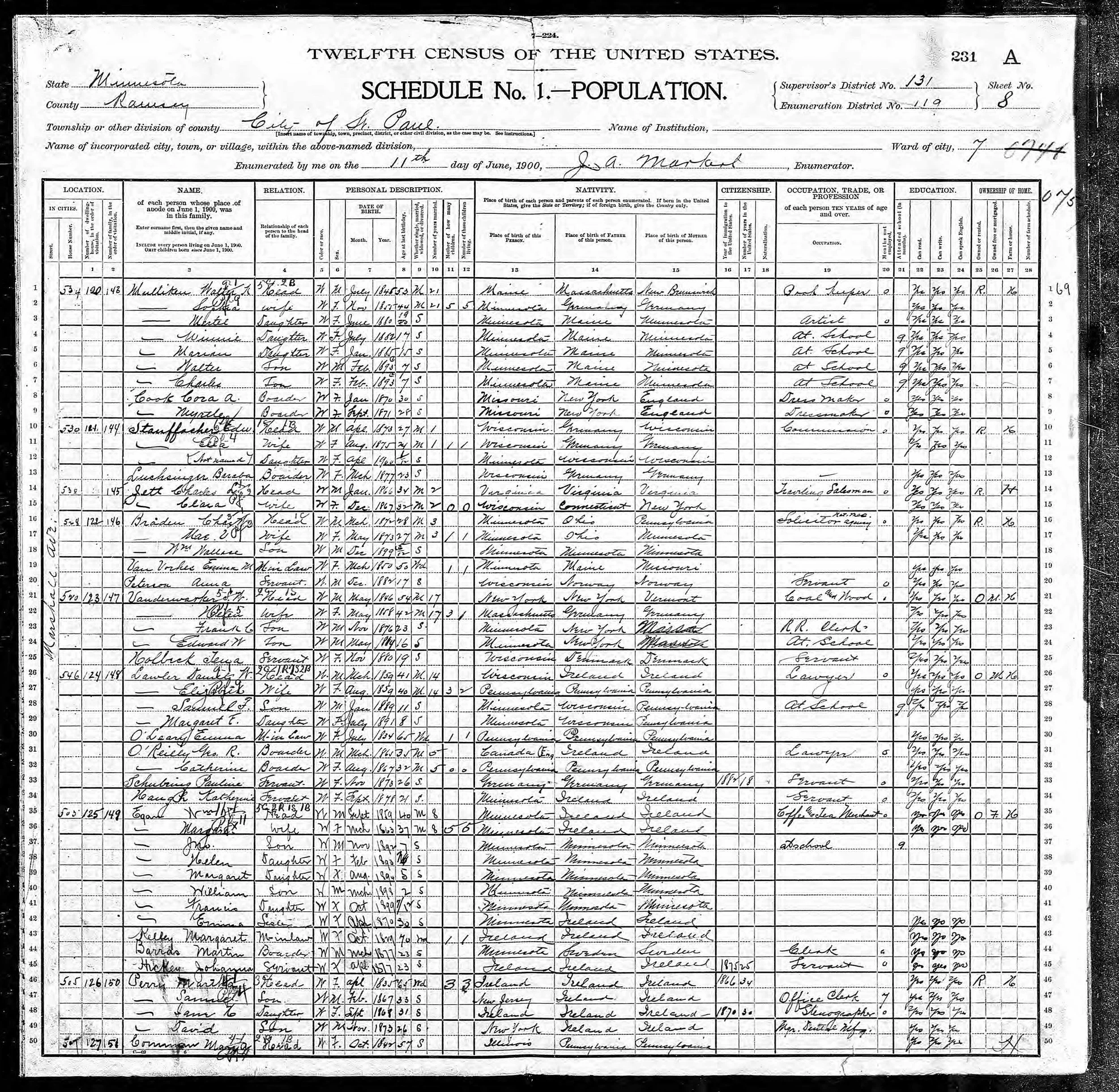
The William Henry Egan family according to the 1900 US Census. Egan was a tea and coffee merchant living on Marshall Ave. in St. Paul.
Marshall Avenue is a long street which transverses St. Paul’s tony Summit-University neighborhood. Summit was where you wanted to live in the 1900s. While they weren’t Congdon-level wealthy, the Egans certainly appreciated a ritzy address.
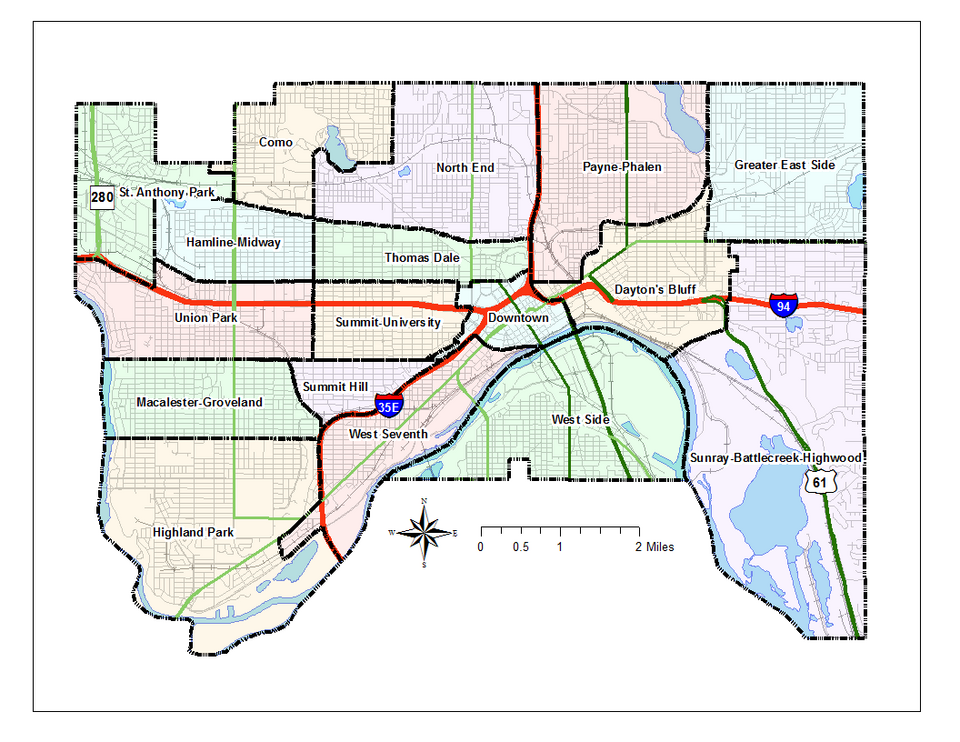
St. Paul, MN and its neighborhoods. Summit and Summit-University are where the opulent Victorian homes are at. Many are still preserved to this day.
By 1910 the Egans were living on Lincoln Avenue, which was pretty similar to Marshall Ave.
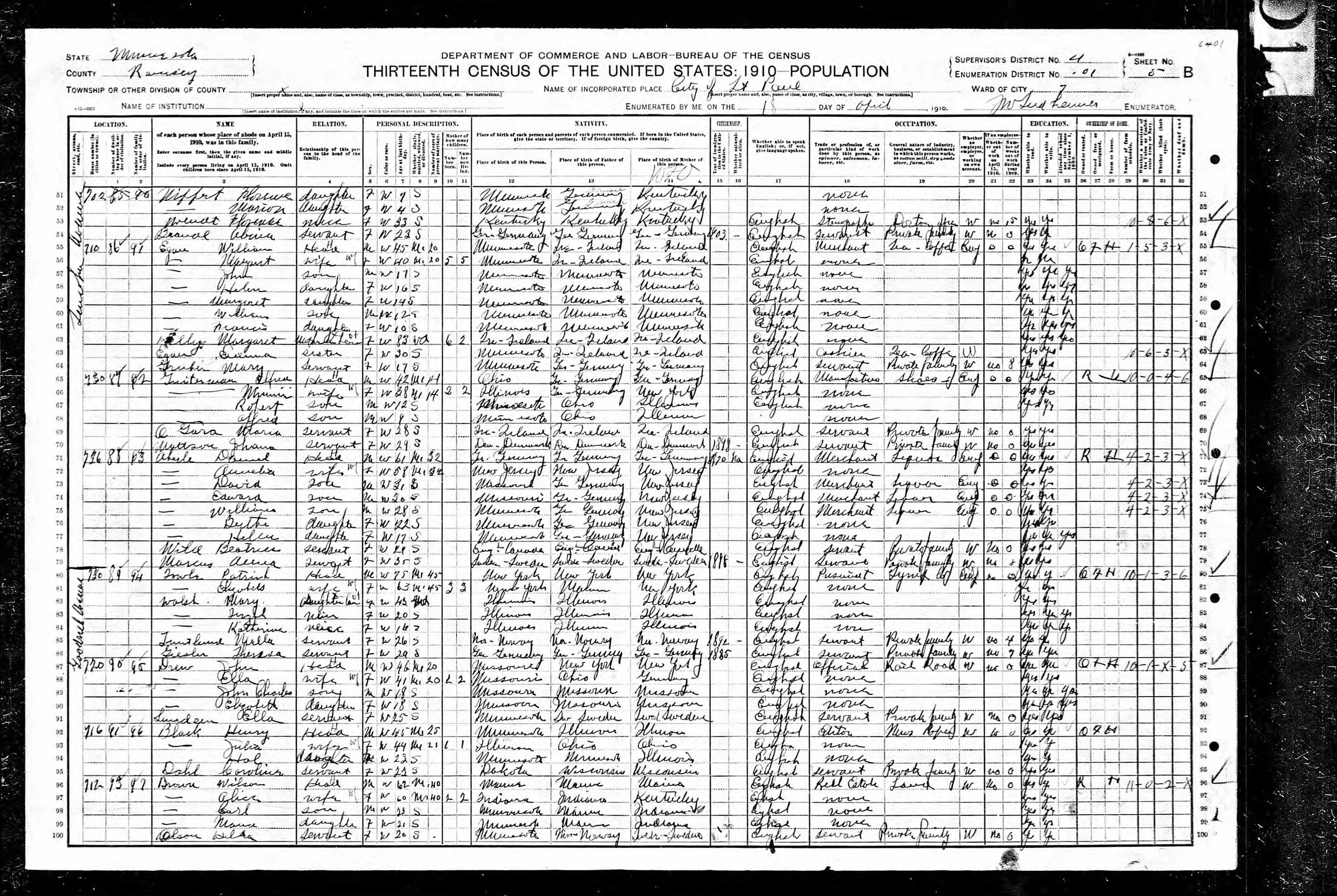
Still sellin’ coffee in 1910.
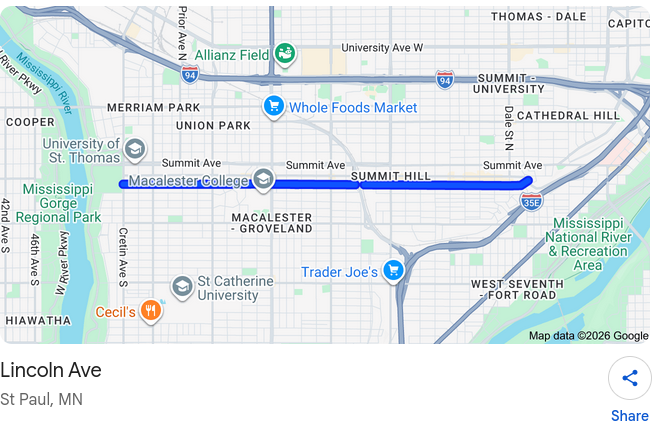
Lincoln Avenue runs parallel to Summit Avenue, where the Congdon-level wealthy people lived.
The 1920 US Census for William H. Egan (below) is especially interesting because it shows that Bill Colby’s dad Elbridge was rooming with his in-laws, as well as the name of Egan’s business: “New York Tea” Company. Note Elbridge Colby is an “instructor” at the University of Minnesota. More on that later.
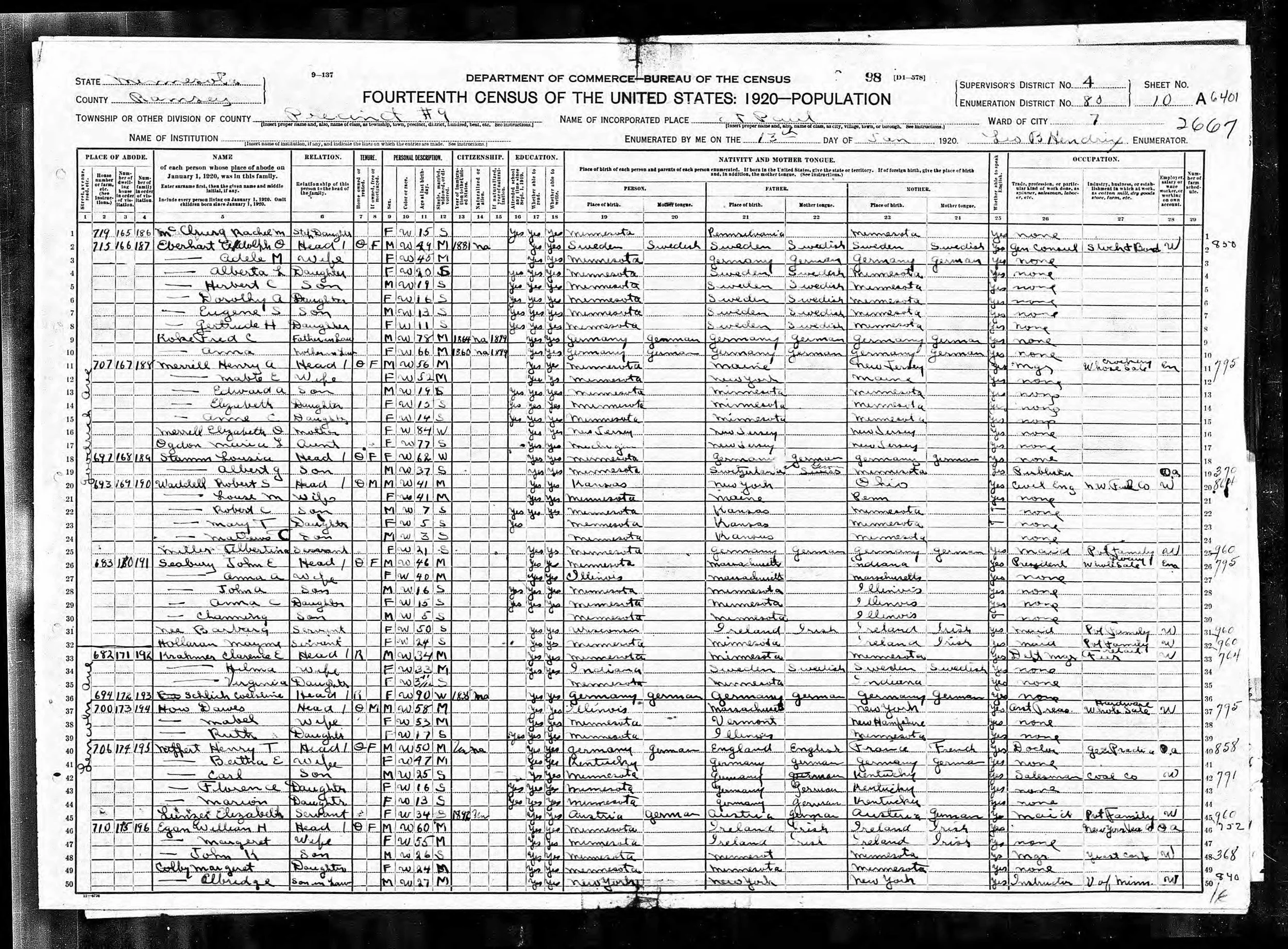
1920 US Census entry for the William Egan household. Still on Lincoln Ave.
This merry bunch shared 710 Lincoln Ave, which today looks like….
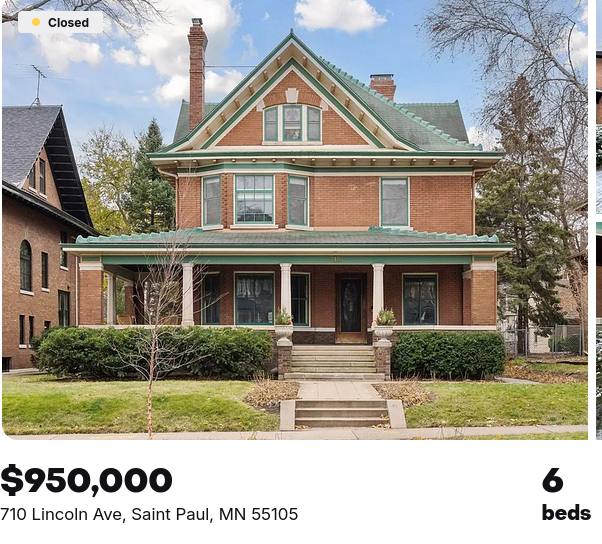
And they say crime doesn’t pay…. This home was built in 1909 so it’s likely that the Egan political family were the first owners.
Here’s a couple of advertisements from William Egan’s coffee business, which didn’t seem to need to advertise very much. Note they are both from the late 1800s.
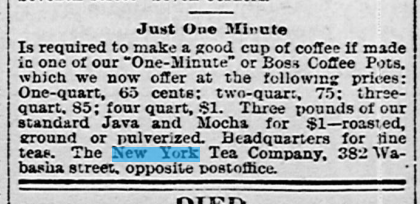
St Paul and Minneapolis Pioneer Press, April 14, 1889.
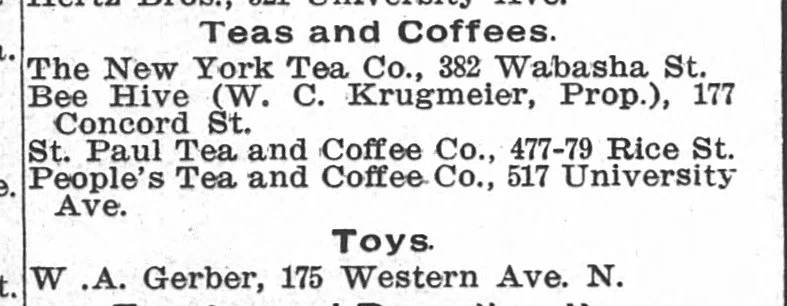
The Northwestern Chronicle (a Catholic paper), November 19, 1897.
So that’s William Egan’s day job— steady, honorable employment which I can trace back to his childhood in the 1870s. That’s unusual for a crime family. Most of the time they fall in and out of the census and give conflicting information at different times. The Egans were smarter than that and consequently William Egan stayed out of the news for the most part. Fortunately, Egan did like to splash cash and rub shoulders with the rich and powerful which helps us flesh out how he really made money.
In 1904 a “William H. Egan” lent money to Caspar Ernst, a serial con-man whose property swindles eventually caught up with him. Here’s Egan grabbing the assets of his shady business partner. How do we know it’s our William H Egan? We can’t be sure. However, there weren’t that many men in St. Paul with this name; even fewer who were merchants with this much cash to throw around in 1904; and, what’s more, cash to throw down the road from their business premises.
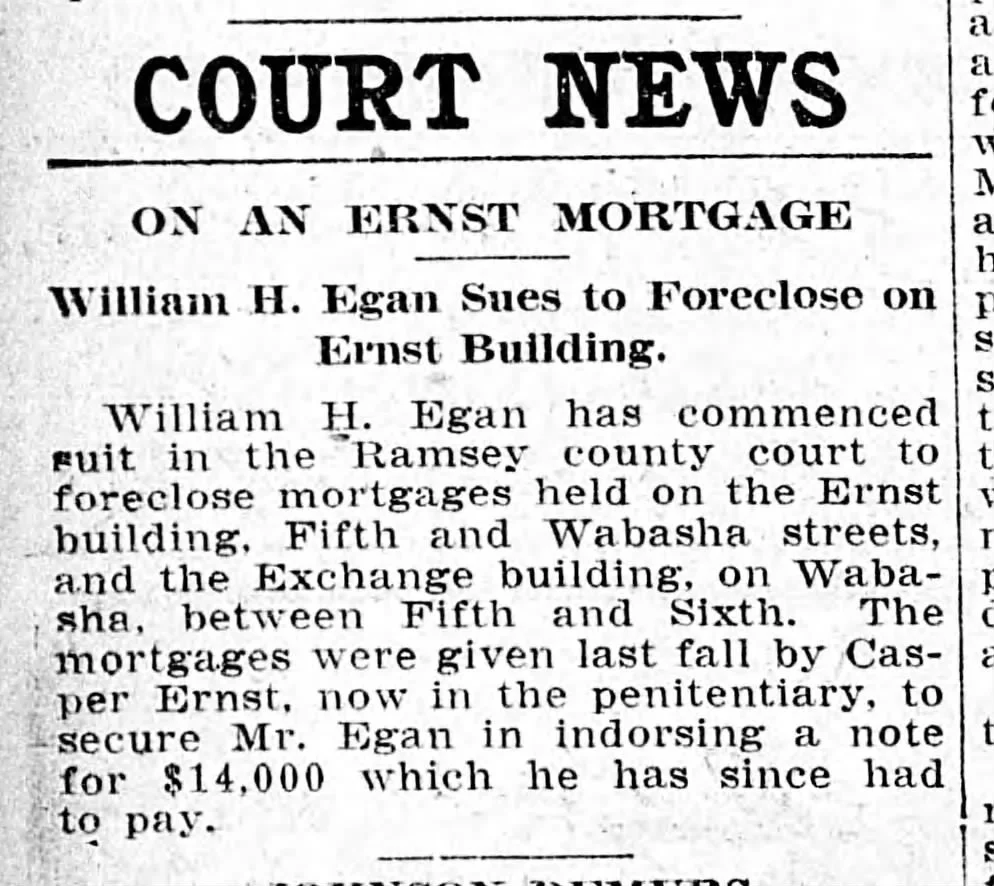
The Minneapolis Journal, March 4, 1904.
Caspar Ernst was a German immigrant and the type of personality about whom Austro-Hungarian criminologist Hans Gross liked to study. A series of clever financial manipulations, enabled by Egan, led to Ernst owning these two buildings before the house of cards came tumbling down. Note both are on Wabasha Street, near Egan’s tea and coffee business. The Ernst Building is a fabulous multi-story brownstone, the Exchange Building has been destroyed.
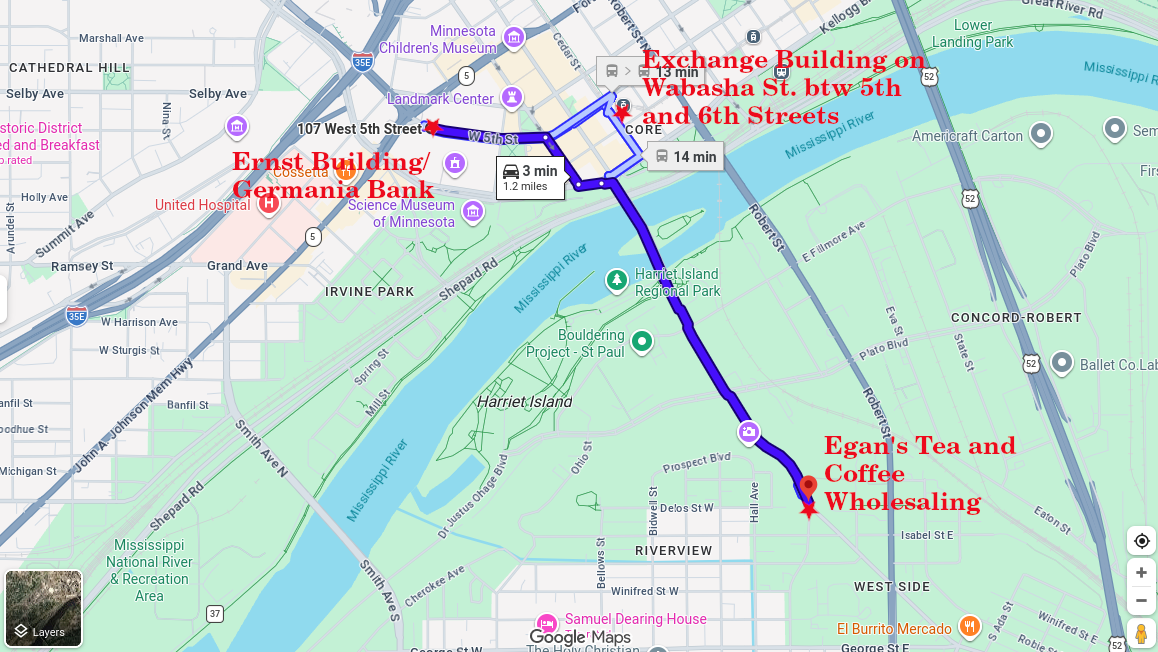
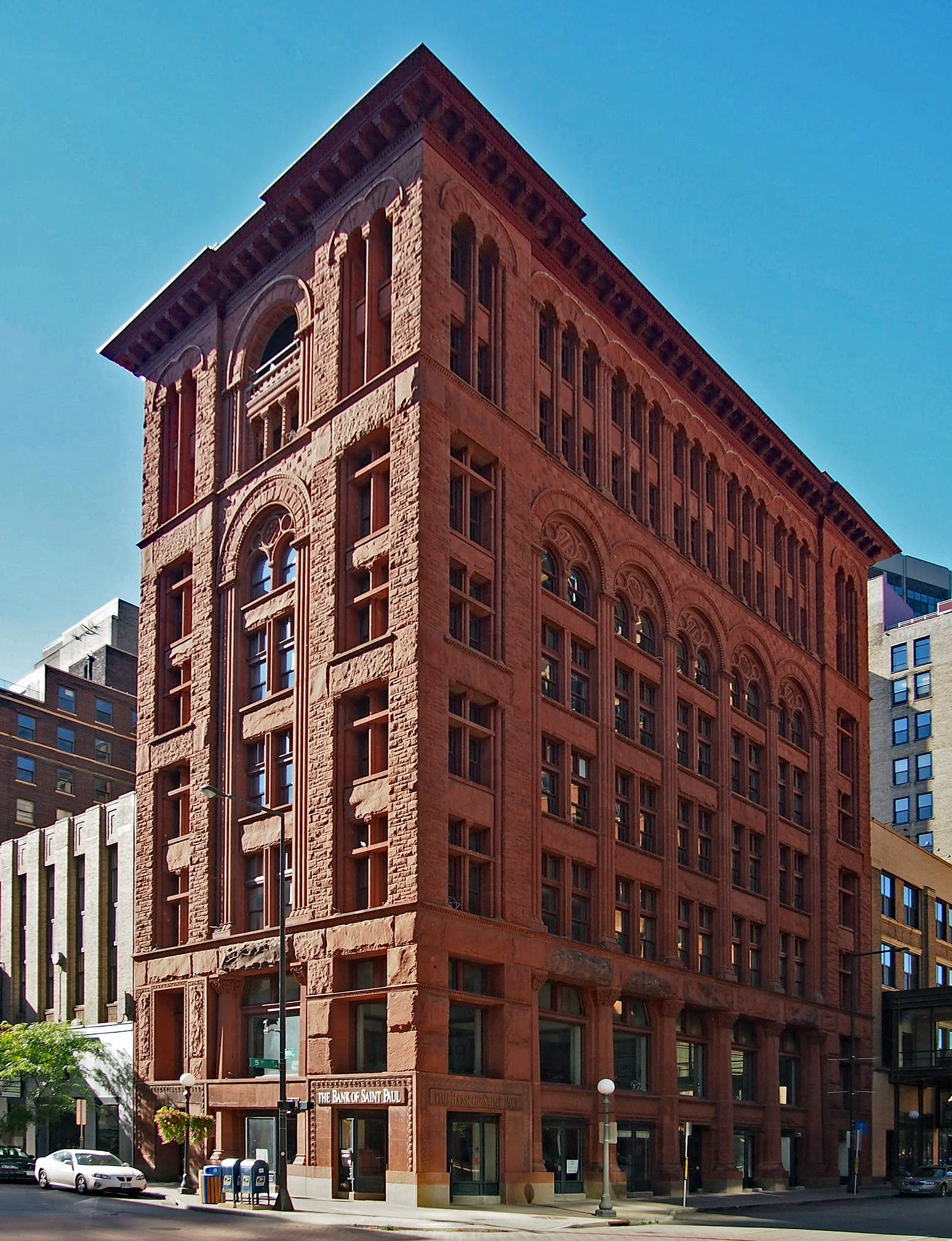
The Ernst/St Paul Building, mortgaged to Elbridge Colby’s father in law.
William Egan’s next foray into “high society” came with Governor Winfield Scott Hammond, one of MN’s few Democratic governors and the last governor before the merger of the Farmer-Labor Party with the Democrats, a merger FLP old-timers like Walter Liggett identified as a Galician Gang takeover. How can I prove this “Colonel William H. Egan” is our Egan? I can’t. However, there is no other census listing for a man with 1) this name or 2) economic standing in St. Paul who could fit the bill. Egan was probably part of Governor Hammond’s body guard when Hammond suddenly died of food poisoning (!) down in Louisiana. Hammond was an academic and a favorite of Woodrow Wilson.
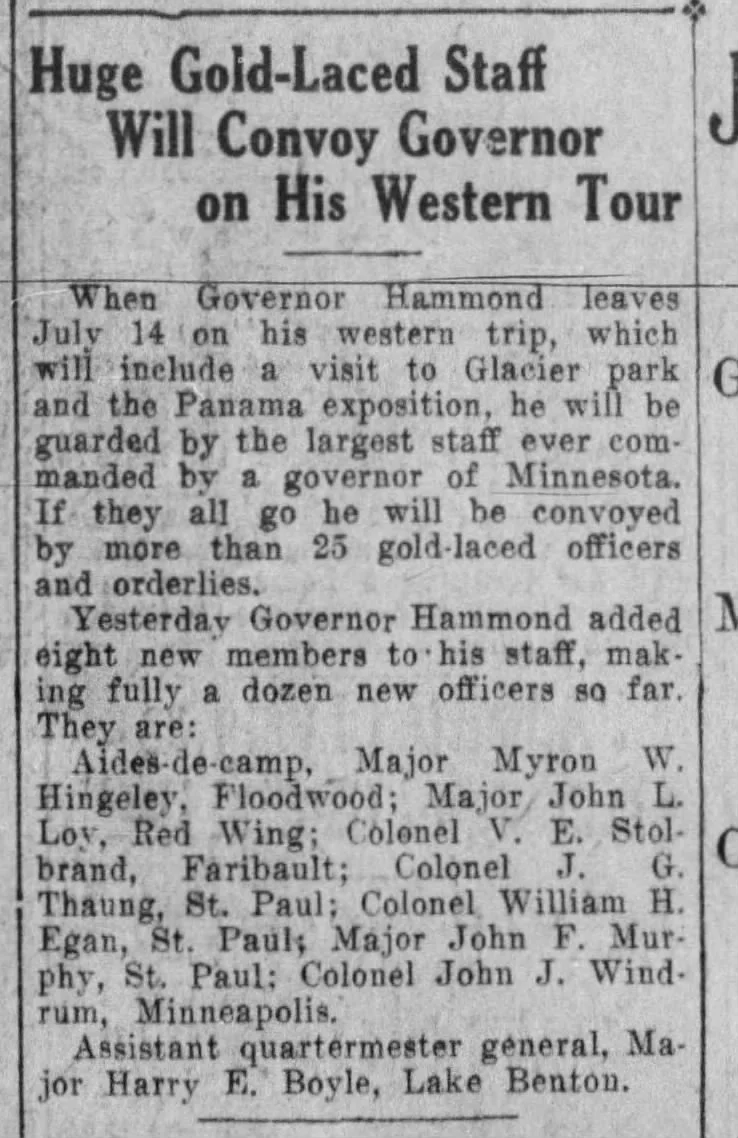
Star Tribune, July 7, 1915.

MN Governor Winfield Scott Hammond, who died only seven months into his term.
What does it mean to be an honor guard to a governor at this time? This is an honorary boodle position for investment friends. See the life and career of Silicon Valley investor Charles Hayden, the face of Hayden, Stone & Co.
Now I’m going to bring you in on something of a mystery. In 1940 William Henry Egan had a widowed daughter-in-law (Mrs. Franklin Egan) and two of his grown sons living with him in that beautiful Lincoln Ave house: John K. (49) and William H. Jr. (42). When the war came, John K. registered:
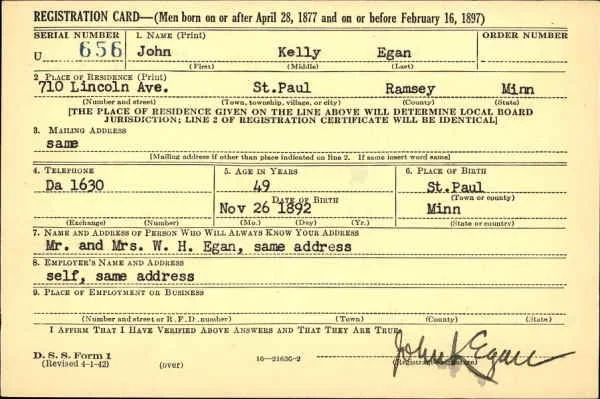
John K. Egan’s WWII registration card from Ancestry.com
There is no registration information for John K.’s younger brother, William H. Jr.. All fighting age men had to register. Maybe this document is missing because William died, but there’s no death record either. In fact the 1940 US census is the last available information about William H. Egan Jr. on Ancestry.com. I find this remarkable given that his father’s family made every census from 1870. There is a wealth of info on William’s brother John K. Egan, however. Strange discrepancy.
Here’s another man with no history: “Commander William H. Egan”. The photo you see below is the only in-print mention of this man on Newspapers.com. (That means his name and photo were printed once, in 1946.) I was unable to find any other military records, nor genealogical records, nor newspaper records of a “Commander William H. Egan”.
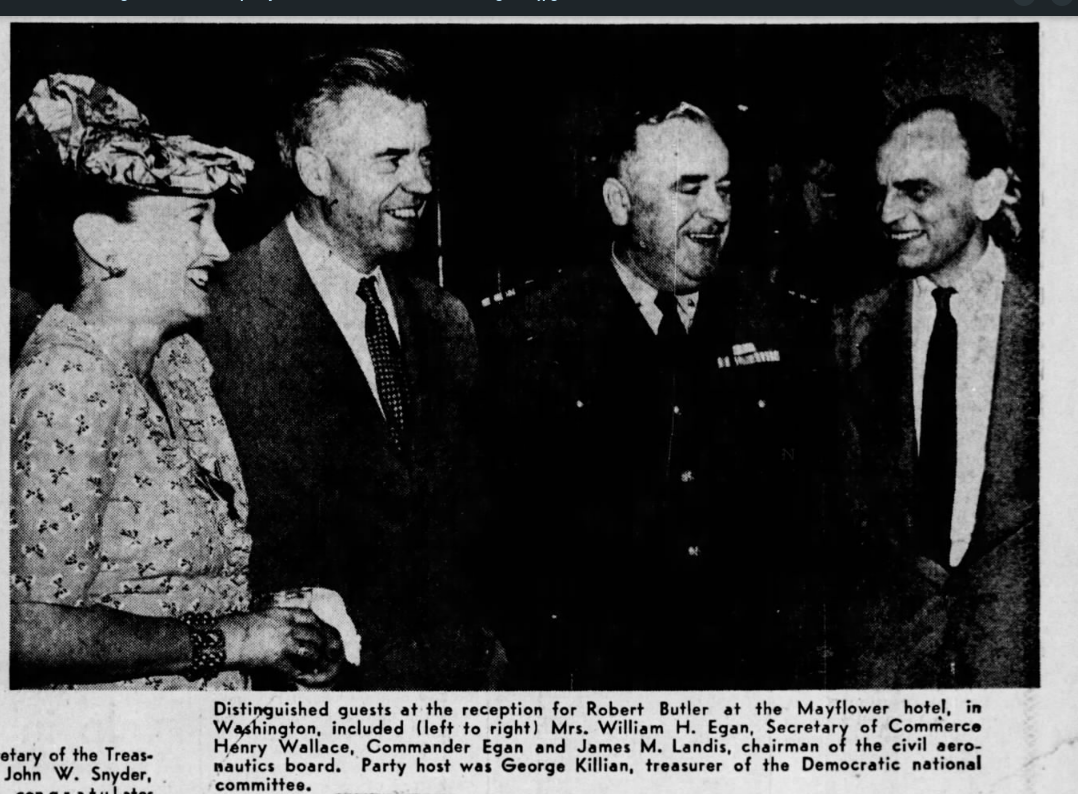
Minnesota Star Tribune, August 4, 1946.
If 1946’s “Commander William H. Egan” is the same person as 1946’s 48-year-old “William H. Egan Jr.”, son of a “participant” in St. Paul’s “Irish Democratic Party politics”, the picture above is very telling. It was taken at a party for MN shipbuilder Robert Butler, who had just been appointed as the first US ambassador to Australia. Check out the party’s guest list:
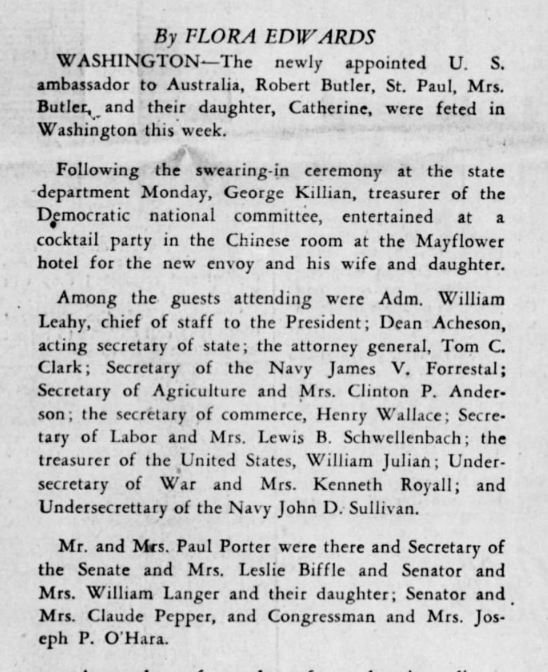
Minnesota Star Tribune, August 4, 1946.
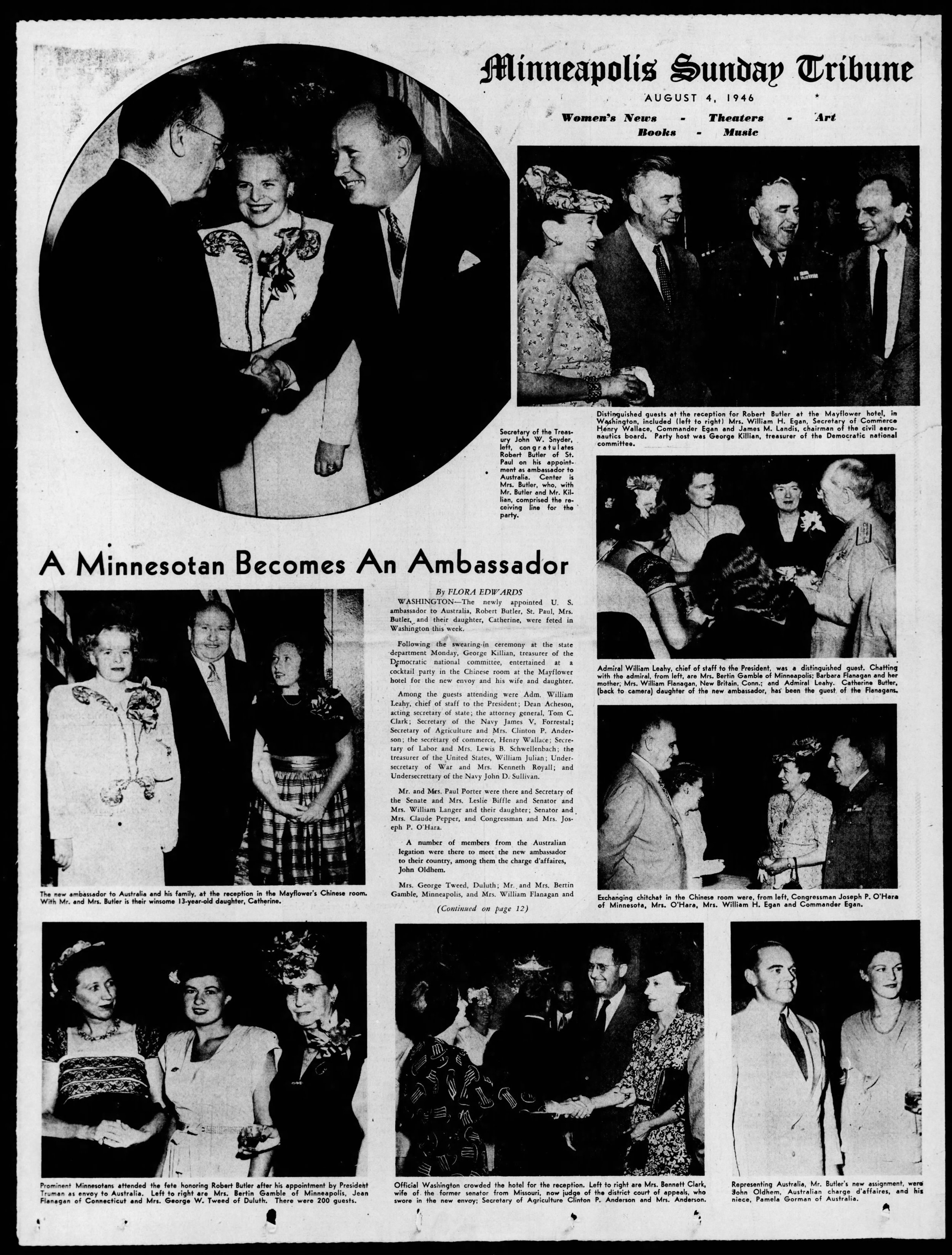
Minnesota Star Tribune, August 4, 1946.
Over the four years prior to his Australian appointment Butler had built hundreds of ships for FDR’s “Emergency Shipbuilding Plan” out of his docks in Duluth, MN and Superior, WI.

Butler’s wartime shipbuilding bonanza was courtesy of the U.S. Maritime Commission, which was lead by Franklin Delano Roosevelt appointee Joseph P. Kennedy. Besides being a prominent Democrat politician, Kennedy is the stock-jobbing businessman I wrote about with respect to Hayden, Stone & Co. He’s John F. Kennedy’s dad. After serving two years in Australia, Butler was made ambassador to Cuba. This statue of Cuban independence leader Jose Marti graces Minnesota’s City Hall because of Butler’s services to the developing casino hot-spot:
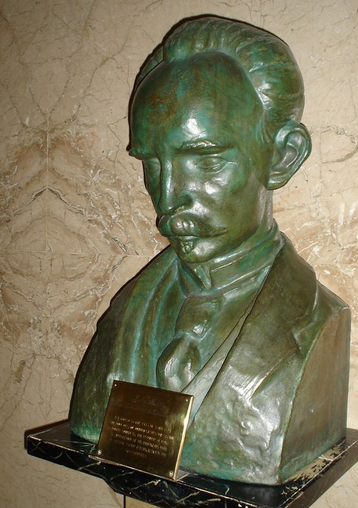
Besides building ships for Democrat FDR, Butler was also the finance director of the Democratic Party in MN. It turns out that Butler used some strong-arm tactics to shake down his subcontractors during the 1944 election cycle. If companies didn’t contribute, Butler would sick the AFL-CIO on them:

The Evening Telegram (Superior, WI) November 2, 1944.

The Evening Telegram (Superior, WI) November 2, 1944. When Butler says “Deweyite-Republican” he’s talking about Thomas Dewey, who helped Mrs. Walter Liggett fight Communist Press libel after Kidd Cann shot her husband for exposing Butler’s party’s Galician Gang connections.
While the above sounds dystopian, it is pretty tame by Minnesota standards. These were the sharks with whom the Egan family were swimming— regardless of the identity of “Commander William H. Egan”— by William Egan Colby’s own admission in his autobiography.
With their ruthless and high-powered contacts, what could Bill Colby’s dad Elbridge Colby possibly bring to the Egan table?
What Elbridge Colby brought to St. Paul were connections at Columbia University in New York City. Readers may remember that Columbia University was the incubator for the socialist movement astro-turfing work of Prof. Edwin Robert Anderson Seligman, sponsor of Mischa Applebaum and the Humanitarian Cult. Here’s what I wrote about Professor Seligman a few years back:
[Prof.] Seligman was the son of prominent banker Joseph Seligman. Prof Seligman was involved in WWI finance and although attracted to some elements of Marxist thought, was an opponent of Socialism. His father, the banker, profited from the US Civil War, railway expansion, and partnered with the Vanderbilt family to develop New York public utilities. Joseph Seligman was the first president of the Ethical Cultural Society, which became entwined with Appelbaum’s cult [The Humanitarian Cult]. Seligman’s family were related by blood and marriage to partners in Kuhn, Loeb & Co (Otto Kahn’s firm) as well as other prominent NYC banking families, including the Guggenheims, who are known for their copper investments. When Appelbaum came as a penniless religious refugee to the USA, he quickly established himself as a successful copper merchant in the Guggenheim’s home base, NYC. Appelbaum’s copper trading concern took office space at 55 Liberty Street, which also housed the law firm of Franklin Delano Roosevelt starting in 1911.
Another key backer to the cult was Jacob Schiff, who was Otto Kahn’s partner at Kuhn, Loeb & Co. Schiff is probably most famous for his work supporting the Japanese during the Russo-Japanese War. His involvement with the cult was not known until shortly after the banker’s death, when a bizarre mercury poisoning incident brought Mischa Appelbaum to the verge of death himself— more on that in a minute.
Now when James Angleton and Elbridge Colby were wife-hunting in Minnesota, the “Guggenheim-Morgan” investment banker syndicate was the leading power in Minnesota’s rich iron mining territories, as well copper mining around Ajo, Arizona. Angleton’s wife got her money from these mining operations, which her grandfather set up as a junior partner to Morgan’s US Steel. Mrs. Angleton’s grandfather, Chester Congdon, helped Teddy Roosevelt spy on the Morgans for Teddy’s investment partners, Phelps Dodge. The industrial espionage network Teddy set up with Navy money would, through a few stages, morph into the CIA.
I’ve written quite a bit about the Ringstrasse political class in Austria-Hungary. These people were overwhelmingly Jewish, brilliantly educated, and extremely rich from sweetheart deals made with the Hapsburgs, particularly after the 1848 revolutions. Most were also organized crime dons, though the dirty work would have been done by toughs lower down in Jewish society. When the leading spokesperson for the Ringstrasse, Berta Szeps Zuckerkandl, announced that the Ringstrasse would relocate to the Anglo-American world in the 1890s, Columbia University (as well as the Oxbridge sphere) was one of the places they felt comfortable. This metastasizing “process”, as Austro-Hungarian foreign minister Alexis von Aehrenthal described it, was underway when Elbridge’s father was on Columbia’s Chemistry faculty. Elbridge would have made even more tony friends than Thomas Haines’ patrons at City College New York, the Kaysers. Perhaps unsurprisingly, when Archduke Franz Ferdinand was shot in Sarajevo in 1914 and the Ringstrasse had no more obstacles to its war-mongering, Columbia University kicked into high-gear with a fact-finding mission. Guess who was Columbia’s leading intelligence operative?
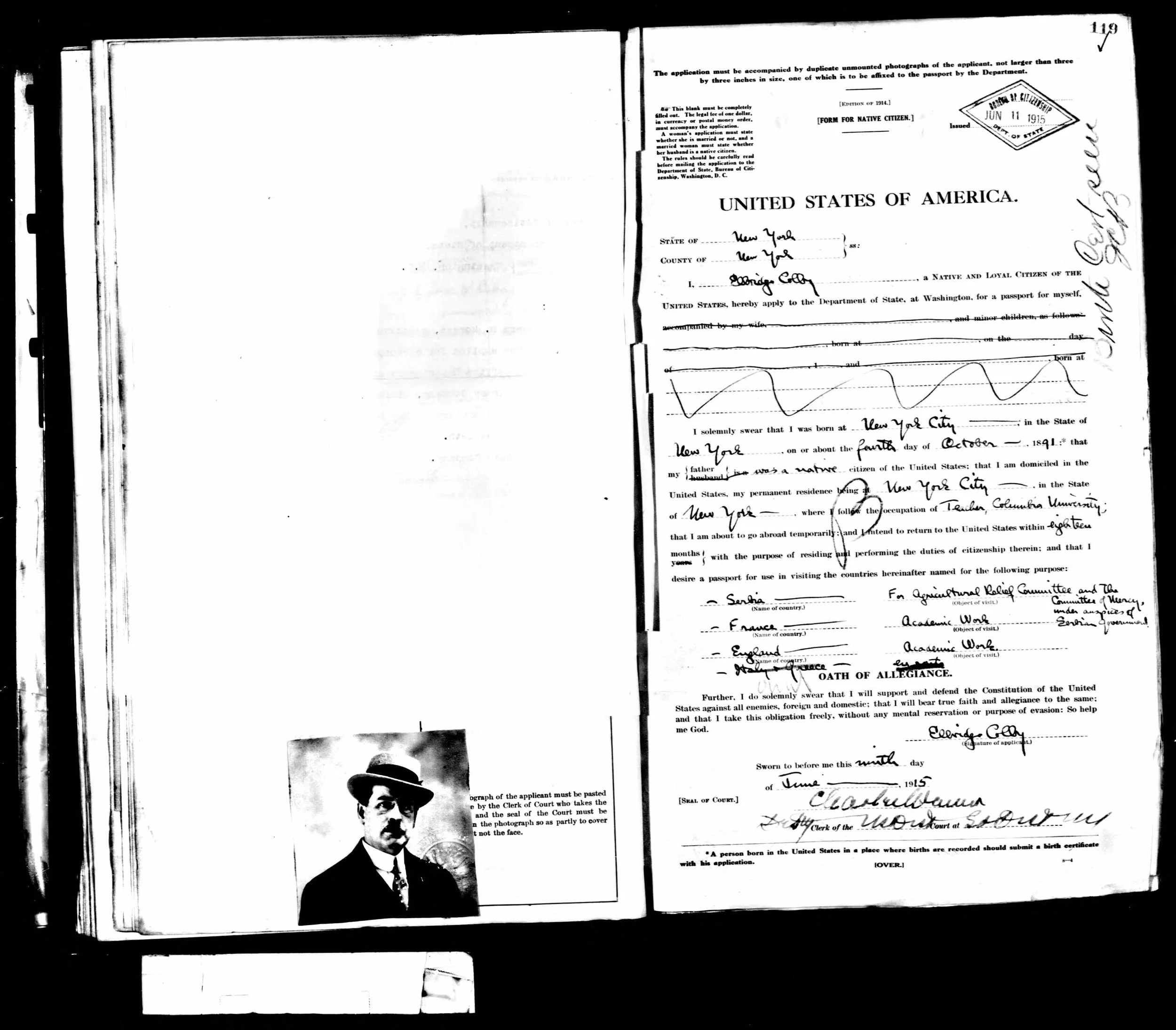
Image from US Passport Applications, group 1795-1925 for Elbridge Colby, page 1 of 8.
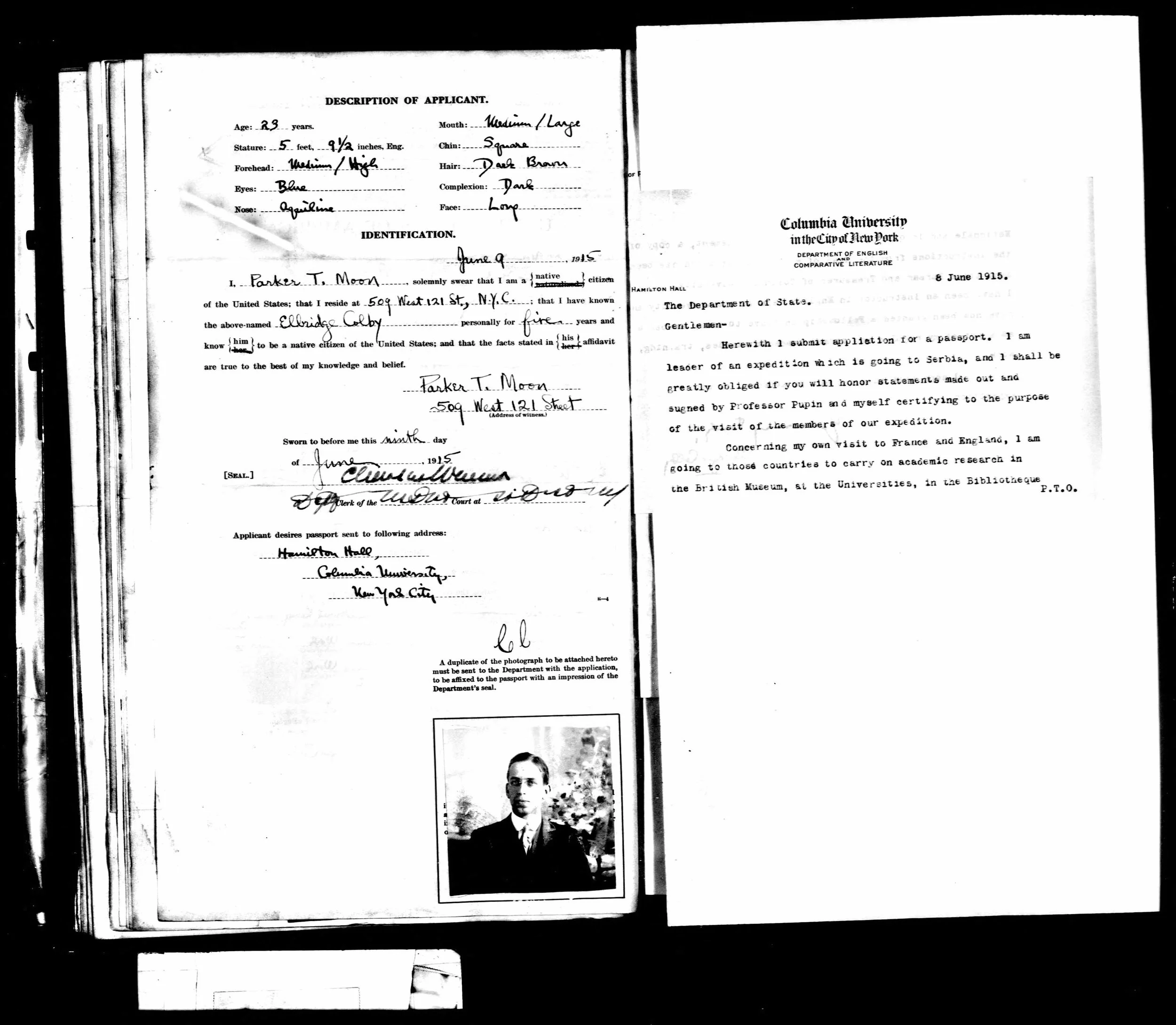
Image from US Passport Applications, group 1795-1925 for Elbridge Colby, pages 2,3 of 8.
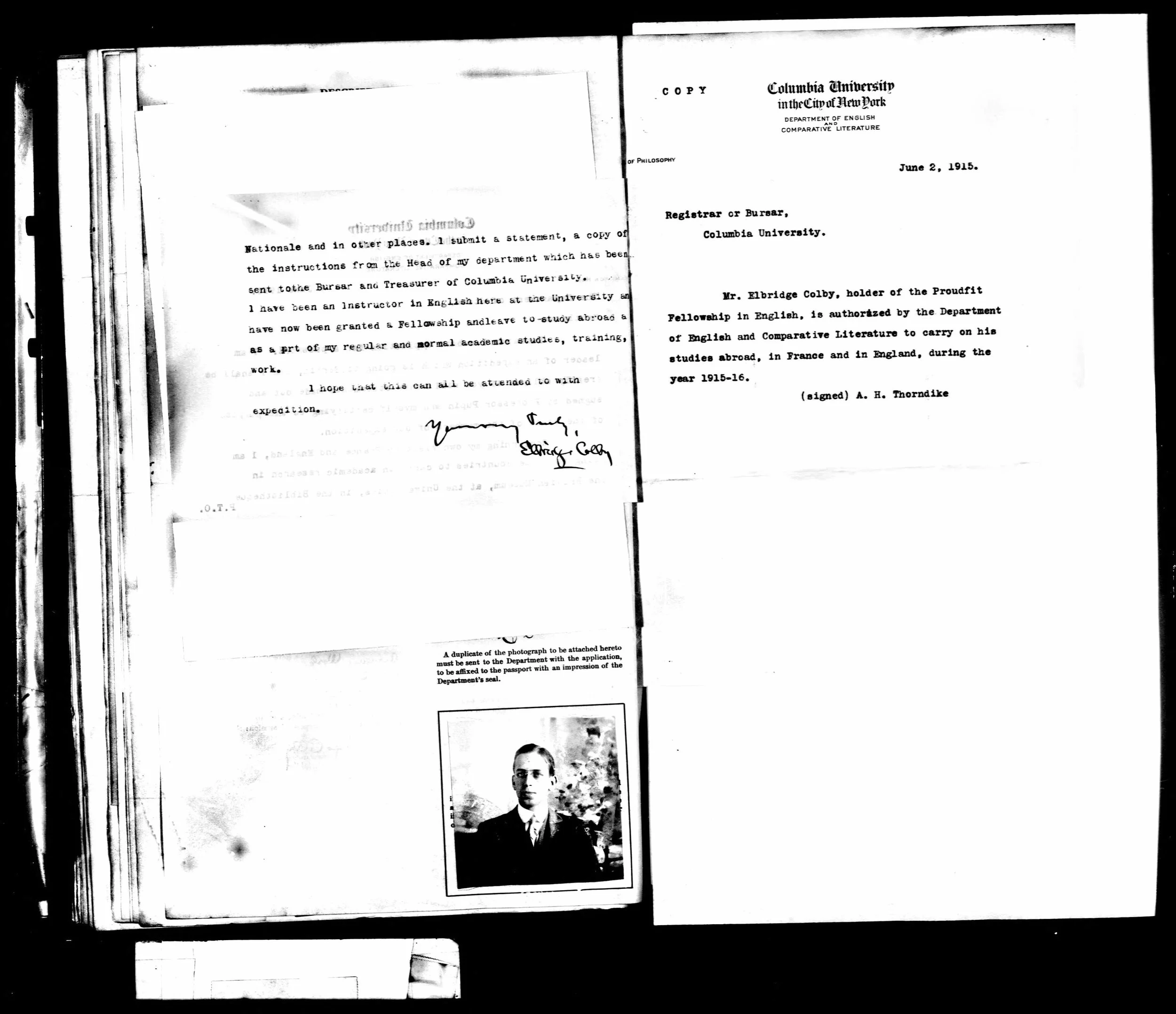
Image from US Passport Applications, group 1795-1925 for Elbridge Colby, pages 4, 5 of 8.
Columbia University in the City of New York, Department of English and Comparative Literature, Hamilton Hall, 8 June 1915.
The Department of State.
Gentlemen--
Herewith I submit application for a passport. I am leader of an expedition which is going to Serbia, and I shall be greatly obliged if you will honor statements made out and signed by Professor Pupin and myself certifying to the purpose of the visit of the members of our expedition.
Concerning my own visit to France and England, I am going to those countries to carry on academic research in the British Museum, at the Universities, in the Bibliotheque PTO Nationale an in other places. I submit a statement, a copy of the instructions from the Head of my department which has been sent to the Bursar and Treasurer of Columbia University.
I have been an instructor in English here at the University and have now been granted a Fellowship and leave to study abroad a [sic] as a prt of my regular and normal academic studies, training, work.
I hope that this can all be attended to with expedition.
Yours truly,
Elbridge Colby
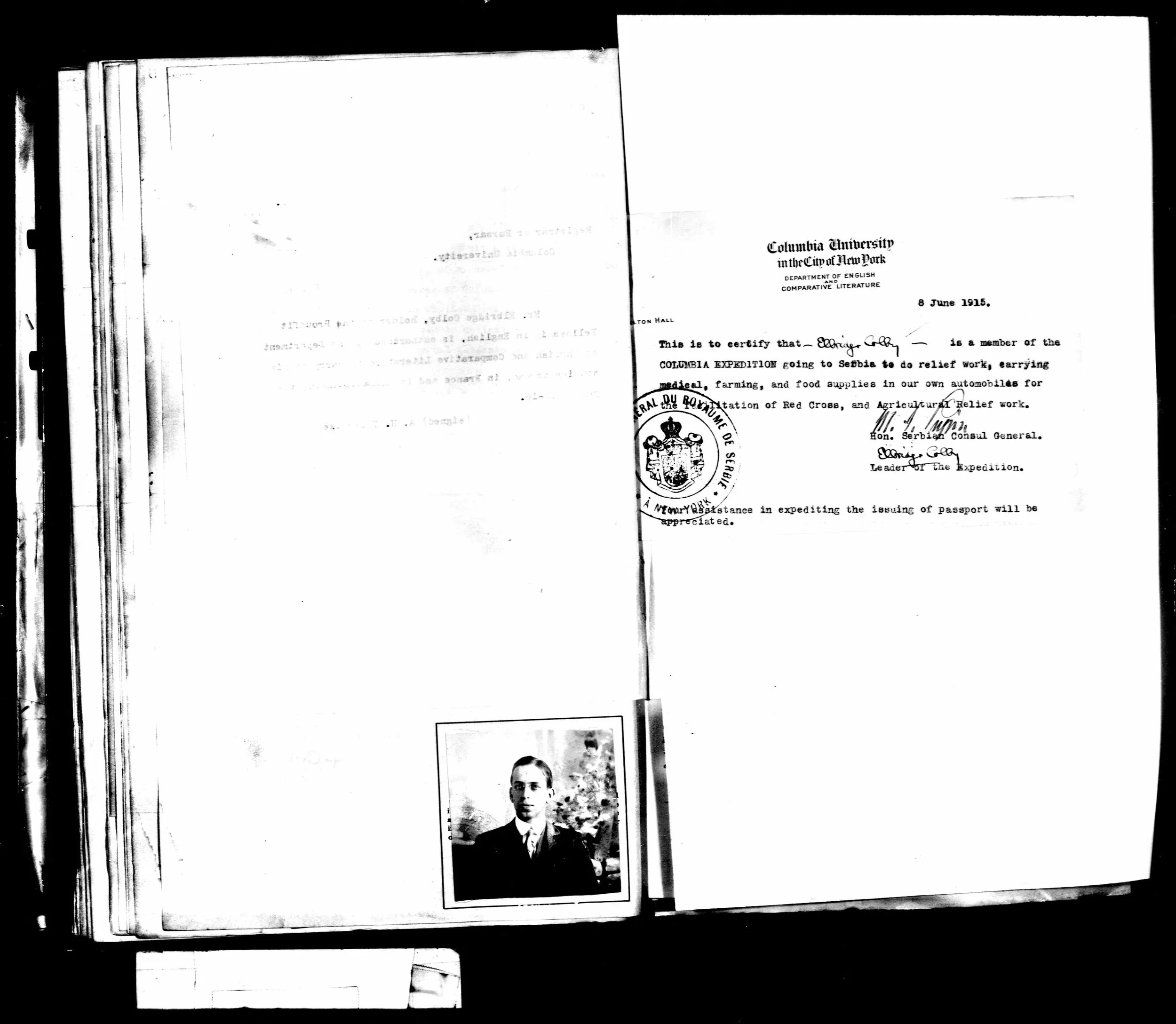
Image from US Passport Applications, group 1795-1925 for Elbridge Colby, page 6,7 of 8.
Columbia University in the City of New York, Department of English and Comparative Literature, Hamilton Hall, 8 June 1815.
This is to certify that Elbridge Colby is a member of the COLUMBIA EXPEDITION going to Serbia to do relief work, carrying medical, farming and food supplies in our own automobiles for the facilitation of Red Cross, and Agricultural Relief work.
M. I. Pupin, Hon. Serbian Consul General
Elbridge Colby, Leader of the Expedition
Your assistance in expediting the issuing of passport will be appreciated.
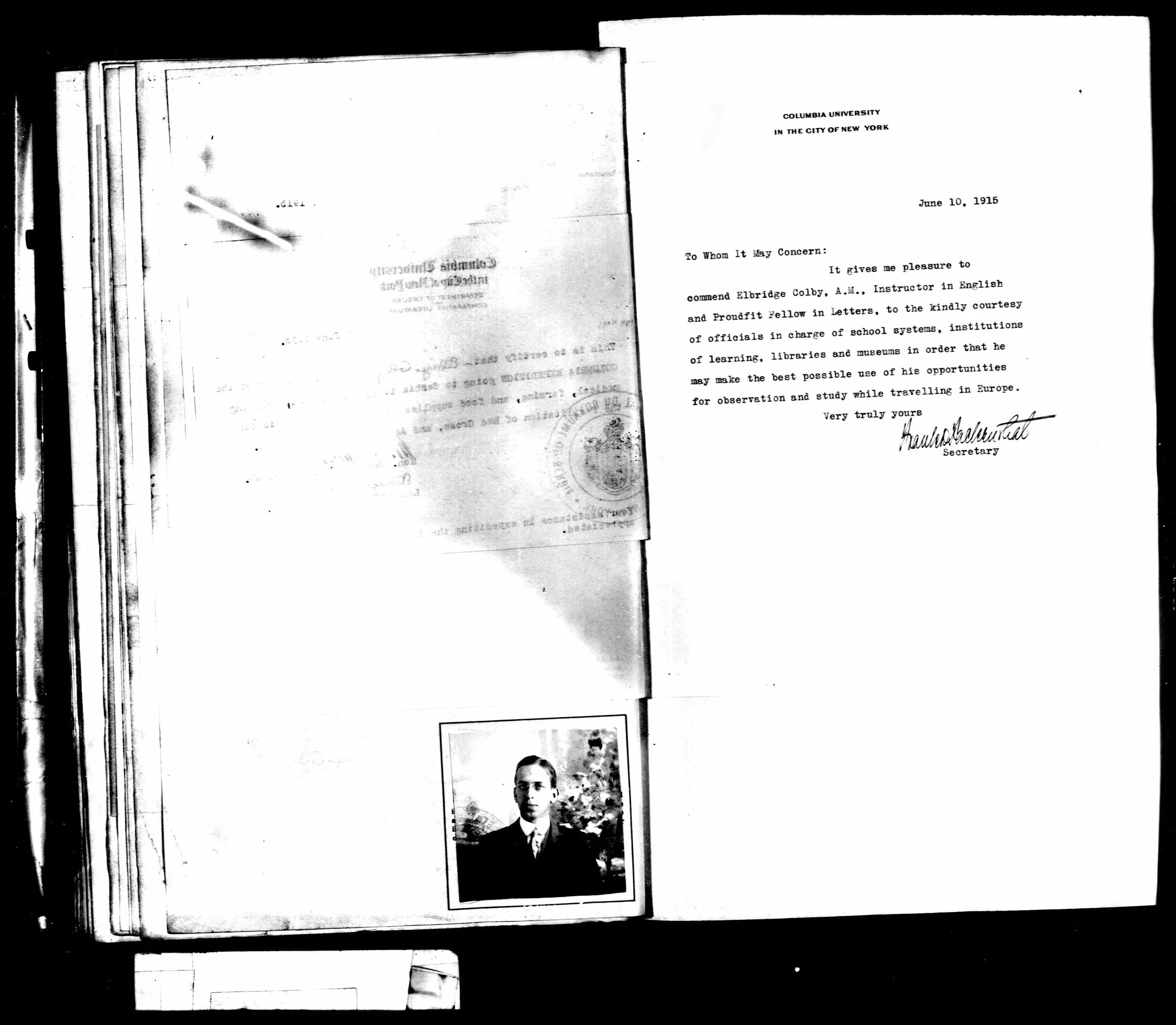
Image from US Passport Applications, group 1795-1925 forElbridge Colby, page 8 of 8.
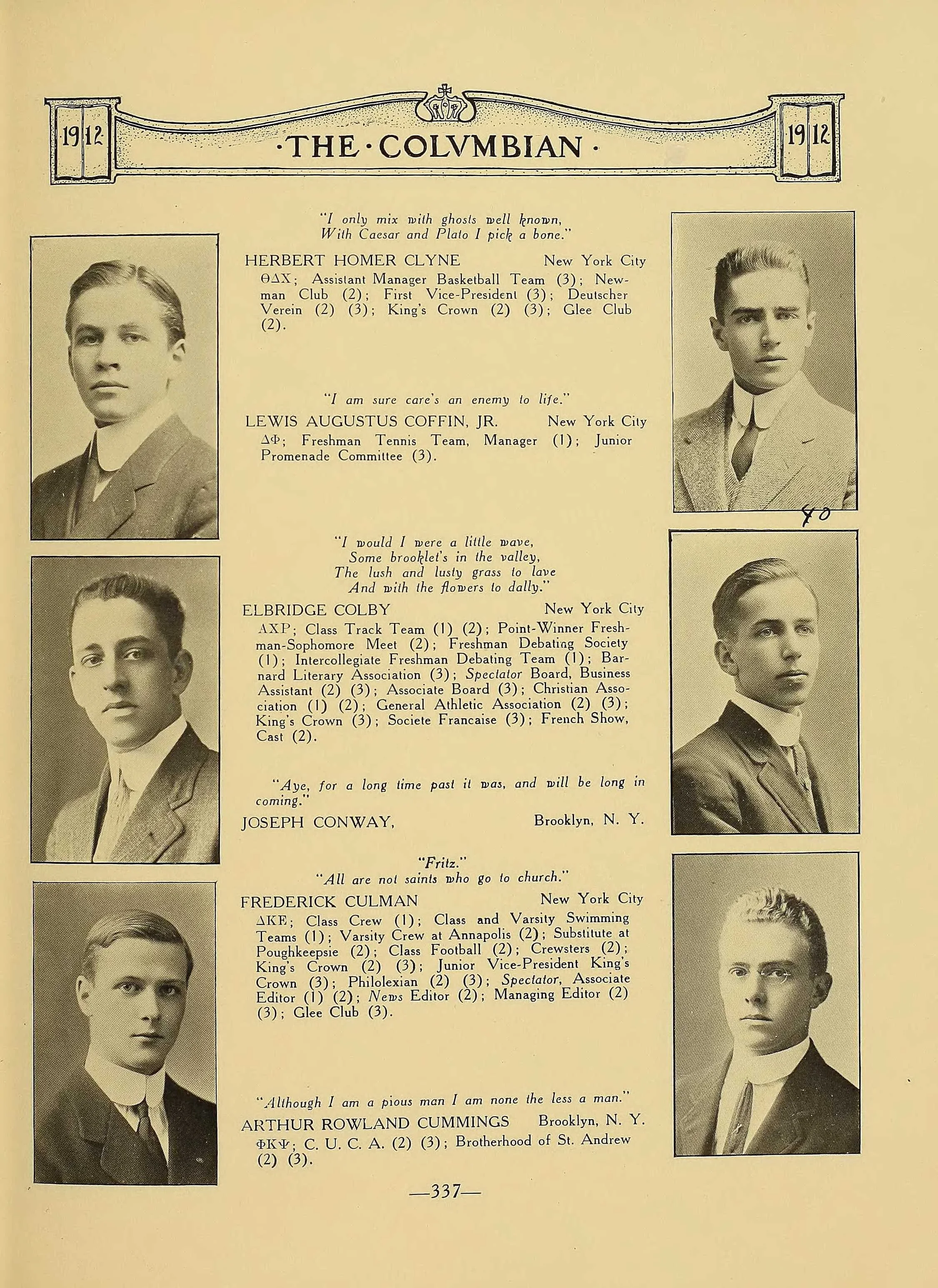
Elbridge is second one down on the RHS.
You’ll notice from the passport documentation above that Elbridge Colby’s main reference was an Austro-Hungarian Serb named Prof. Michael Pupin. His birth name was Mihajlo Idvorski Pupin and he was born in modern day Kovačica, Serbia which was the Military Frontier of the Austrian Empire at the time. Local Hapsburg police had trouble with young Pupin and his “Serbian Youth” nationalistic activities— Pupin was one of those nationalists that the Galician Gang spied on in exchange for pimping/human trafficking privileges. Running afoul of the law, Pupin left for Prague to finish his gymnasium (high school) studies— so his parents were wealthier than the “sheep-herders” he liked to pretend.
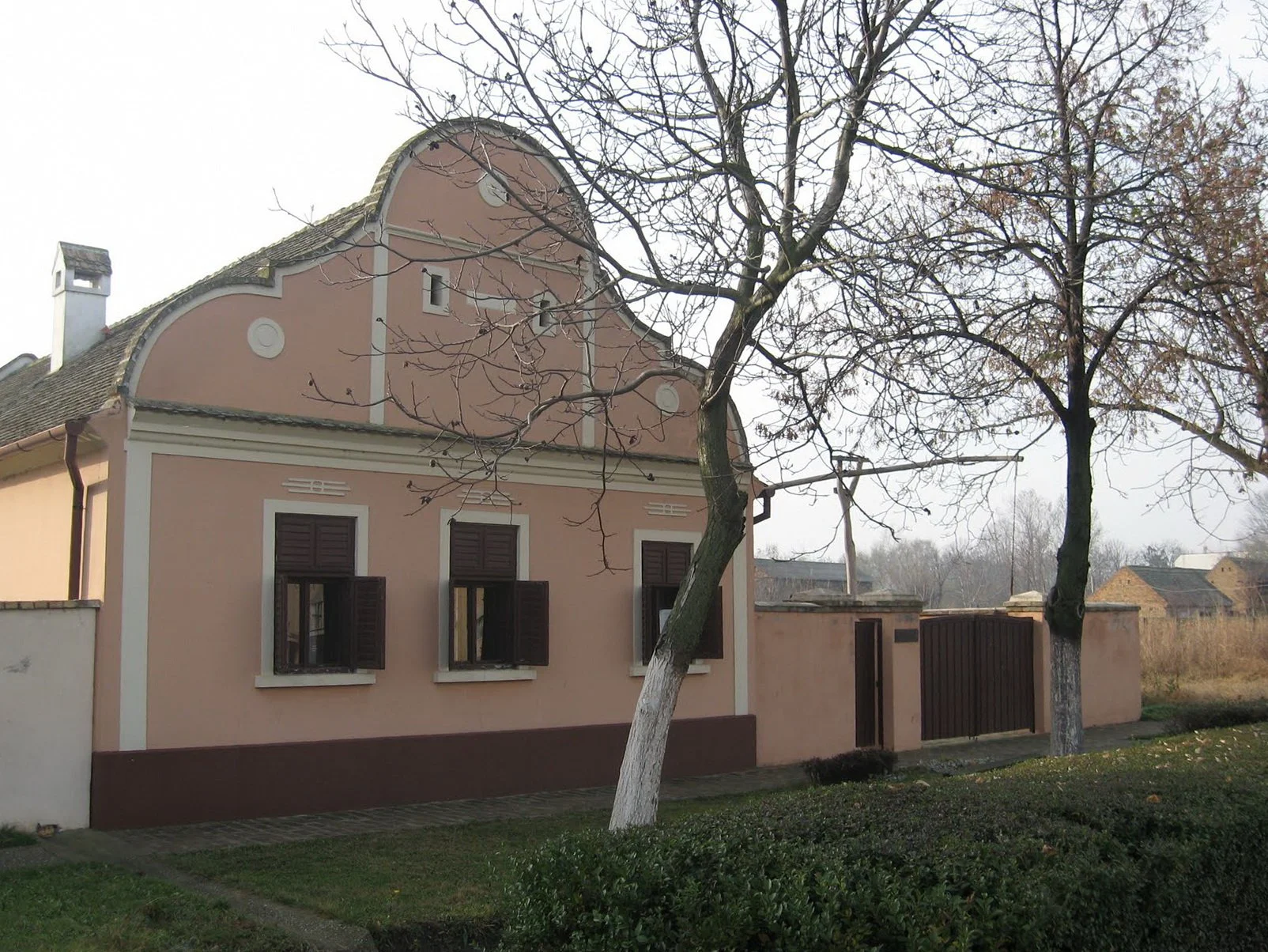
Pupin’s birth home.
When his father died in 1874, the twenty year old Pupin ended his studies in Prague and immigrated to the USA, where he eventually made friends at Columbia University, got on the rowing team and was elected class president in 1881 (he was twenty-eight and a Junior). During his time in New York City Austria Hungary annexed Bosnia Herzegovnia, a pet project of Foreign Minister Alexis von Aehrenthal, and the economic exploitation of the Balkans began in earnest— usually after a vanguard of highly-decorated Ringstrasse military officers ‘laid the tracks’. The man who Foreign Minister von Aehrenthal put in charge of information sharing with Berlin during this time was named Colonel Alfred Redl.
Pupin was just the type of athletic, popular, yet financially vulnerable student at a prestigious university that caught the eye of the Roosevelt family. The Roosevelts collected such people as henchman, to my knowledge Teddy was the first to deploy this networking strategy. Pupin graduated from Columbia and became a US citizen in 1882, whereupon he promptly returned to Europe to study first at Cambridge under John Tyndall and then in the late 1880s under Tyndall’s research partner Herman von Helmholtz at the University of Berlin where Pupin earned his PhD. Herman von Helmholtz was both a rockstar scientist and an advisor to the Prussian Government. (I wrote about Helmholtz with regard to Daniel Schreber and Havana Syndrome.) In 1910 Teddy would endow a “Theodore Roosevelt Professorship” at the University of Berlin, and of course took Prussian money a few months later to buy an NYC newspaper in support of his Bull Moose campaign for Woodrow Wilson.
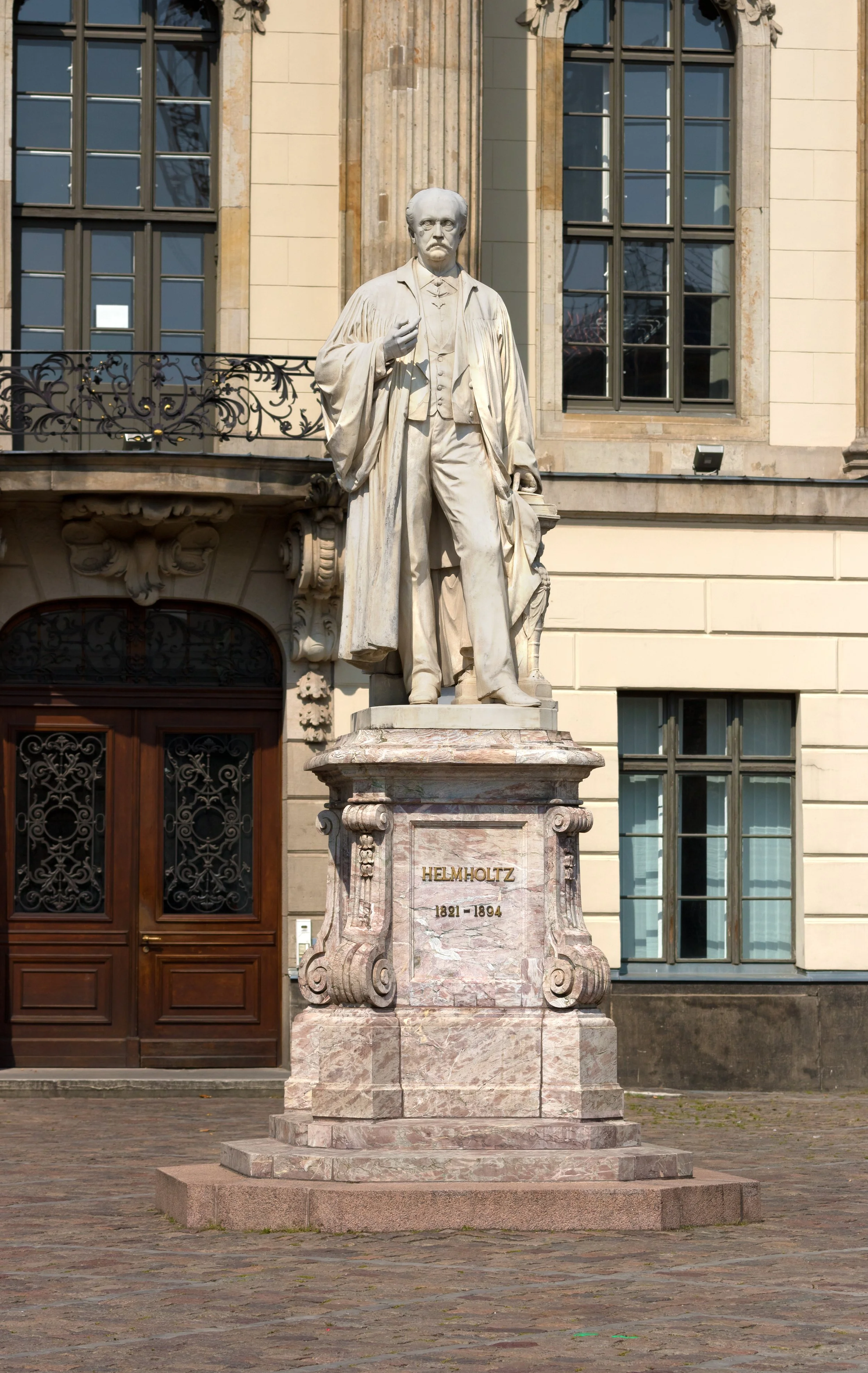
The Hermann von Helmholtz statue in the courtyard of the University of Berlin.
Pupin was a scientist, but a politician first and foremost. Lobbying for the Serbian people in the Balkans was the constant in his life. By the 1910s, Vienna’s Ringstrasse wanted war against Serbia (they wanted to absorb it like they had Bosnia Herzegovnia in 1878) and they relied on Prussia for military support towards this goal. Archduke Franz Ferdinand was the only powerful figure to speak against this imperialism, and he was shot in mid 1914. Now was the Ringstrasse’s chance! Eldridge and the Columbian Expedition struck while the iron was hot. After the war, Prof. Pupin participated in the Paris peace conference where the borders for Serbs, Croats and Slovenians were discussed, and he acted as an advisor to President Woodrow Wilson during the creation of the ill-fated Yugoslavia.
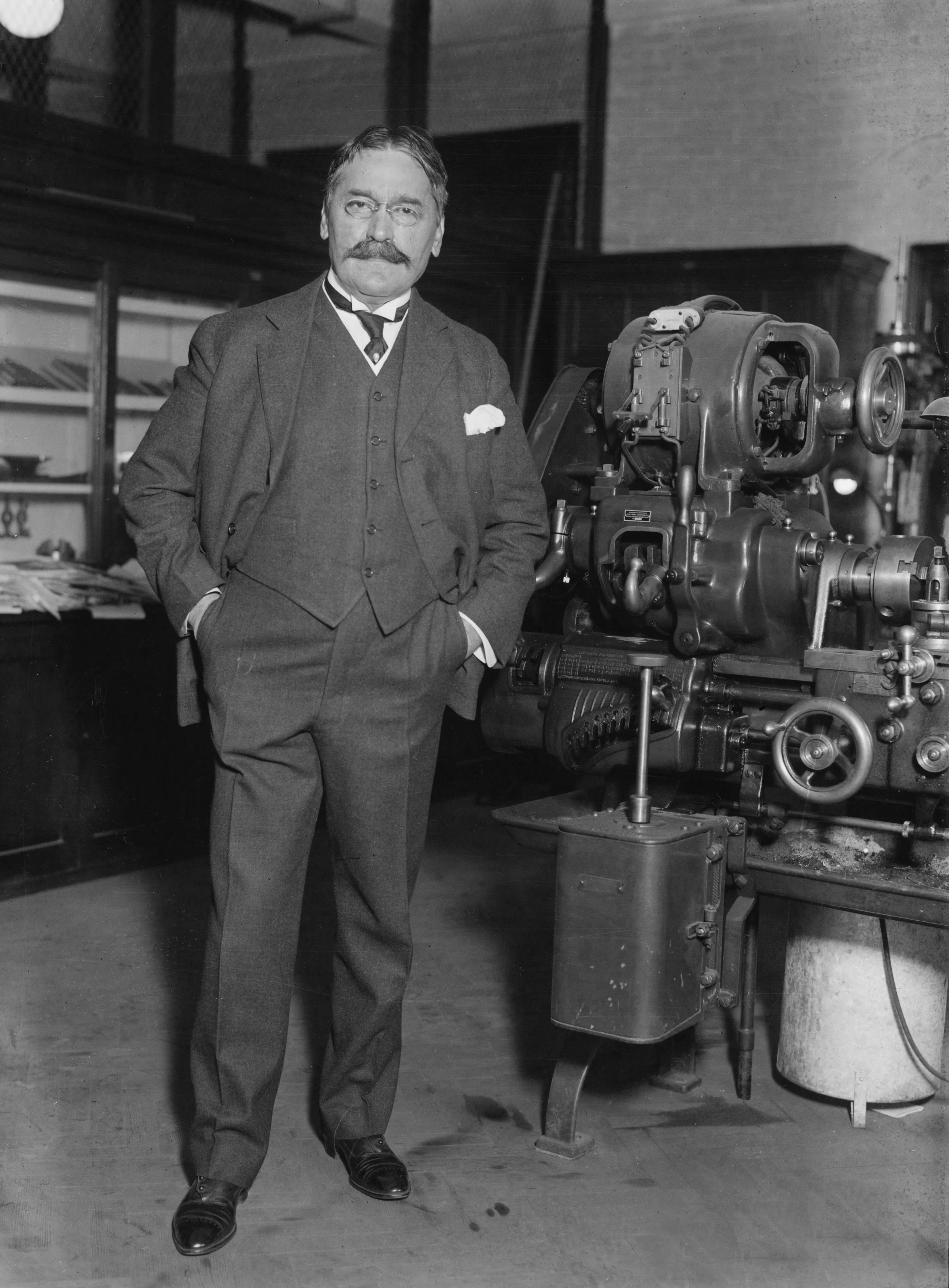
Michael Pupin in 1915.
To put Pupin in perspective, in 1917 as a Columbia professor he was busy designing submarine detection technology at Key West and New London (Connecticut). Submarine warfare had been a pet project of Teddy Roosevelt since at least 1903. Also in 1917 Otto Kahn’s Mutual Film company was developing special submarine-based film equipment, which I wrote about in The Mutual Film Corp Submarine Connection:
“Mutual’s submarine connection goes back to 1914 though, before their switch to producing British propaganda. When Mutual bought the Thanhouser Company, they acquired interest in Thanhouser’s partnership with the Submarine Film Corporation, which was founded by inventor John Ernest Williamson and his brother George…
The early Thanhouser/Williamson film (Thirty Leagues under the Sea, 1914) and the Mutual/Williamson films (Twenty Thousand Leagues under the Sea, 1916; The Submarine Eye, 1917) were fantasy features and not overtly war-related. However, these films did have interest for the US military, because the Williamson “photosphere” allowed filming from submarine boats. The construction of this “photosphere” was made possible by the financing described above. The apparatus was a huge, telescoping metal pipe with a glass dome on the end which could extend 250 feet into the sea. John’s father Charles had designed and manufactured an early version of the device for inspecting ships’ hulls, but John fitted a five-foot-wide glass observation chamber to the end of the pipe which allowed for movie-filming…”
The operations of the Williamson Brothers were of intense interest to the US State Department representative in the Bahamas, too:
"The unique work of Carl Gregory at the Thanhouser Company in making movies under the ocean is the subject of a report of the U.S. Consul at Nassau in the Bahamas. The New York Evening Sun is thus led to comment editorially on the feat: Mr. William F. Doty, our Consul at Nassau, has just reported the successful operation of a submarine motion picture camera recently invented by an American photographer. No machine previously invented has been efficient at a submersion of more than two or three feet, but with this apparatus submarine pictures have been taken in Nassau harbor showing with great clearness the marine gardens, fish of many varieties, old wrecks with divers working among them, anchors at a depth of a hundred feet, and the movements of sharks and other submarine dangers…
"Consul Doty reports that an American physicist of high reputation has expressed opinion that the tube may be lengthened perhaps to 1,000 feet, which would make it of importance in many lines of scientific work in oceanography. It may prove very useful in salvage operations and in the inspection and repairs of hulls at sea. In the pearl and sponge fishery the tube is expected to work a revolution, since many of the best specimens lie too deep for exploration in the diving helmet. These films have been shipped to New York, where they are to be placed on exhibition at once. No more interesting development of the cinematograph has yet been offered." (The New Rochelle Paragraph, July 10, 1914)
Mutual Film, a company at least in part financed by Otto Kahn who lent money to the Imperial German war effort, and a company open to making Imperial German war propaganda, had purchased submarine technology of interest to the US government. By the end of the year the man who brokered this deal, Charles Hite, founder of the Broadway Rose Garden and Flo Ziegfeld’s sex-show competitor, was dead under suspicious circumstances.
Much like Pupin, Elbridge Colby was an ambitious young man in straightened circumstances. His well-connected father died in 1897, when Elbridge was about five years old.
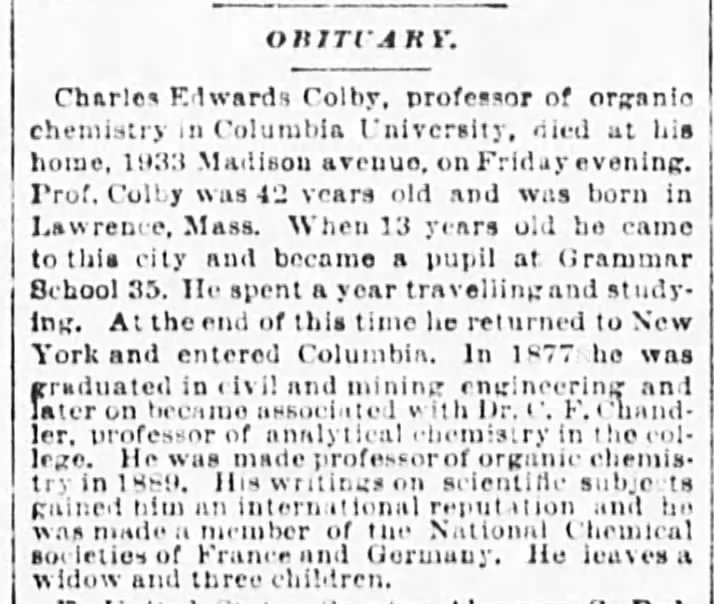
New York Herald, October 18 1897.
As Bill Colby writes: “He [Elbridge] came from a family that had fought hard to stay respectable despite poverty.” “Respectable” was a high bar for Elbridge, as you can see from the census records below, the Colby family kept Fifth Avenue and Madison Avenue addresses.
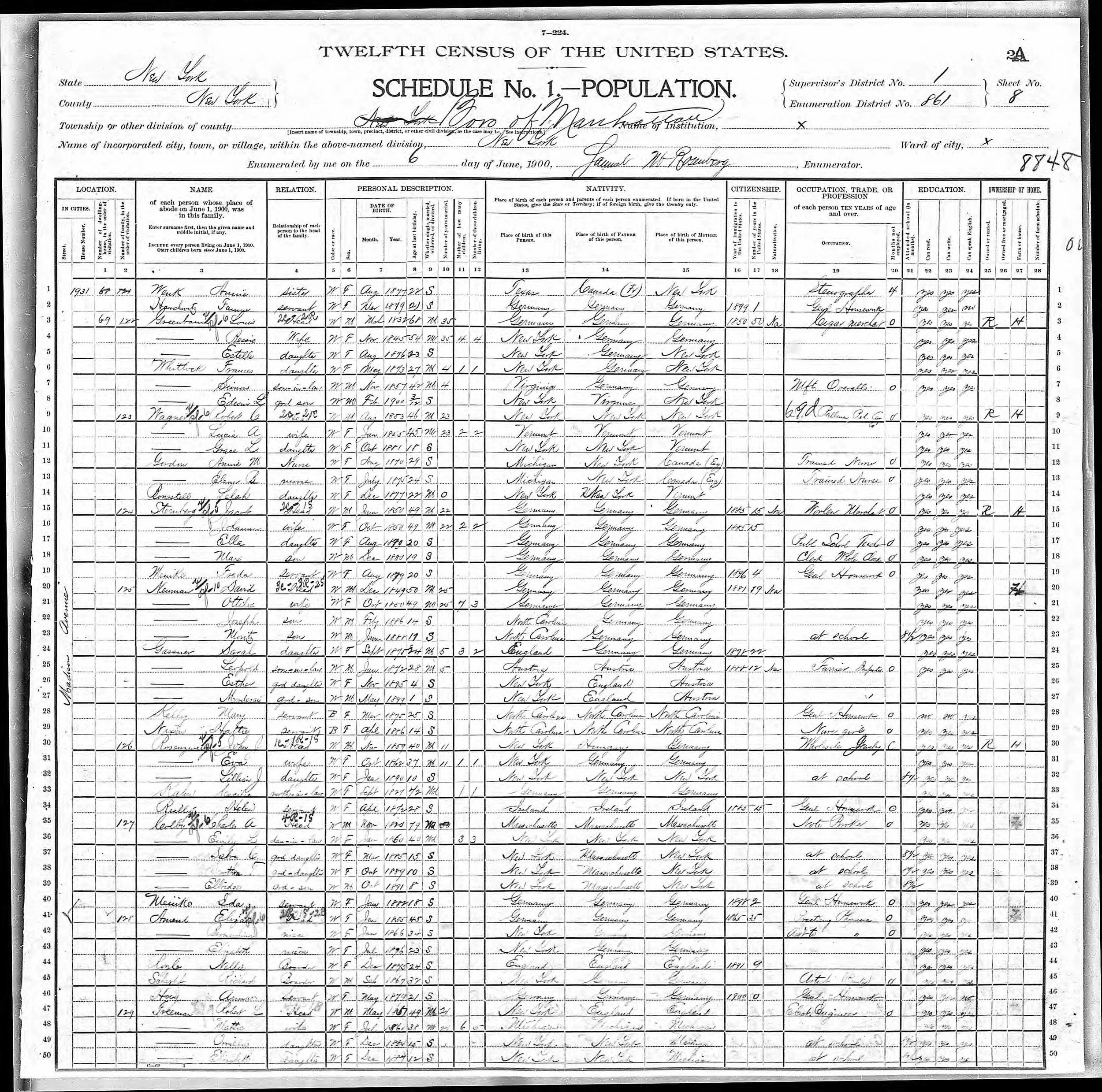
1900 US Census: after the death of her husband, Elbridge’s mother lived with her father-in-law, a “note booker”— a financial intermediary who acted as an agent selling debt securities between borrowing businesses and investors, usually local bankers— on Madison Avenue. Not exactly hard up.
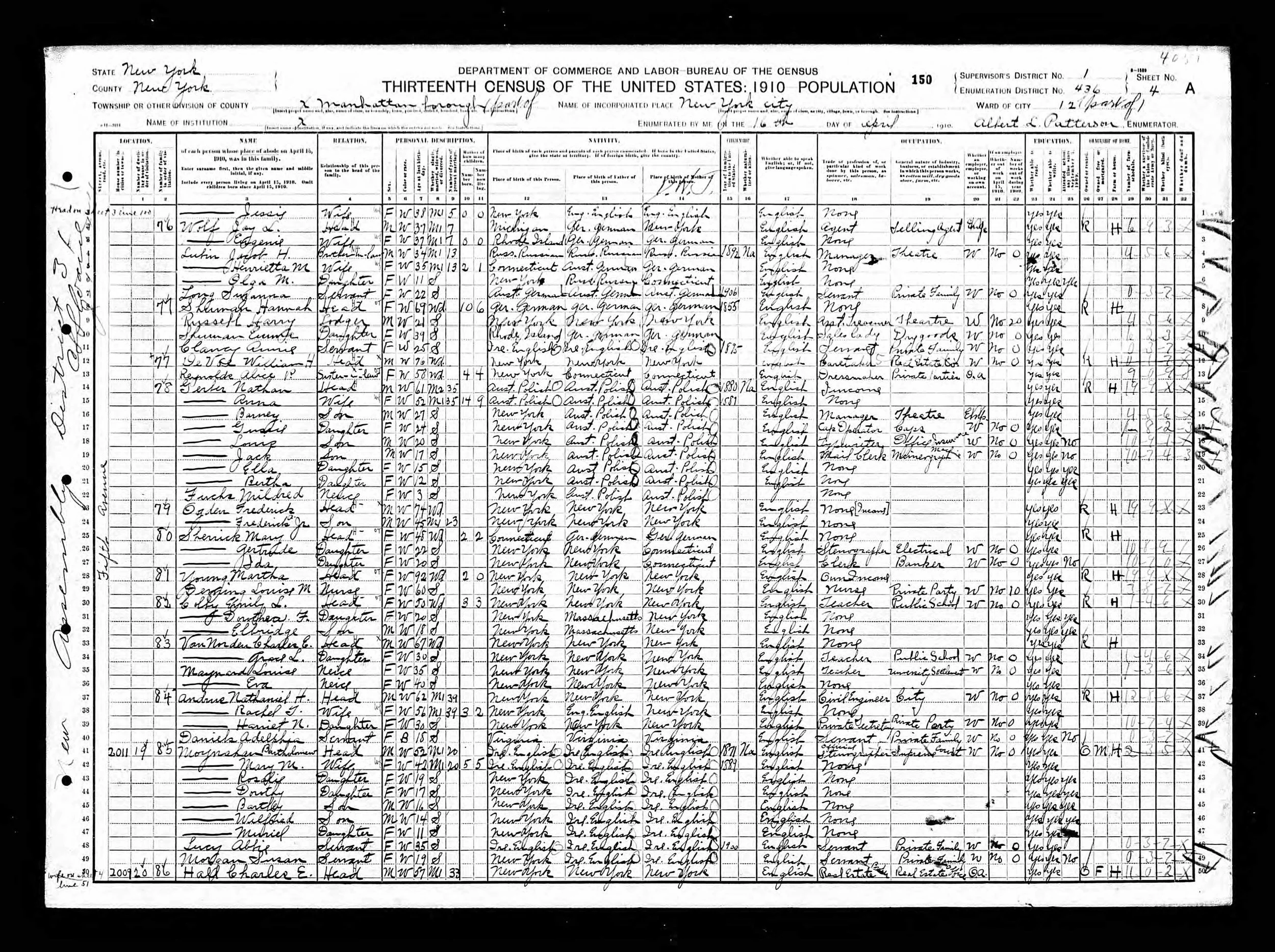
1910 US Census: By the time Elbridge was 18 his mother kept the family on Fifth Avenue. She worked as a public school teacher and Elbridge wasn’t required to earn an income.
Elbridge married William Henry Egan’s daughter in early November, 1917. He was in the US Army at this time and took her to the Panama Canal Zone, which was under special observation by Chester Congdon’s chief mine operations manager, John Greenway, at the request of Theodore Roosevelt. (Greenway was another of the young men like Pupin.) After their Panama sojourn (max 3 years), William Egan Colby was born in St. Paul, where Elbridge had a job at the English Department of the University of Minnesota under Cyrus Northrup, who was also the university’s president.
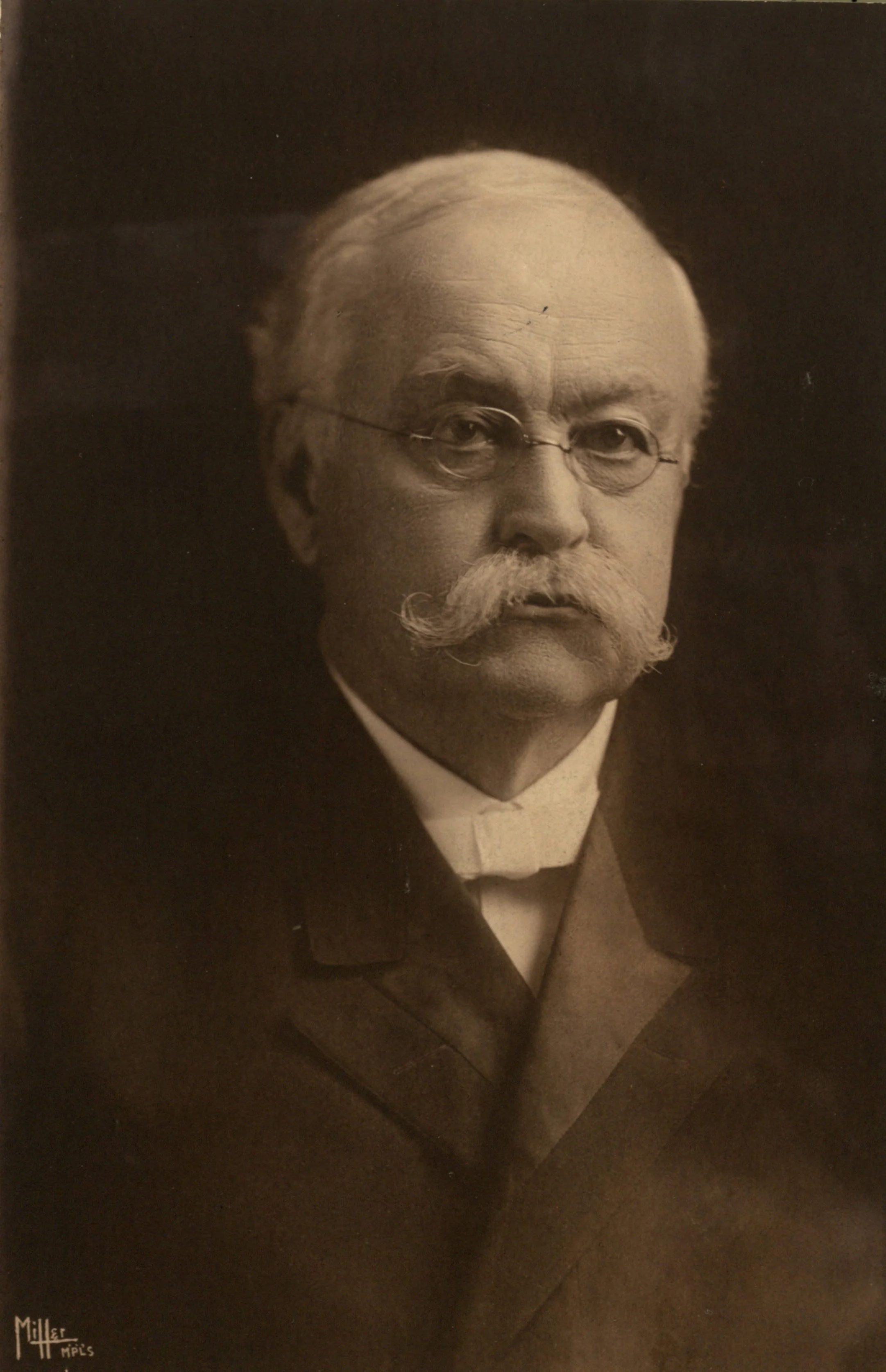
Cyrus Northrup, president of the University of Minnesota
Northrup was personal friend and correspondent of Theodore Roosevelt. Roosevelt would ask Northrup to canvass for young, reliable university men that Teddy could bring into his industrial espionage network. At UMN Colby regularly wrote for the St. Paul Pioneer Press about business opportunities in Panama and even contributed a particularly bitter and controversial anti-racism piece to The Nation. (This piece opined on an event, the trial of a black US army solider in Georgia, USA. It was a debacle for Colby and will get its own post.) The Nation protected Minnesota’s venal Governor Olson against Water Liggett’s anti-corruption activism and refused to help Liggett when the Galician Gang threatened (then took) his life. In short, by 1925 Elbridge Colby had made the right friends to take him to Washington D.C.
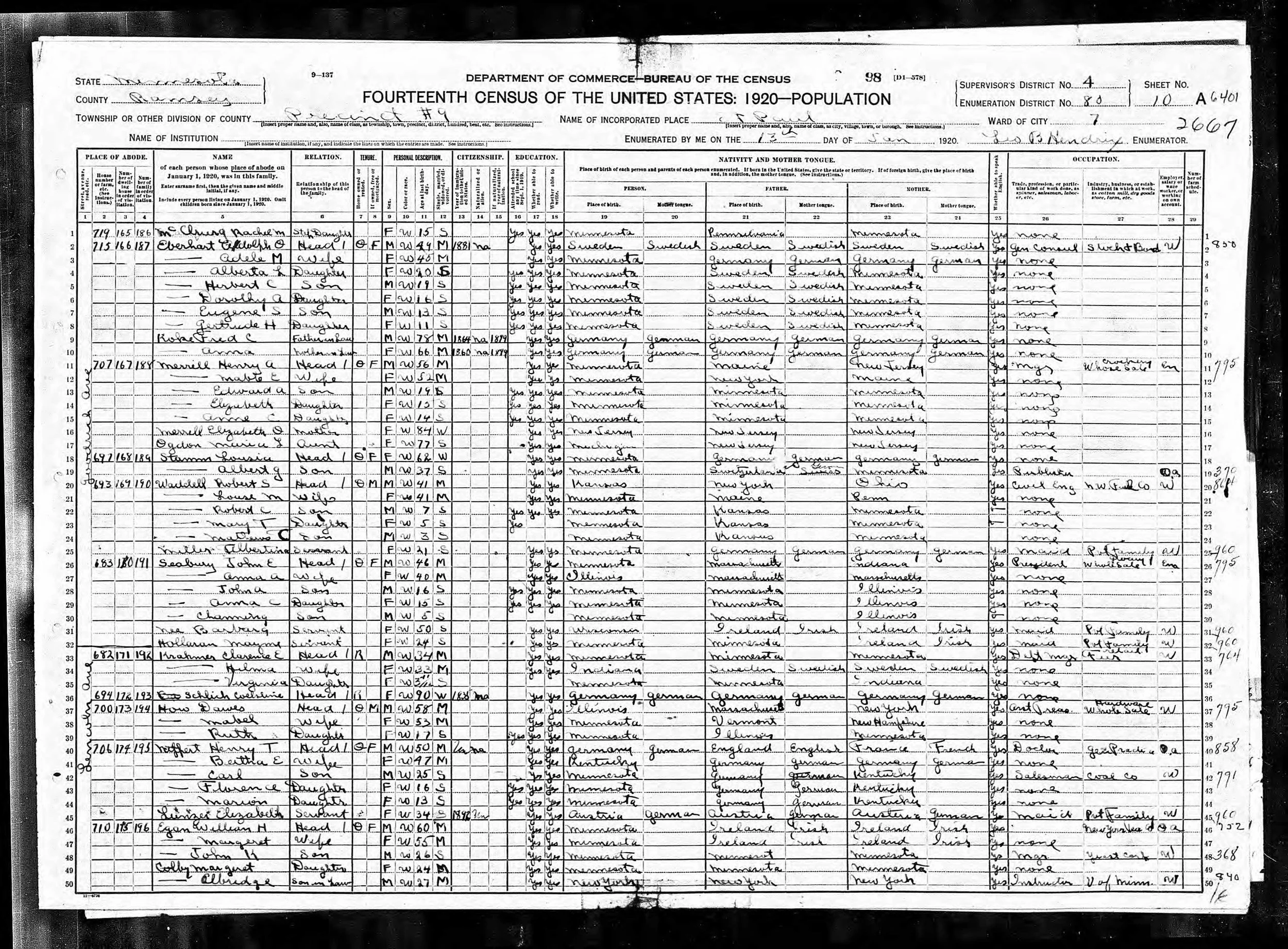
By 1920 both Elbridge and his wife are living with his wife’s family at the impressive 710 Lincoln Ave house in St. Paul, MN.
There is no 1930 US Census information for Elbridge Colby because that decade saw him taking a break from his anti-racism work to mock the dirty Chinese in Tientsin (Tianjin).
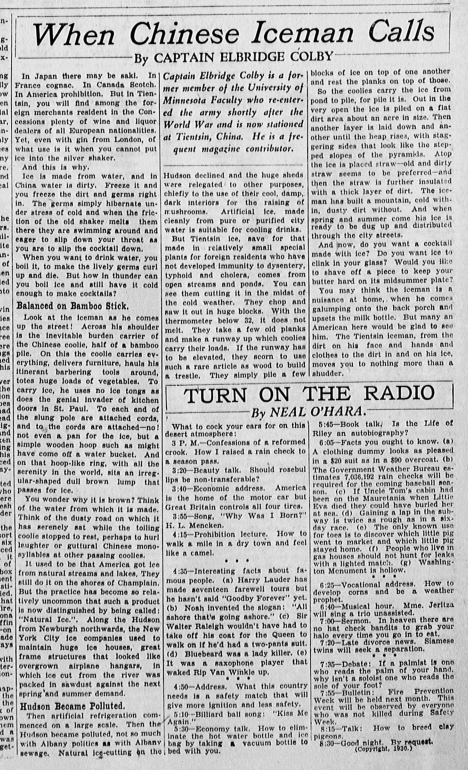
St. Paul Pioneer Press, March 16, 1930.
The 1940s and 1950s saw Elbridge and his wife return stateside and information becomes very scarce….
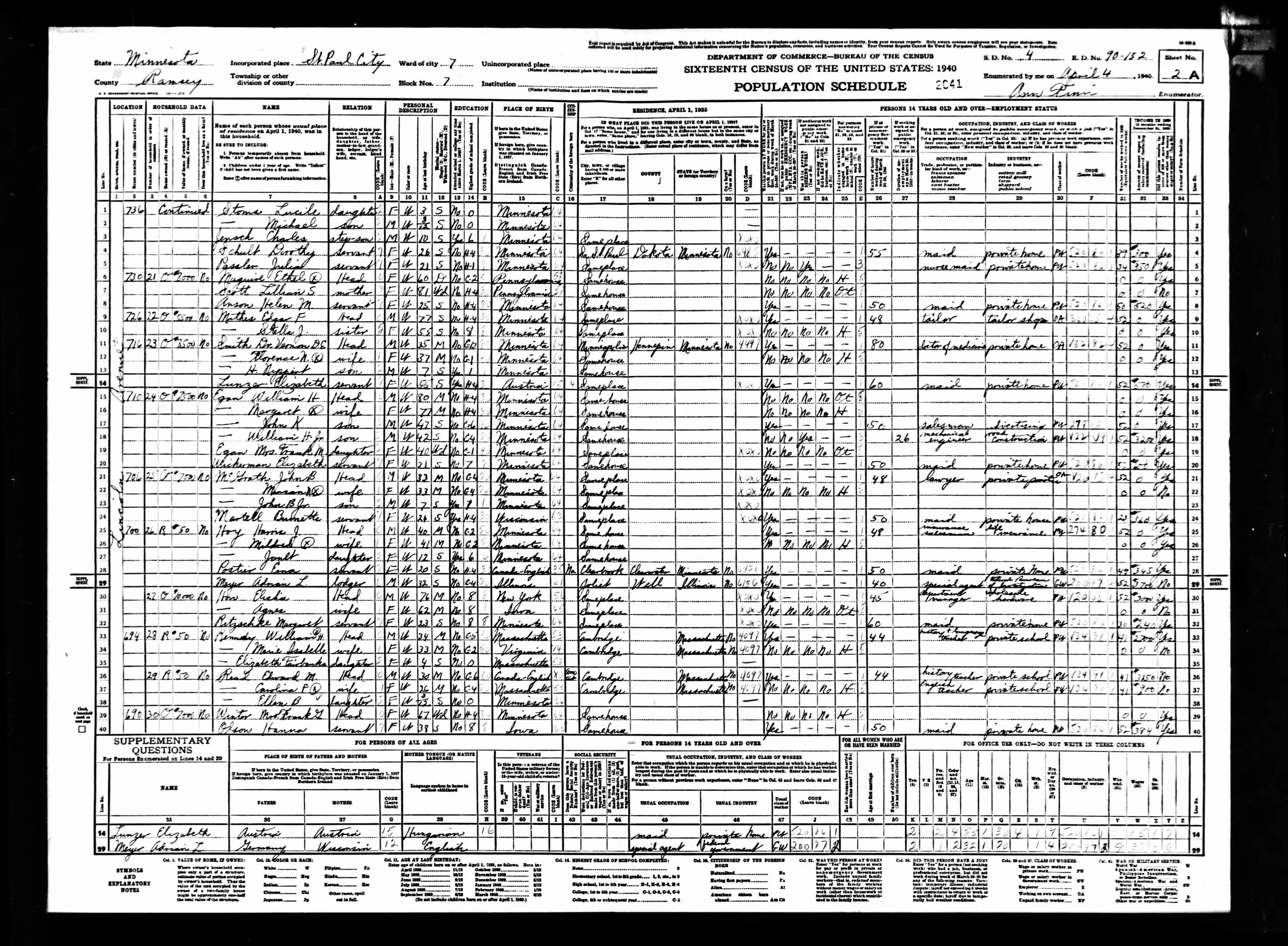
The 1940s saw the Colby family briefly stationed in Vermont.
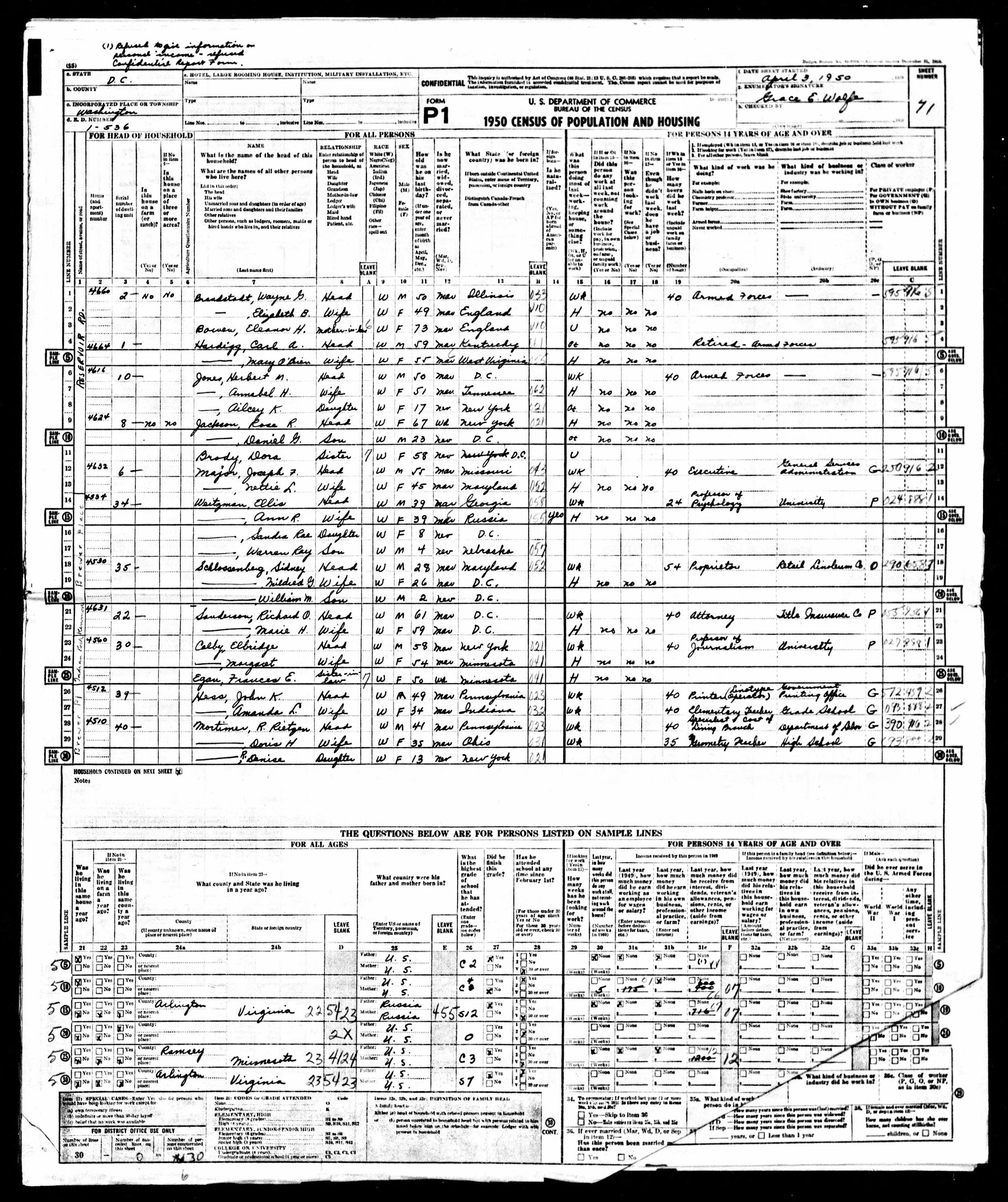
By the 1950s Elbridge was in Washington D.C. working as a Journalism professor at a University.
Congratulations readers, if you made it this far. You now know more about the early life of Bill Colby than the majority of his biographers and court historians at the CIA. You are certainly better equipped to evaluate his actions at the ACLU, and then CIA, than those who have tried to tackle that topic before. If, on the other hand, you’re one of the poor souls who contracted “sick think” nausea while reading this post: the truth will set you free.