J. Rufus Wallingford
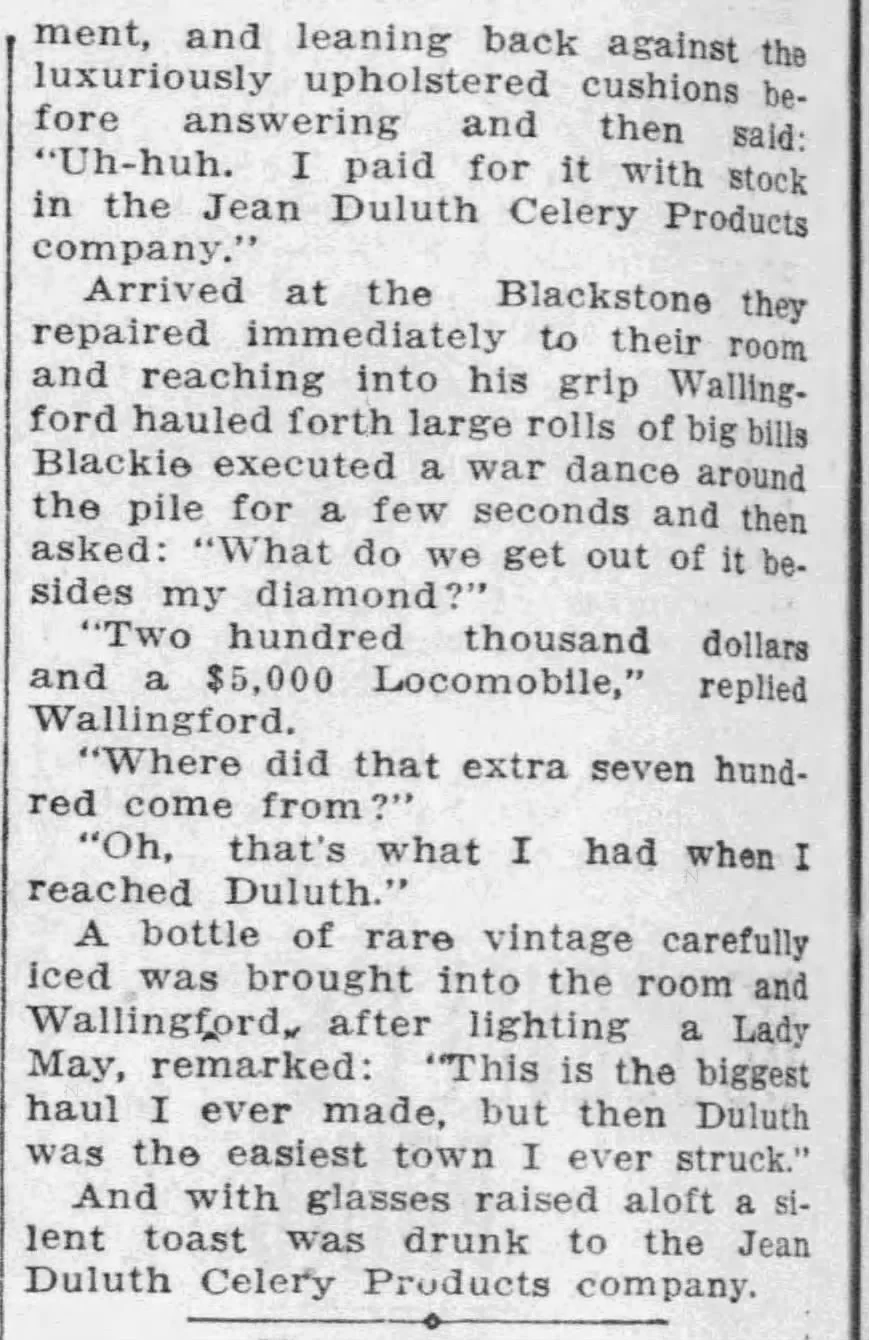
This is not a post about a real person. This post is entirely lifted from the April 7, 1912 Duluth News Tribune newspaper. It only just strikes me that I am posting this clipping on April 7th, 2026, so I’ll take that as a sign of how important it is that I reproduce “How Wallingford Trimmed Duluth” for my own readers.
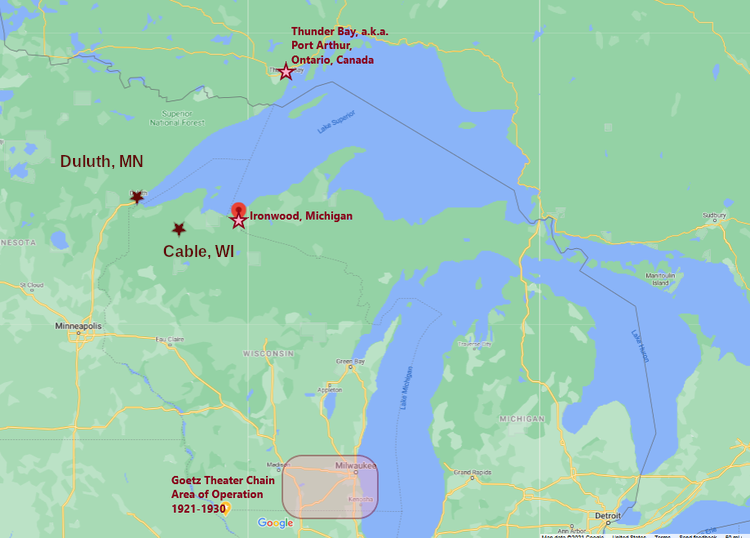
Duluth, MN was home base for the Congdon family, an influential mining family of New England extraction who were on the front lines combating organized-crime sponsored labor unrest in the iron and copper industries. James Jesus Angleton, the CIA counterintelligence pro, married into the Congdon family via their d’Autremont cousins.
Neither angels nor devils, the Congdons were old-school Americans, the type of people who the Bush family pretend to be. People like the Congdons have been on the losing side of things for about one hundred years now and the fictional story reproduced below will give andreanolen.com readers some insight as to why. While J. Rufus Wallingford is not a real person, many of the other characters, including Congdon family patriarch Chester A. Congdon; Duluth poobah J. L. Washburn; and the obliquely-referenced “Morgan-Guggenheim Sydicate”, are.
The stock-swap fraud described in the fictional story below was in real life perfected by Iakov Faktorowicz, a.k.a. “John “The Barber” Factor”, brother of US military cosmetologist Max Factor. In the early 1930s John Factor was convicted of financial frauds back in England, where the family had settled after fleeing “Russian Poland” (Congress Poland), which was north of Austrian Poland (Galicia, as in “Galician Gang”). John Factor fled to the USA to avoid punishment.
Chicago FBI head Melvin Purvis, who recruited James Angleton for the OSS/CIA, helped John avoid deportation back to Great Britain by either incompetence or connivance during the notorious “Factor Kidnapping” debacle. The “kidnapping”, investigated by Purvis personally, dragged on just long enough for the statute of limitations on Factor’s deportation to run out. In addition, Purvis pinned the kidnapping on Al Capone’s and Factor’s Chicago gangland competitor, the Irish kingpin Roger “The Terrible” Touhey. Purvis thereby made Chicago safe for the old Rothstein criminal network out of NYC: the “Galician Gang” or “Supermob”.
After being saved by Purvis, Factor went on to front mob casinos in Las Vegas and was one of John F. Kennedy’s largest political donors. Purvis would later shoot himself under mysterious circumstances.