James Angleton's "Decennium Horrendum"
This is not an easy post to write, and I believe some readers— rational people— will be resistant to what I have to say. I started this website looking at hermeticism in the early film industry and today I can marry that topic with James Jesus Angleton’s expulsion from the CIA.
Angleton’s ouster did not happen overnight, rather it was the product of several years’ positioning by William Egan Colby, and when the axe finally fell Angleton described it as a “coup de grâce”— a mercy killing. Perhaps this makes more sense when you consider that Angleton’s resignation in December 1974 came sandwiched between the filming of a murder movie in his wife’s ancestral home (Spring 1972) and the actual murder of the family matriarch in that home on June 27, 1977.
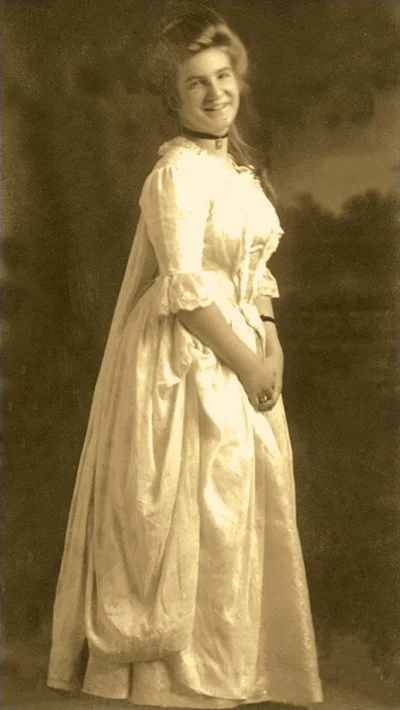
Elisabeth Congdon, Angleton’s wife’s family matriarch, as a teen in 1912.
Participating in organized crime is dangerous. In a previous post I’ve likened it to seeking out the company of the possessed. Quite often these organizations build group loyalty through occult practices, or actually believe their criminal undertakings are protected by some devilish “Santa Muerte”-type demon. It would be a mistake to underestimate the psychological and spiritual pressures swirling around families like the Angletons or the Colbys.
Colby was the product of Minneapolis Bossism: the Egans were a left-wing organized crime family adjacent to the Galician Gang operating in the Upper Midwest. The Galician Gang, an Eastern European Jewish ‘mafia’ sometimes called the “Supermob”, had close ties to the Communist Party and it’s directors from Moscow. If you got on the wrong side of either of these outfits, like former Soviet operative Walter Liggett did in the 1930s when he exposed Galician control of the Farmer Labor Party, you had both the Soviets and the Galicians coming after you.
In the face of Hitler’s disruption of the post-WWI financial order, the Supermob and the Soviet International came together to work with the Gilded Age heirs of Lincoln’s post-war bonanza like the Congdons, but this marriage could never last. Angleton saw his role as documenting the Soviet-leaning half of this partnership as its goals veered away from those of his wife’s class. This is what ultimately got him on the wrong side of Colby.
Angleton’s wife grandfather, Chester Adgate Congdon, had made the family money in mining alongside Carnegie and J. P. Morgan. Part of the reason he could do this was that he Galician-proofed his workforce by only hiring heritage Americans and Northern Europeans (minus socialist Finns). This meant his operations could deliver steel— the lifeblood of American industrialization— when other firms were shut down due to extractive, mob-directed union action. John Greenway, Congdon’s chief spymaster, thought the Italian and Galician union bosses had American industry by the short hairs and, in his letters to Teddy Roosevelt, Greenway compared their organized strikes to coordinated military action. Other industrialists who both recognized the danger of mob bosses perverting unions, and took remedial action to prevent it, were National Cash Register’s John Henry Patterson and Henry Ford. These men represented Anglo-America’s bulwark against Austria-Hungary’s organized crime problem. The Italians and Galicians understood that these industrialists understood them, so when Angleton’s Congdon matriarch was murdered by her adopted daughter, the mobs openly celebrated it in their Duluth movie theater. But I get ahead of myself.

John Greenway to Theodore Roosevelt, The Roosevelt Center. 1/2. In this letter Greenway refers to the Congdon’s copper mining assets in Arizona.
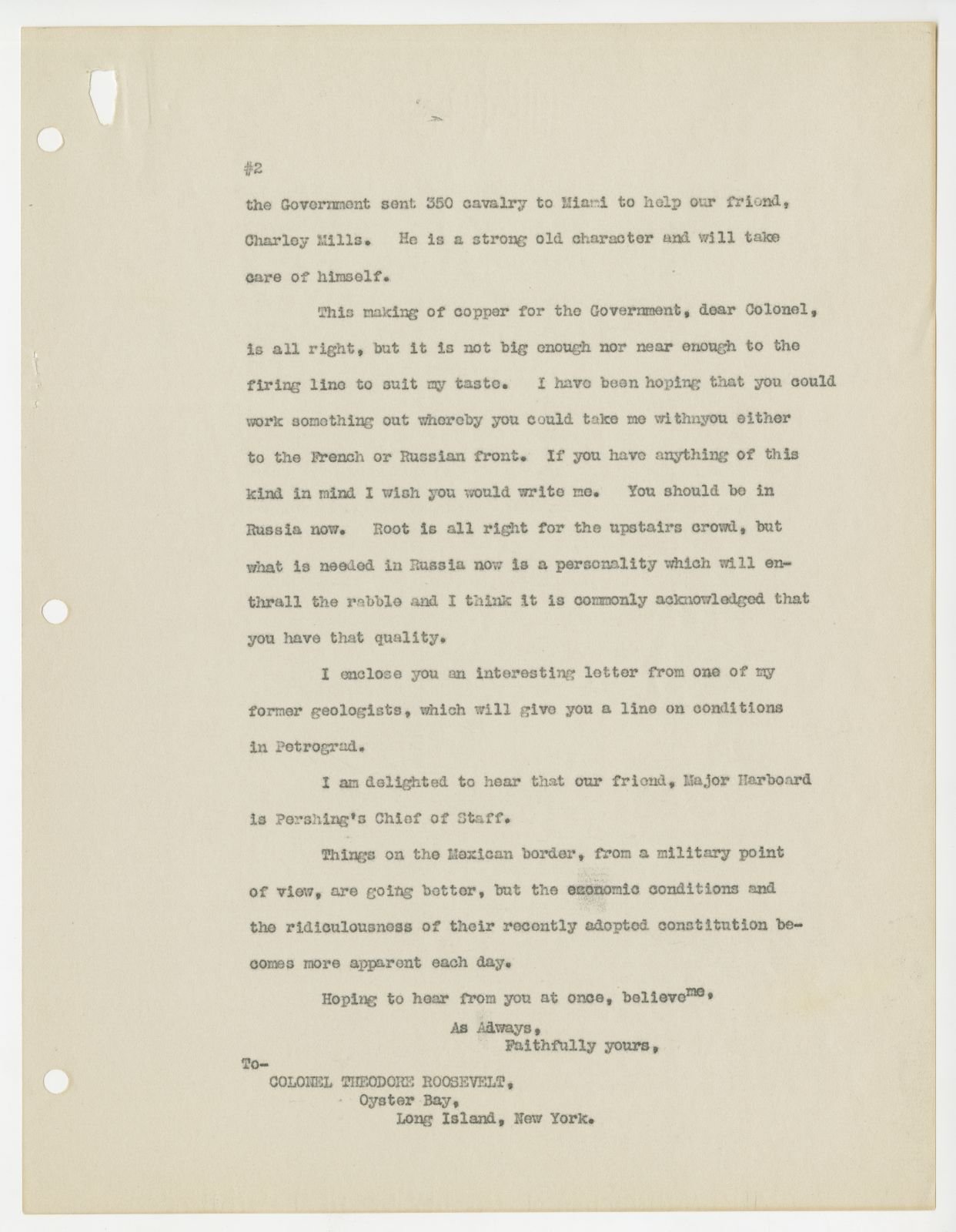
John Greenway to Theodore Roosevelt, The Roosevelt Center. 2/2
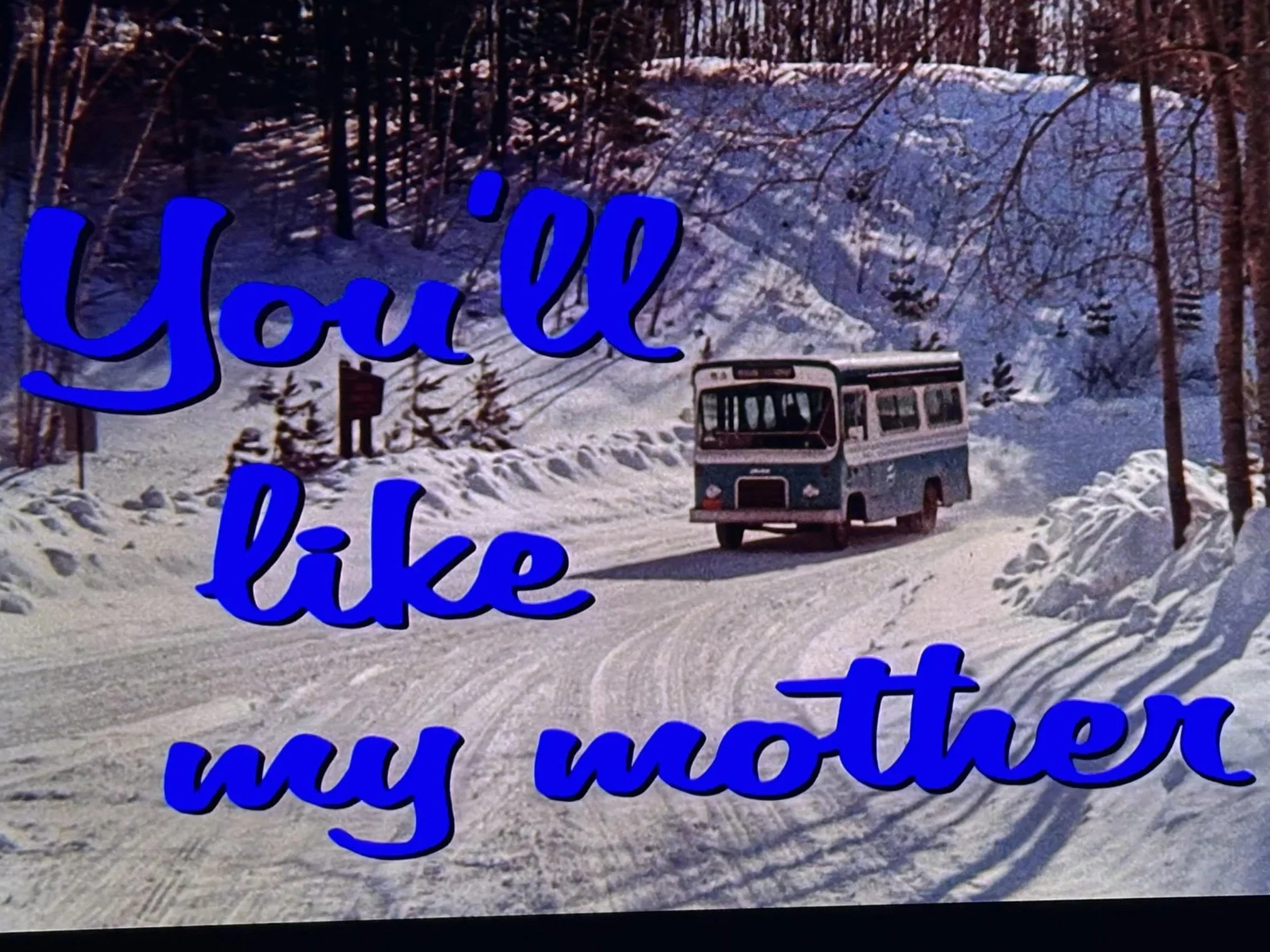
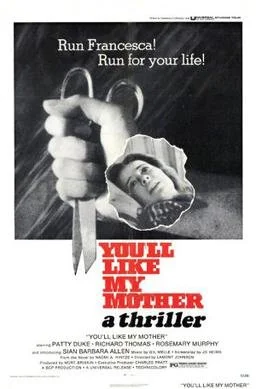
In 1972, when Colby was strategizing on how to rid himself of Angleton and replace the CIA’s anti-Castro Castle Bank with his own Australian “Nugan Hand” outfit, a television movie producer named Lamont Johnson was preparing to shoot a horror movie based on a pulp novel by gothic fiction author Naomi A. Hintze. Johnson could grind out about one movie every six months, with titles like Wallenberg: A Hero's Story (1985) and Lincoln (1988), but in 1972 he actually directed three films, one of which was You’ll Like My Mother.

Lamont Johnson, a still from 1955 when he was acting in TV series “Treasury Men in Action”. That’s a reference to the Secret Service, originally staffed by Lincoln gangsters. Note the lionization of “G-Men” around Melvin Purvis II twenty years before.
The plot for You’ll Like My Mother couldn’t be simpler: a young war widow travels to meet her mysterious mother-in-law, only to be presented with an imposter whose son is a psychopathic killer. For some reason, Lamont thought the only suitable location to film this was the home of Angleton’s in-laws, the palatial Glensheen Manor in Duluth, Minnesota.
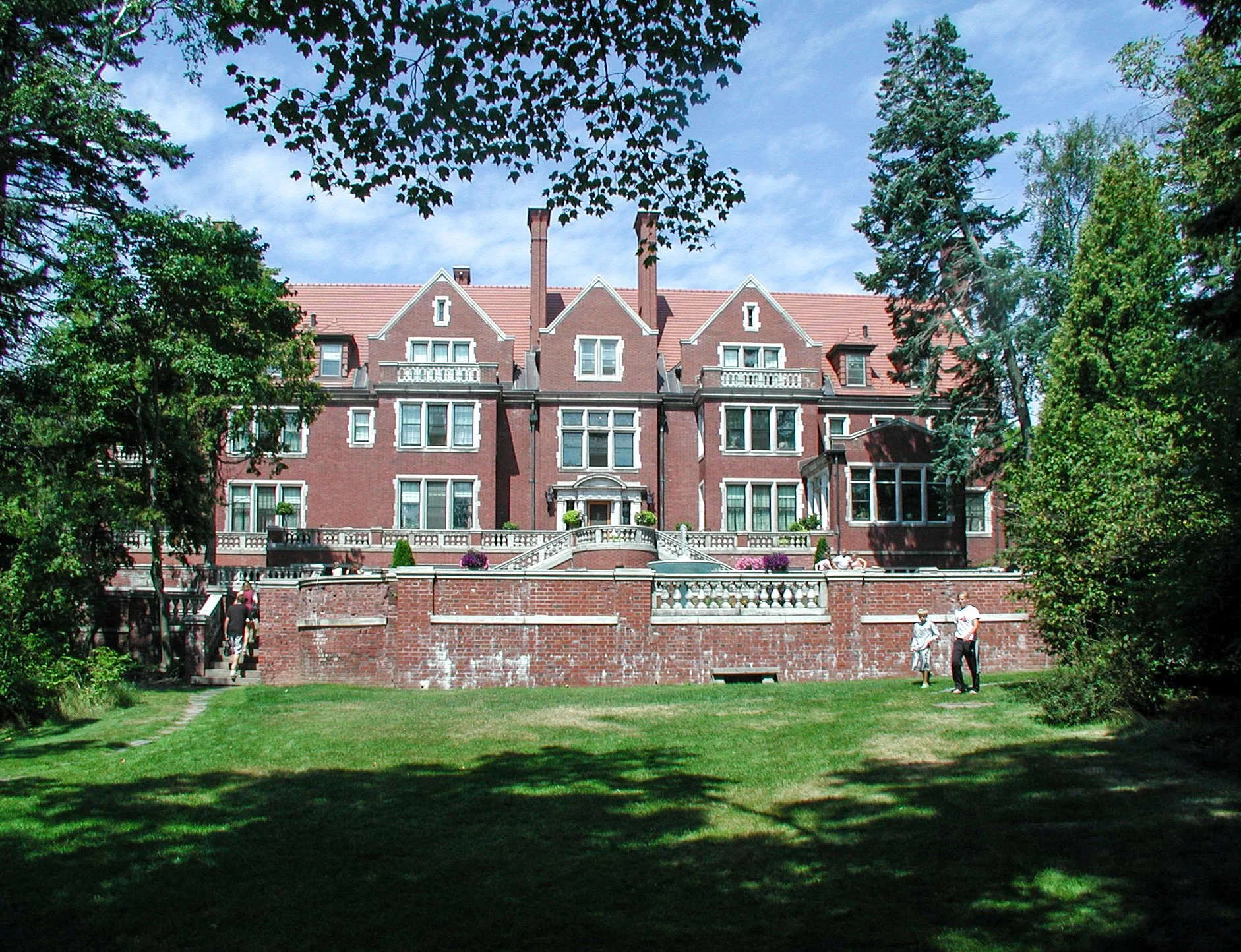
“Lake side view of Glensheen” By Learjet at English Wikipedia - Transferred from en.wikipedia to Commons., Public Domain, https://commons.wikimedia.org/w/index.php?curid=3865034
Glensheen has now the property of the University of Minnesota, which maintains it as a kind of museum about the Congdons. Student tour guides will not talk about the murder, but you can buy a book on it titled “Will to Murder” at the gift shop. This book was written with the help of public prosecutor John DeSanto and Duluth Sheriff Gary Waller, who are not shy about their lack of professionalism investigating and prosecuting the case. All page references in this post refer to this strange book.
By the time You’ll Like My Mother landed on Lamont’s desk, Gleensheen was inhabited by the last of Chester Congdon’s daughters, Elisabeth. She was the owner of the home and lived alone with a rotating nurse, a small house staff and a gardener. In the 1970s Duluth was the type of place where you didn’t have to lock your doors, so there was no security staff. Elisabeth was a sheltered and eccentric person who had never been married and yet had control of a vast portion of the Congdon wealth. She had no worldly protection, and when Lamont came proposing to shoot a glamorous Hollywood movie with a handsome leading man, the elderly Elisabeth was only too happy to invite his crew in. They would even pay to have the house cleaned afterwards!
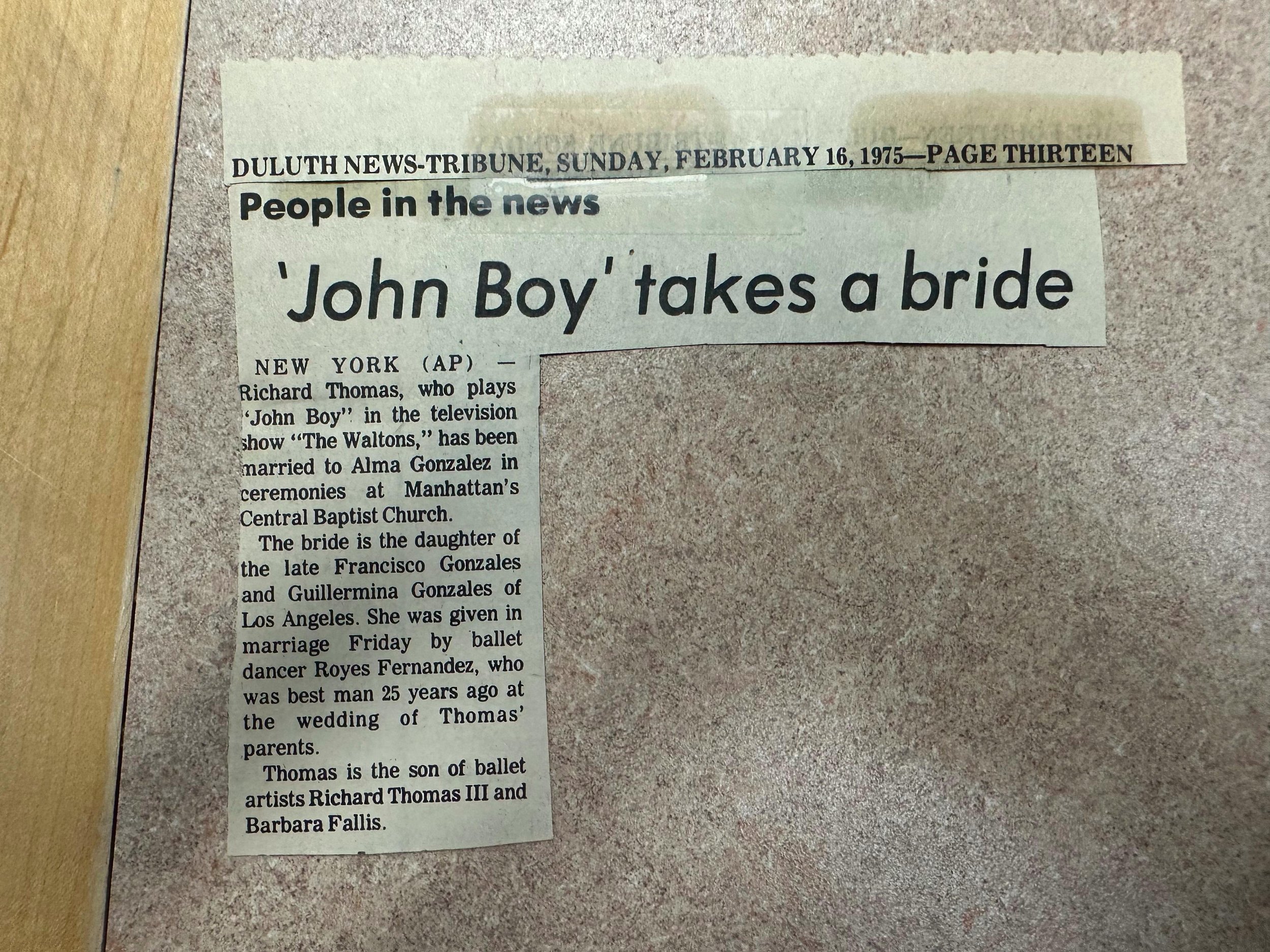
The elderly Elisabeth was somewhat taken with Richard Thomas, the star of the film, and kept clippings on him until her death. The Congdon ladies used the movie’s Duluth premiere to arrange a fundraiser for local charity. Elisabeth was shocked when she actually saw the movie.
Despite her vast wealth, Elisabeth didn’t have an easy life. Desperate for children, she had adopted two baby girls in the 1930s, the eldest of whom she named Marjorie after her sister. Marjorie had mental health problems which were evident from an early age, problems which were probably best described as psychopathy. Marjorie would have really violent temper tantrums; lie with abandon; and spend money extravagantly. Her behavior only got worse as she got older and as a teen the family had her undergo a psychiatric evaluation at the renowned Menninger Clinic, which resulted in a diagnosis of “sociopath”. To her credit, Elisabeth didn’t try to have Marjorie’s problems erased with a lobotomy like Joe Kennedy did to his daughter Rose, but at the same time Elisabeth didn’t get Marjorie the help she needed, either. The family tried to keep Marjorie’s problems a secret, but by 1972 a number of those secrets had crept out into the open.
The spending, for one, was a public embarrassment. Marjorie would wrack up enormous bills with department stores and have them sent to her mother. Eventually Elisabeth had to ask retailers to stop giving Marjorie credit. Marjorie even bought a stud stallion using her mother’s forged signature, which, when discovered, Elisabeth duly honored. When Marjorie eventually had children of her own she lived vicariously through them via competitive figure skating, as her husband Dick LeRoy explained “she wanted to be the mother of a figure skating champion”. (Will to Murder, p 67) Marjorie would alienate the other skater-parents with dirty tricks in an attempt to get her star son ahead, even to the point of bribing a Minnesota coach with a “pedigreed Siamese kitten” which became the talk of the town. (p 68) In 1974, as middle-aged Marjorie became desperate for ever greater sums of money, she tried to poison Elisabeth with marmalade containing a sedative called meprobamate, which was popular around Hollywood about ten years prior. (p 26) It nearly worked, Elisabeth was sick for days, but the matriarch decided to “save face” and not make a formal charge with the police. However, household staff and nurses, as well as the trustees of the Congdon Office Corporation were made aware of the problem— they kept a locked file on Marjorie’s behavior in their office (p 66). One suspects Marjorie’s contact at the Marquette National Bank in Minneapolis, E. Thomas Welch, the man who since 1968 administered her trust and paid her creditors, understood the situation too. Anyone with ears around Duluth or Minneapolis would have heard a lot of interesting things about James Angleton’s in-laws.
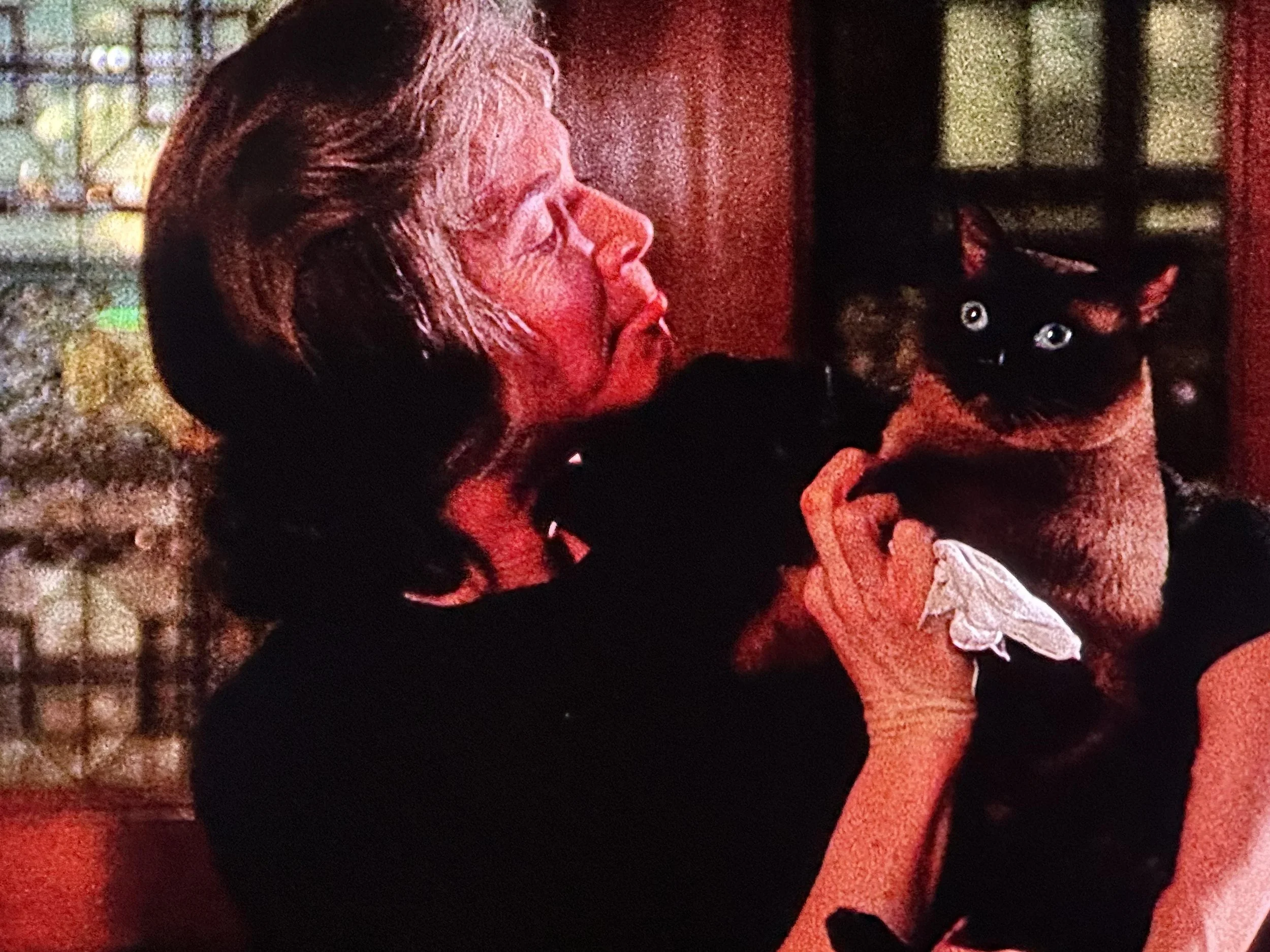
And, wouldn’t ya know it! A sprinkling of these embarrassing details made it into Lamont’s movie. Besides the obvious parallel of the imposter (adoption) psychopath son, Lamont chose to give a number of gratuitous cameos to a rather striking Siamese cat.
And the imposter mother, who enables her son’s killing sprees, has a penchant for ostentatious luxury clothing.
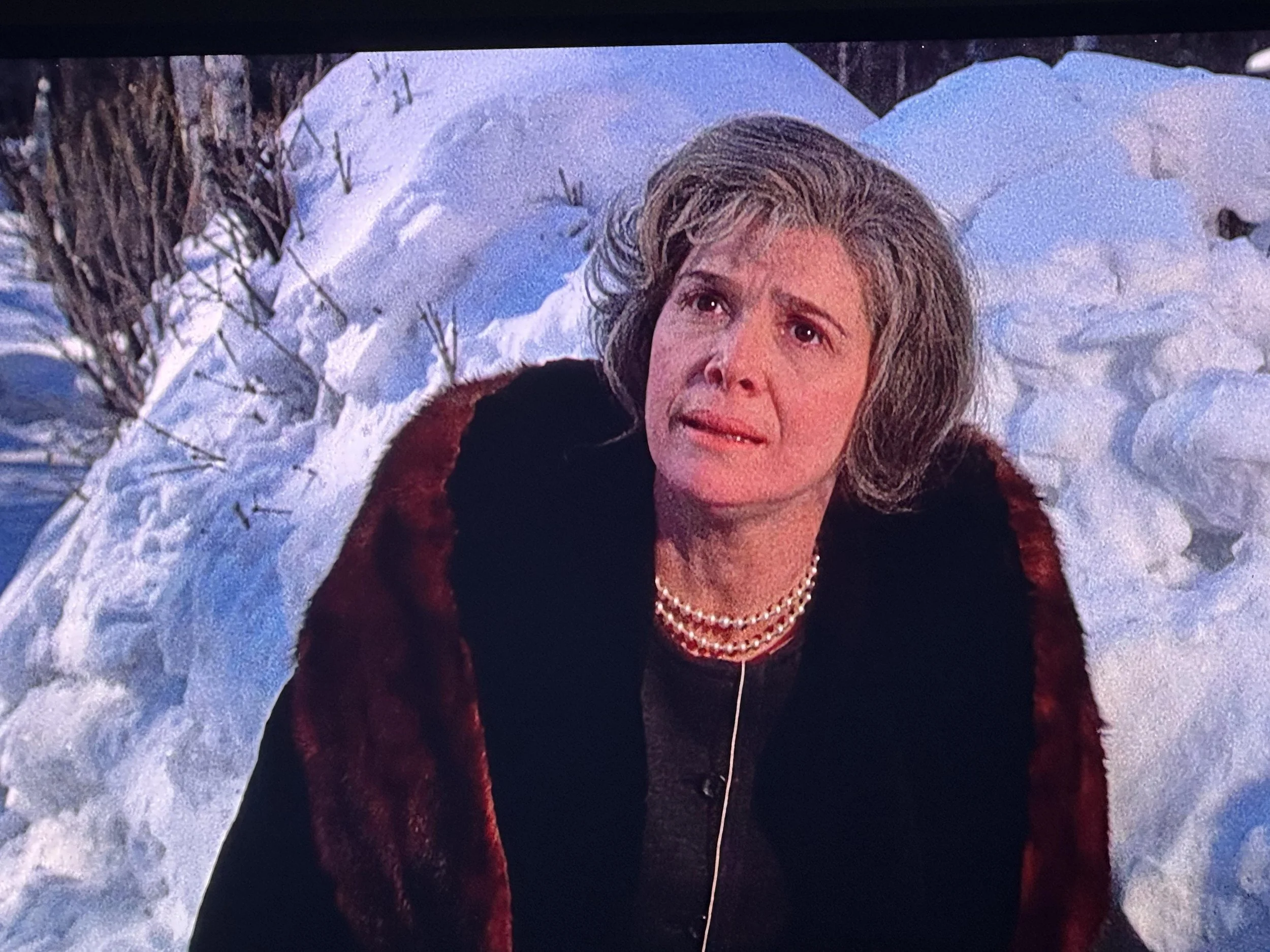
The imposter “Mrs. Kinsolving” is played by Rosemary Murphy.
And in the penultimate scene, where the psychopathic son (played by not-yet-famous Richard Thomas) is gearing up to rape and kill the widow, a fetching marmalade pot steals the scene inside the Congdon’s luxurious breakfasting room.
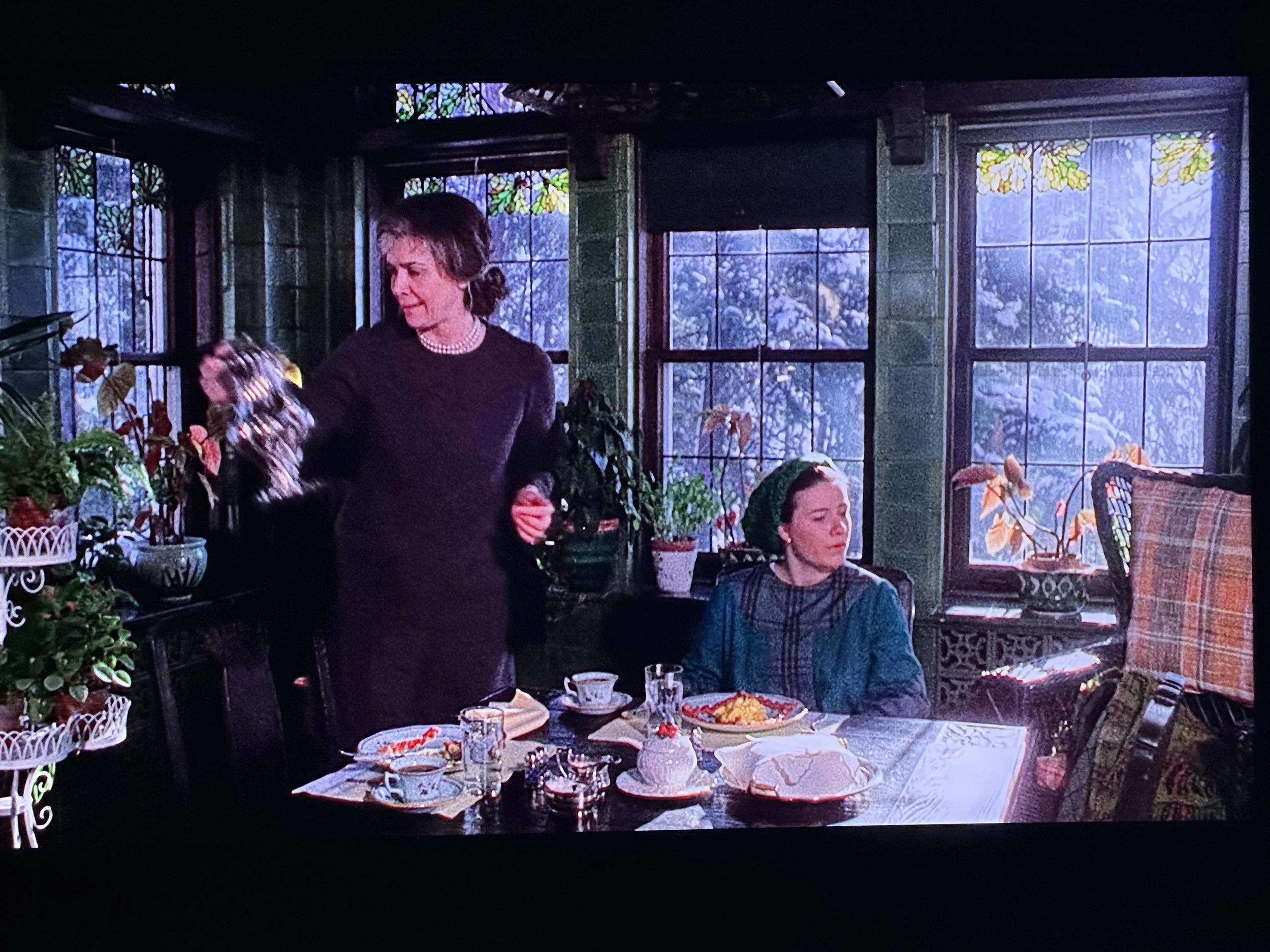
The Kinsolving widow was played by Patty Duke (in blue).
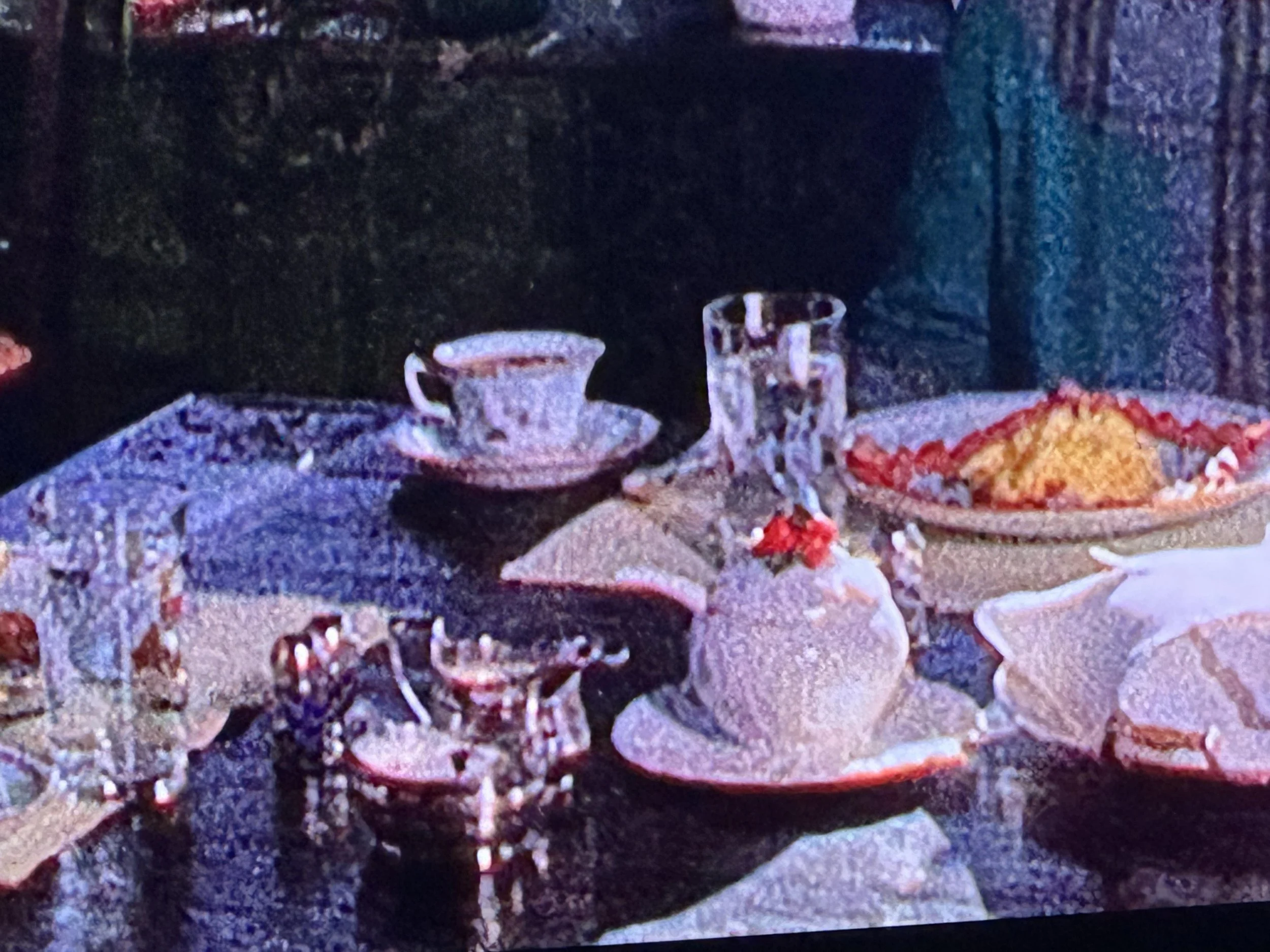
Marmalade is ready for its close-up!
Lamont made it very clear that the ‘old money’ family in his movie, the “Kinsolvings”, were entirely based on the Congdons. In the story, the old house was built by the “grandfather” of the widow’s veteran husband, a perfect correlation to Angleton’s wife’s grandfather, Chester A. Congdon. Reference is made to reducing the Congdon’s political influence when Murphy’s character states in her first scene: “The house is a museum more than anything else, full of the relics of the great Kinsolving past”. (Consider focusing intent in Aleister Crowley’s magick.) The Congdon’s famous carriage collection is the locale for the film’s final chase/murder. Frankly, the movie borders on character assassination. But things get darker than that, readers.
The movie presages Elisabeth’s murder in 1977 in ways that cannot be explained by contacts inside Duluth’s police force nor the Congdon Office. For instance, the film’s high-suspense hiding and chase scenes happen on the main staircase, where five years later Elisabeth’s nurse would be gruesomely murdered after the elderly Elisabeth was killed in her bed. The movie contains multiple bed scenes where “Kenny” shares inappropriate intimacy with his mother.
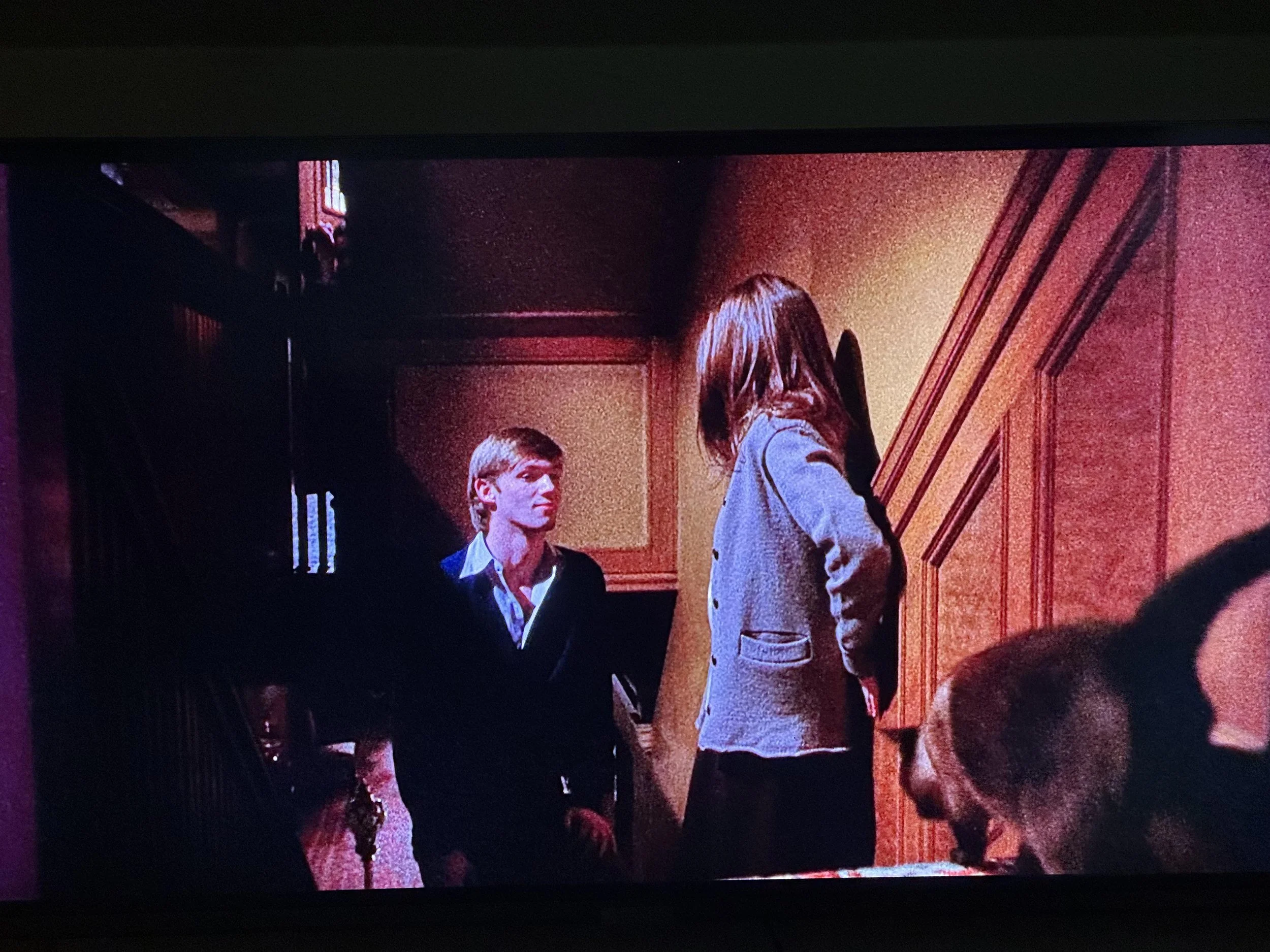
In the movie, “Kenny” threatens his family in fits of rage. Here you see Thomas on the stairs where Elisabeth’s night nurse would be bludgeoned to death in five years’ time.
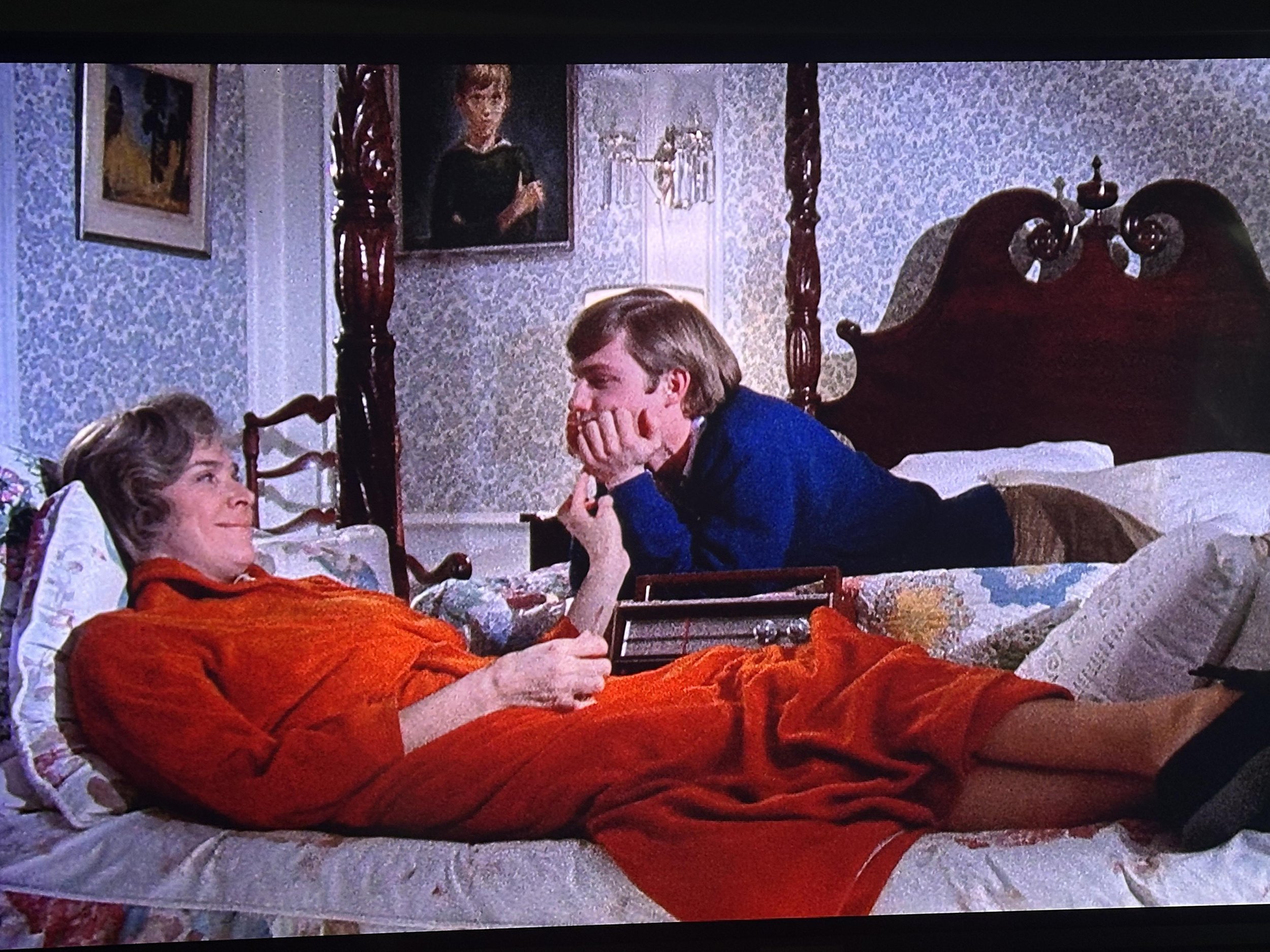
In mama’s bed….
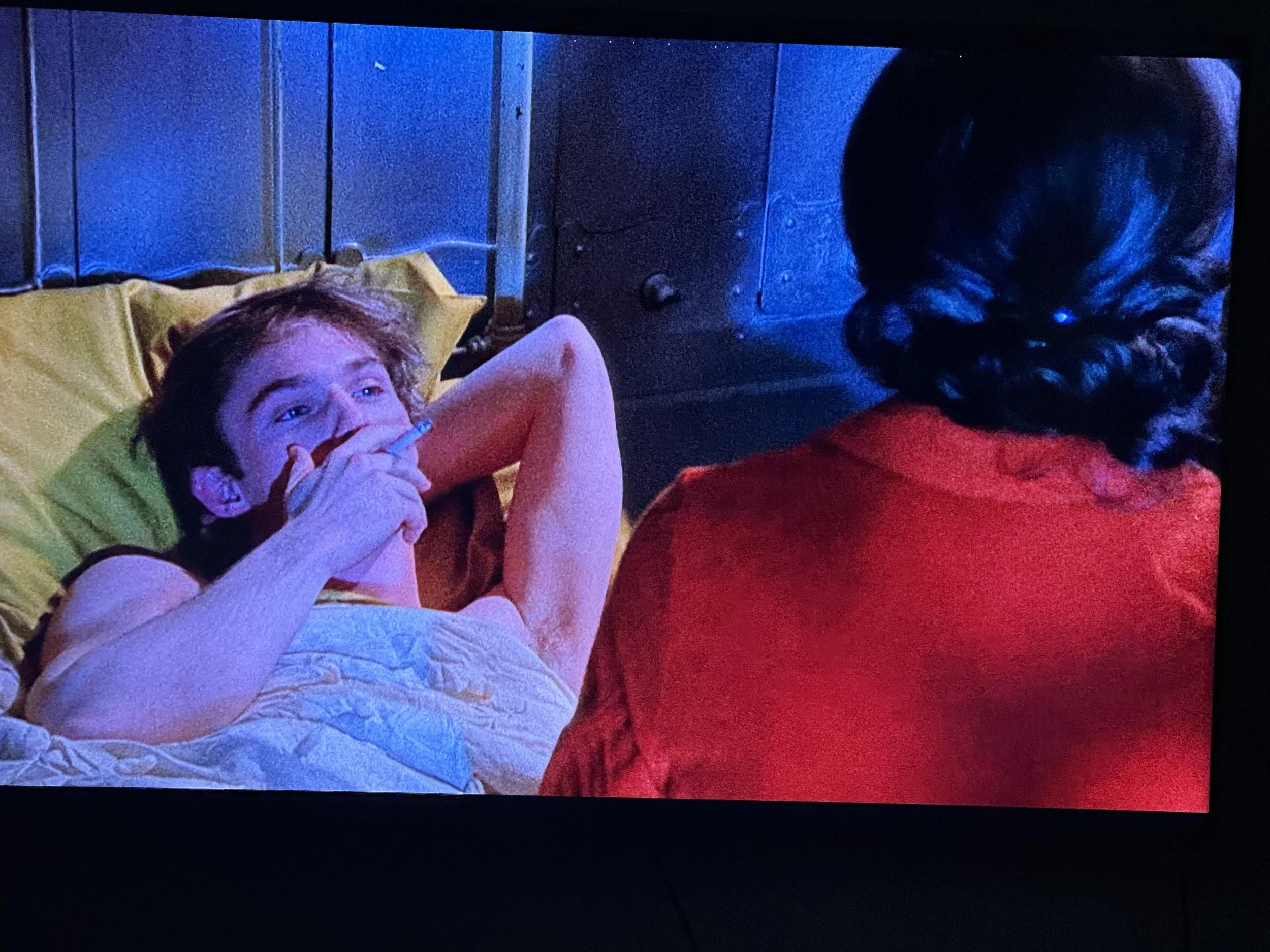
Transgressive behavior in family members’ beds is a recurring theme in “You’ll Like My Mother”.
The movie also has a connection to a later murder that Marjorie probably committed in 1980, that of Helen Hagen. Helen, a friend from Marjorie’s ice-skating-mom days in the 1960s, was in her sixties and in a nursing home suffering from Alzheimer’s Disease when Marjorie likely fed her poisoned baby food. Marjorie was having an affair with Helen’s husband Wallace after Marjorie’s second husband, Roger Caldwell, had been convicted of killing Elisabeth and was in prison. (Marjorie went on trial for her mother’s murder too, but was acquitted thanks to the incompetence of prosecutor John DeSanto— more on that in a minute.) In Lamont’s 1972 film, “Mrs. Kinsolving” is a nurse who drugs the widow’s cocoa in order to prevent her discovering Kenny, who is on the lamb from a murder/rape conviction.
We must assume that Marjorie Congdon saw You’ll Like My Mother before she— at very least— participated in the murder of her mother and Helen Hagen. It’s impossible for us to know what effect that film had on the mind of a mentally ill woman who was running from creditors and nurturing high-stakes fantasies of Olympic ice skaters and stud ponies. We don’t know how suggestible Marjorie was. We can say for sure that the financiers of early film believed whole-hardheartedly in film’s ability to “animate the image”, give real-world power to the intention of their hermetic spells. Could a damaged woman have been the intended vector for some power-obsessed wizard’s willful thinking about a rival family?

When hermeticists cast spells— or as they sometimes call it, cast images— the components of the image are important. Long-time readers may remember my writing on Empress Sisi’s “stars”, the twenty-seven diamond stars with which she ornamented her fetishized hair, or her opulent ruby jewellery. A quintessential hermetical work, The Picatrix, identifies combinations of diamond and ruby as useful in spell-work designed to dam-up the creative potentialities.
In line with this thinking, one would expect the actors in Lamont’s movie to have some meaningful relation to the working. As it turns out, Richard Thomas’ family is exactly the type of family one would hope that counterintelligence chief James Angleton was watching.
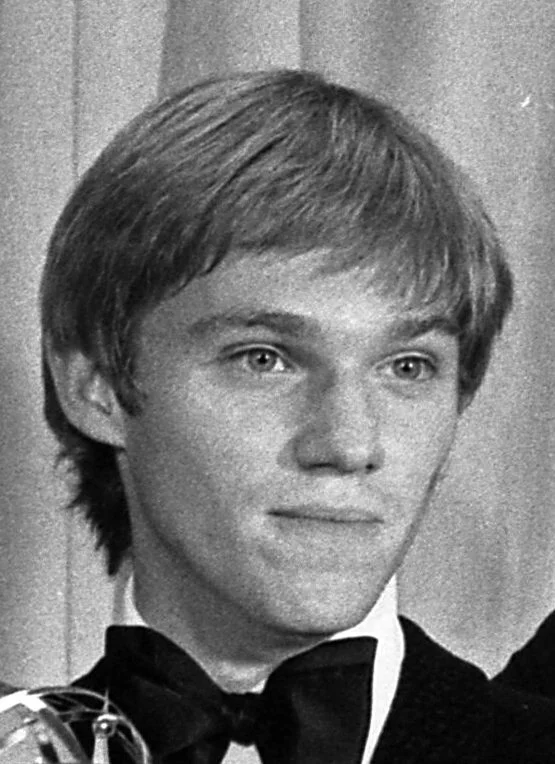
Richard Thomas in 1973.
Both of actor Richard Thomas’s parents, Richard Scott Thomas and Barbara Fallis, were dancers in Cuba’s Company Alicia Alonso in the early 1950s, which thrived under President Fulgencio Batista. Company Alicia Alonso became the National Ballet of Cuba when Fidel Castro came to power and kicked out the Galician Gang and Mafia. Castro gave Alonso money so that her dance company could become the cultural face of Cuban Communism. (Alonso herself was from a wealthy Cuban family and largely insulated from the horrors regular Cubans suffered under both Castro and Batista.)
The funny thing is, Alicia’s career got its start in New York City dancing for Cecil de Mille’s niece Agnes. Cecil de Mille was one of the directors who flourished with the Galician Gang’s takeover of Early Cinema under Roosevelt direction. When she suddenly went blind after moving to NYC, the American Ballet Theater’s assistant conductor, Benjamin Steinberg, protected Alonso’s career and bent backwards to give the disabled prima ballerina choice roles. Steinberg also toured with the Ballet Russe de Monte Carlo, which brought Alonso and the Thomases together and gave Alonso a huge amount of stage time in the USSR. Steinberg was a ‘Civil Rights activist’, his shtick being marketing black musicians, composers— much like Orson Welles’ “Voodoo Macbeth” fiften years before. I gently remind readers that whatever Steinberg didn’t like about NYC’s symphonic scene was a direct result of Yiddish Theater barons’ and Otto Kahn’s patronage, but Steinberg forgot to mention that part.
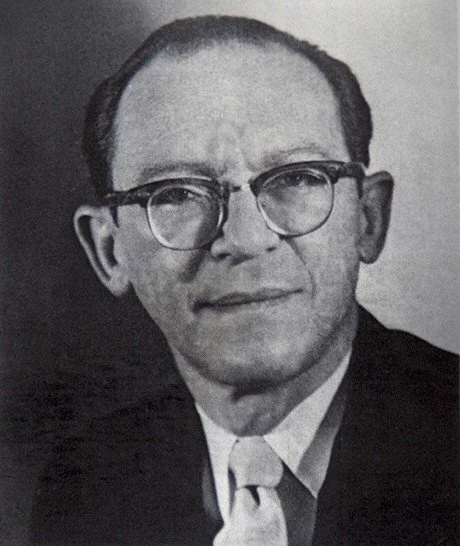
Benjamin Steinberg, drummer-boy for racial justice.
Thomas’s parents, Richard Scott Thomas and Barbara Fallis, met Alonso in New York City where the three danced with Steinberg’s companies. The trio and Steinberg set off for Cuba to set up Alonso’s Ballet school under Batista and the Galician Gang contacts he cultivated. When Alonso did her deal with Castro, Steinberg became the first music director and conductor of the Cuban National Ballet, from where he organized a tour of the USSR as conductor of the Cuban National Ballet Symphony Orchestra. He, like Alonso, was a cultural face of the Cuban communist dictator (who didn’t have a lot of time for blacks).
Alonso was a tyrant and Cuba sounded more fun than it actually was, so Richard Scott Thomas took his wife and young son back to New York City in the mid fifties, left to join the circus, and then returned to NYC again to start teaching ballet around the edges of the great companies (which always made time for him). Thomas ended up running Mr. Feld’s New Ballet School, the goal being to train “minority” students, but financial mismanagement lead to its eviction and closure. Thomas still had enough money to buy a farm in Kentucky where he bred foxhounds and horses until his death in 2013. His son meanwhile had a better career in television acting than most actors can expect: immediately upon his completion of You’ll Like My Mother, Richard Thomas Jr. was offered his breakthrough role as “John Boy” on the TV serial The Waltons. Thomas Jr. found acting roles quite consistently into his old age and married into the wealthy Bischoff clan, a Pueblo family with German names, who deal by appointment in Native American art.
“Kenny’s” mother, “Mrs. Kinsolving” is played by Rosemary Murphy, daughter of American diplomat Robert Daniel Murphy, the leader of Franklin Roosevelt’s “Twelve Apostles”, a spy network based in the State Department. Murphy was born in Milwaukee and was one of the Wisconsinites, alongside Mar-A-Lago’s Joseph E. Davis, on whom FDR relied to make his partnership with Stalin go down smoothly.
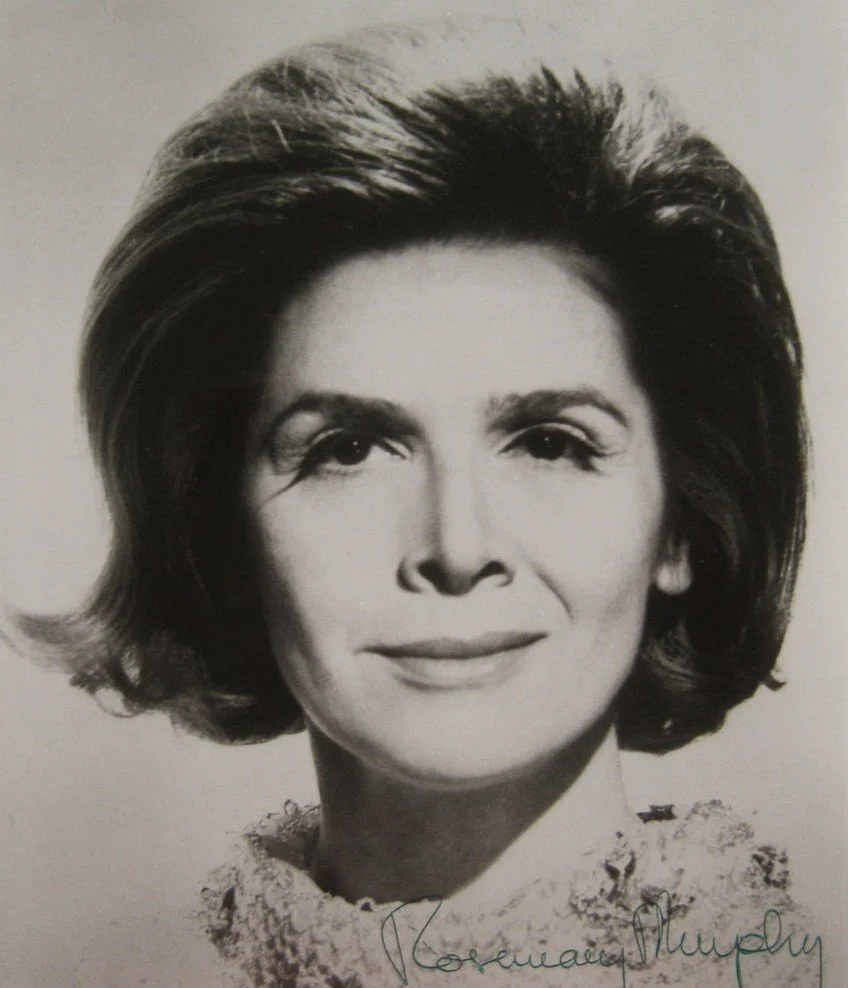
Rosemary Murphy in 1970.

Robert Daniel Murphy
Murphy was key to laying the groundwork for the Office of Strategic Service’s operations in North Africa in 1942 where communist-sympathizers in the OSS like Donald Chase Downes were free to effect their political goals under the guise of wartime expediency. After 1947 Angleton was not friendly to these opportunists. Murphy was very close to Dwight Eisenhower, just like “Ike’s Soldier” Henry Crown, and was appointed advisor to General Lucius D. Clay, the military governor of American-occupied Germany. From there Murphy became a ‘permanent Washington’ figure. When Bill Colby was head of the CIA, Murphy was chairman of the Intelligence Oversight Board. So it was this character’s daughter who provided the “image” for the Congdons in Lamont’s invocation.
One of the most curious aspects of the whole Glensheen Murder/You’ll Like My Mother phenomenon is the Mafia/Galicican Gang connection. All her adult life Marjorie Congdon would brag about her mafia connections. As a person always in need of money, who also had access to the Congdon wealth and political machinery, Marjorie certainly would have been a person of interest to Minnesota’s underworld, and according to her she was connected in Colorado too. The mob came out in force after the murder of her mother and during Marjorie (and her husband’s) trials.
When news of Elisabeth’s murder spread, the local “Norshor Theater” replayed You’ll Like My Mother in celebration.

Duluth News-Tribune, June 30, 1977.
Who were the theater’s management? The manager was a man named Don Hanson and the company was owned by Henry G. Plitt, proprietor of a string of movie theaters that originated in Chicago. Henry Plitt married into the Maceo Mafia family of Galveston, TX. In the mid 1950s Plitt was president of “Paramount Gulf Theaters Inc.”, the holding company for Paramount’s Southern movie theater assets. (Paramount was careful to separate its component assets so that it wouldn’t be busted like the Edison Trust.) Plitt was also president of the ‘West Coast Friends of Bar-Ilan University’ in Israel.

Los Angeles Times, May 7, 1986.
I remind readers that Elizabeth’s father had cut into Galician profits when he refused to hire workers from nationalities under their criminal thumb, nor those from under the Mafia’s thumb. This included not only Italians and Eastern European Jews, but also socialistic Finns. In addition, Chester Congdon spent a good amount of time frustrating mob politicians in Minneapolis who wanted a bigger cut of the northern counties’ mining profits. Colby’s in-laws, the Egans, would not have been pleased with the Congdons.
But it wasn’t just the Galicians crowing. To explain why, I’ll start by looking at a 2003 book titled Will to Murder: The True Story Behind the Crimes and Trials Surrounding the Glensheen Killing. It was written by Gail Feichtinger, a Duluth News-Tribune journalist, on behalf of the prosecuting attorney John DeSanto and Duluth’s sheriff at the time of the murders, Gary Waller. The book seems to revel in the incompetence of these two, who do not appear to feel any remorse or embarrassment regarding their exposure. For instance, Waller’s men made no effort to protect the crime scene which became thoroughly contaminated; they failed to properly catalogue any of the photographic evidence; and willfully ignored evidence that pointed to more suspects than just Marjorie and Roger. DeSanto ran a bumbling case against the pair, resulting in Marjorie’s acquittal and Roger’s conviction being reversed a few years later.
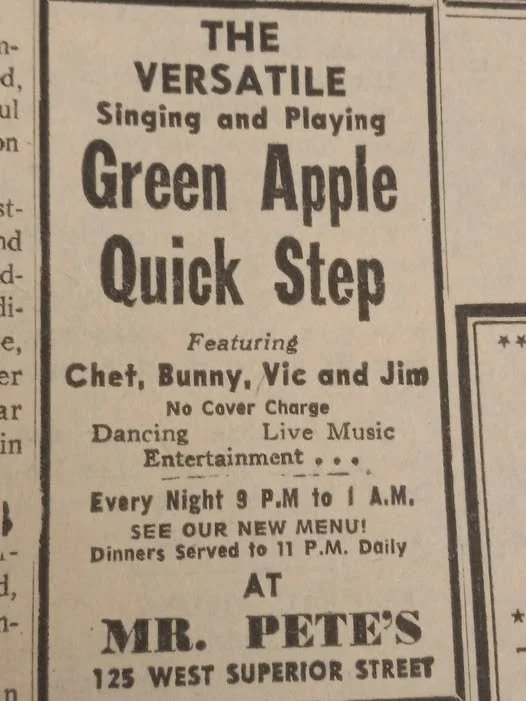
Perhaps even more disquieting than DeSanto’s complacence is how Feichtinger introduces him: the state prosecutor makes a $10 bet with a washed-up bartender named Bobby Daniels, one of the ex-fighters in the Galician Gang boxing scene, who in 1977 was running DeSanto’s favorite watering hole “Mr. Pete’s”. “You’ll never catch the person who did this” Daniels wagers. Of course, DeSanto never did get Marjorie, the gal with the mob connections.
John DeSanto was the protege of local millionaire Jeno Paulucci, who would turn up to watch Marjorie and Roger’s trials. DeSanto’s father worked for Paulucci, and his mother was ethnically Finn. (Paulucci himself was the son of an out-of-work Italian miner who opened a speakeasy during Prohibition.) The pair were so close that Paulucci lent John DeSanto his Florida home for John’s honeymoon. Who was Jeno Paulucci?

“Jimmy Carter - With Jeno Paulucci and John Volpe and Board of Directors of the National Italian-American Foundation, Fr. 3-19; National Advisory Council on Economic Opportunity”
Paulucci was a founder of the National Italian American Foundation which fights perceptions of Italian-Americans as mafiosi. The problem is, Jeno Paulucci’s business practices made him look very much like he was part of the Mafia. You see, Paulucci made it big using Minnesota state subsidies to sell canned Chinese food and frozen pizzas in the USA and Canada over a time frame that the Department of Justice noticed mob activity explode in these industries. From the “Pennsylvania Crime Commission 1980 Report on Organized Crime and the Cheese and Pizza Industry”:
The Report which follows is the result of a two-year investigation of the pizza and cheese business in Pennsylvania and its ties to Organized Crime figures in the State, other states and Canada.
The widespread illegal activities of the controllers of these businesses have cost Pennsylvania taxpayers incalculable millions of dollars in state, local, and federal taxes; provided safe-harbor for hundreds of illegal aliens; driven out legitimate business competition; cost human life through murder, and arson; and provided millions of dollars in cash for Organized Crime.
Paulucci’s business model overlaps with mob takeover of the food supply industry that I documented in James Angleton and the Mobbing of the US Economy— a takeover which happened on the back of Lucky Luciano and Meyer Lansky’s partnership with the OSS/CIA. Other magnates getting into frozen food at this time included Joseph E. Davis and his wife Marjorie Merriweather Post, FDR’s Stalin-helpers.

Omaha World Herald, August 2, 1968.
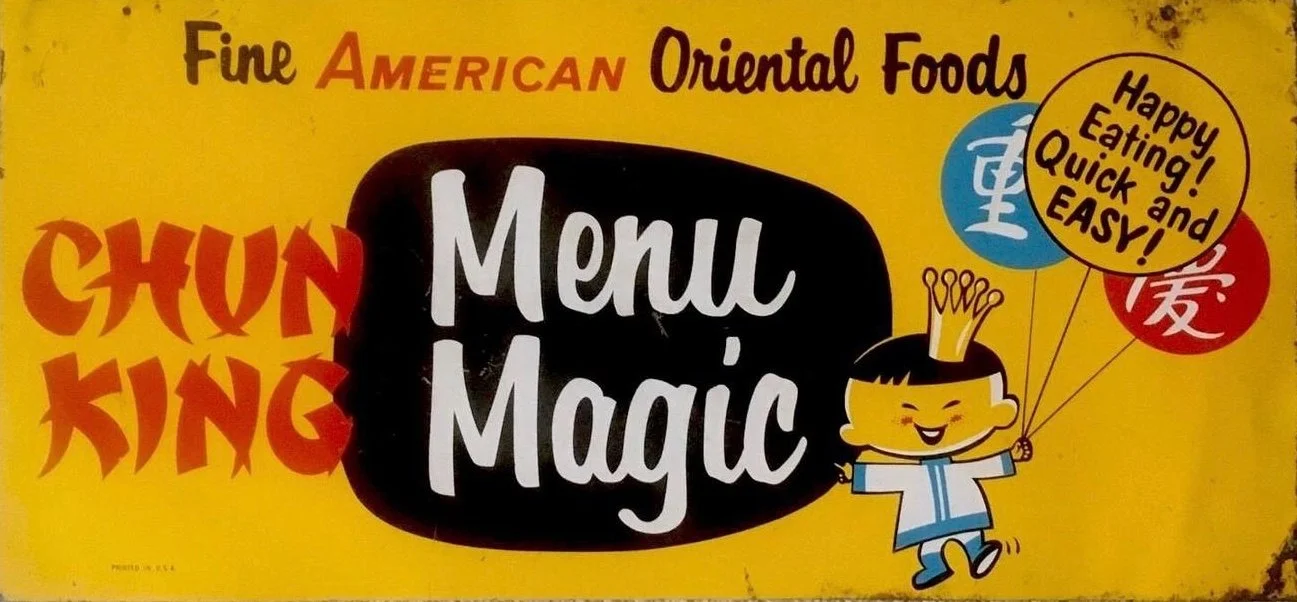
Things didn’t get any cleaner for Jeno when R.J. Reynolds Tobacco Company bought him out. You see, after the sale Paulucci became an executive for RJR. Following Paulucci’s appointment and departure, the European Union brought a money-laundering suit against RJR, alleging that RJR used cigarette sales to launder money for “Latin, American drug cartels, Italian and Russian mafia, and Saddam Hussein’s family” to name just a few. From the EU lawsuit:
21. The primary source of cocaine within THE EUROPEAN COMMUNITY is Colombia. Large volumes of cocaine are transported from Colombia into THE EUROPEAN COMMUNITY and then sold illegally within THE EUROPEAN COMMUNITY and the MEMBER STATES. The proceeds of these illegal sales must be laundered in order to be useable by narcotics traffickers. Throughout the 1990s and continuing to the present day, a primary means by which these cocaine proceeds are laundered is through the purchase and sale of cigarettes, including those manufactured by the RJR DEFENDANTS. Cocaine sales in THE EUROPEAN COMMUNITY are facilitated through money-laundering operations in Colombia, Panama, Switzerland, and elsewhere which utilize RJR cigarettes as the money-laundering vehicle.
22. In a similar way, the primary source of heroin within THE EUROPEAN COMMUNITY is the Middle East and, in particular, Afghanistan, with the majority of said heroin being sold by Russian organized crime, Middle Eastern criminal organizations, and terrorist groups based in the Middle East. Heroin sales in THE EUROPEAN COMMUNITY and the MEMBER STATES are facilitated and expedited by the purchase and sale of the DEFENDANTS’ cigarettes in money-laundering operations that begin in THE EUROPEAN COMMUNITY and the MEMBER STATES, Eastern Europe, and/or Russia, but which ultimately result in the proceeds of those money-laundering activities being deposited into the coffers of the RJR DEFENDANTS in the United States.
All these big-money deals bought Jeno the ear of many world leaders, including Presidents Carter and Ford and Hubert Humphrey, whom he advised on an informal basis. But despite these high-level demands on himself, he made time to watch the implosion of the Congdons. Angleton is never reported at the trials, though by ‘77 he would certainly have had the time.
The Glensheen Murders/You’ll Like My Mother phenomenon leads me ask why James Angleton didn’t have someone looking after his sheltered, muddle-headed aunt. He could probably have justified the USG paying for such a minder on national security grounds. I also wonder if Angleton really appreciated the viciousness of the men with whom he had partnered at the OSS and then CIA. Perhaps his sudden turn to Christ in old age was a reaction to what he saw when the mafia mask slipped in the 1970s.