A Tale of Two Oppenheimers
Economically, it was the best of times. Spiritually, the worst. Today readers, I present two Oppenheimers: one of Boise, ID and the other of St. Paul, MN. What connects these two men is Thomas Dewey, the NY Attorney General who fell on his sword for James Jesus Anglteon’s mafia friends at the CIA.
James Angleton’s father, James Hugh (henceforth “Hugh”), came to Boise, ID to serve with Pershing at the Mexico border at the start of WWI. Hugh was a people person, and not afraid to use his personal life (marriage to Mexican Carmen Moreno) in the service of his country, though he always maintained connections in Mexico.
When National Cash Register came to Boise in search of local business partners, Hugh, a consummate salesman, found the perfect employer. Hugh entered NCR as head of the Boise agency (a diplomatic roll); then became sales manager for the entire USA; and finally, on the back of Hoover’s international business putsch via the Commerce Department, Hugh was made NCR’s vice president of foreign operations. Hugh was a well-connected man by 1933 and he has Boise, ID’s social scene to thank for it.
Hugh cultivated a wide circle of friends at the Elks, the local Red Cross organization, YMCA, Rotary International, Business Ladies’ Club and the Shriners. Whenever Hugh made a business trip (about twice a month), it was recorded in the social section of one of the two local papers. The Angletons were often mentioned amongst the “Warm Springs” circle of families who regularly reported their parties to The Idaho Statesman or The Evening Capital News. This circle was a tight clique which persisted for decades.
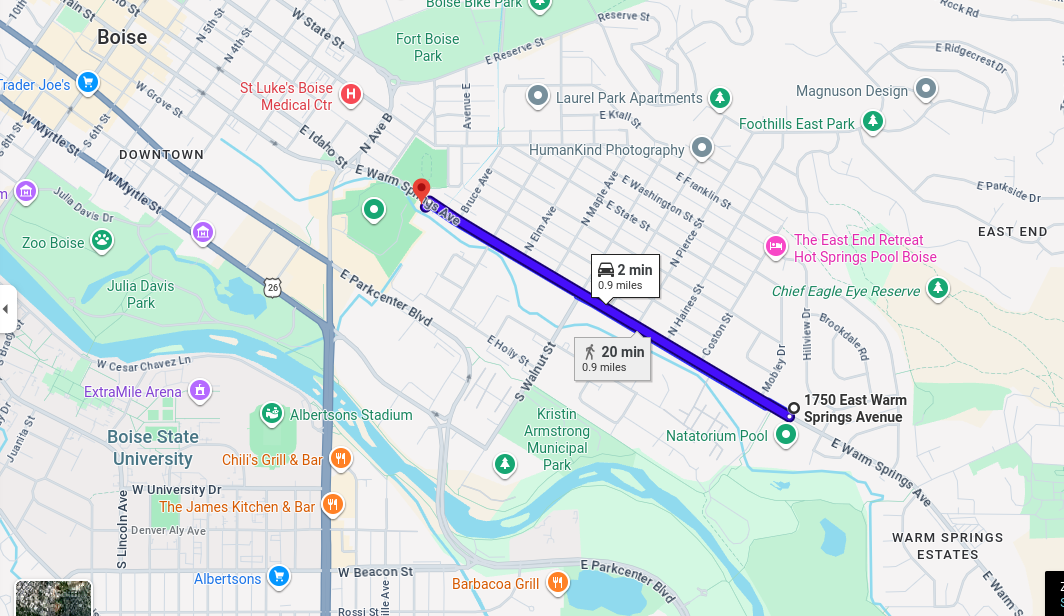
The socially prestigious “Warm Springs Avenue” historic district in Boise, Idaho.
The “Warm Springs” circle was surprisingly cosmopolitan. The Falks, Oppenheimers, Davidsons. Governor Smylie’s family and their inlaws the Wurzbergers. The Langroises, Forneys and Eidens. The Falks and Oppenheimers, clearly the social leaders, had intermarried in the person of Jane Falk Oppenheimer, a sort of “Mrs. Astor” of the “Warm Springs” pond, whose privileged life was a whirlwind of parties and charity work. There was a darker side to all this, however, because the Falk/Oppenheimer crew were magnates of early Boise’s entertainment industry.
When Hugh got the opportunity to buy NCR’s struggling Italian franchise in 1933, he found new avenues for his talents. According to his NYT obituary, Hugh “worked closely with the United States Embassy” as owner of NCR Italy. Repeating Patterson’s success but in Milan, Hugh became a darling of the expatriate business community. He and his sons met the interesting people one would want to meet in Italy, like fellow American Ezra Pound (himself squarely at the center of the English literary world of the time). We know from his son’s biography by Winks that Hugh made friends with Italian freemasons— historically a very dangerous bunch of people— who kept him out of jail in the 1930s when the Italian government got wind of his spying activities as president of the American Chamber of Commerce. Hugh’s web of contacts grew. Funnily enough, not many of them spoke Italian.
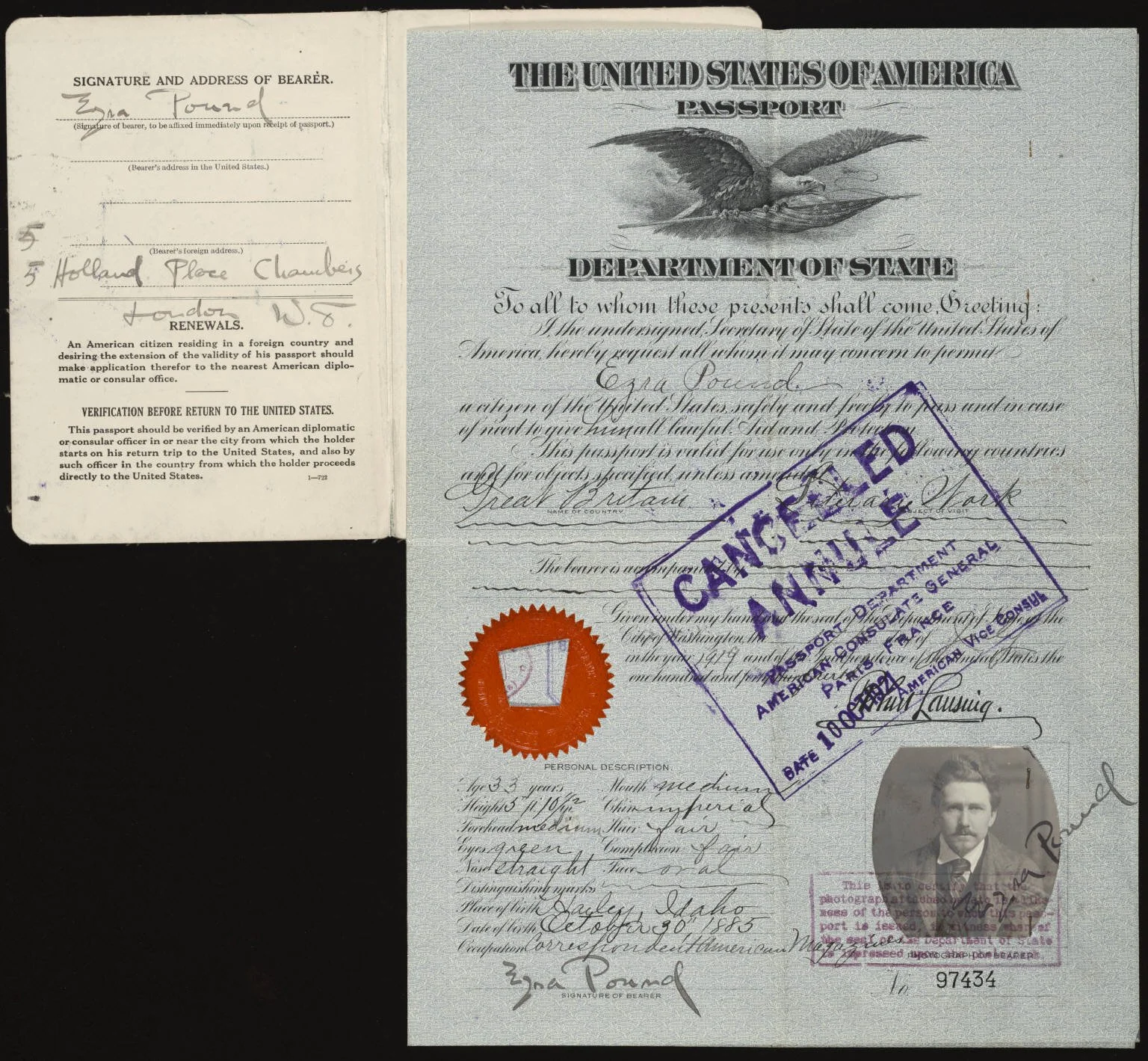
Ezra Pound’s 1919 US passport. Ezra Pound identified corruption in the State Department as one of the consequences of the Civil War.
On the eve of WWII, having spent nearly a decade in Italy selling expensive equipment to Italian businesses, Hugh Angleton didn’t speak Italian:
Already an officer during the First World War, he [Hugh Angleton] was recalled and with the rank of major sent to the School of Military Government in Charlottesville, Virginia. He did not pass the qualifying examination, and indeed, the examining officer in his report reiterated the point by describing his Italian as ‘poor’: after eight years spent on the Peninsula, it was basically made up of words and phrases related to commerce, for the rest, the candidate was unable to hold a conversation and did not write correctly. However, given his many contacts and his experience in Italy, as well as the fact that he is a person with a lot of potential, the elderly officer (Angleton is now over fifty) is considered decidedly useful, and is given a second chance which he succeeds in taking.
By the time Hugh joined the OSS in 1943, he claimed to speak German and French too. High-class people during this period would have learned these languages (imperfectly) at school. Let’s be real: the OSS wanted Hugh for his contacts, “civil and ecclesiastical, which he knew how to use”.
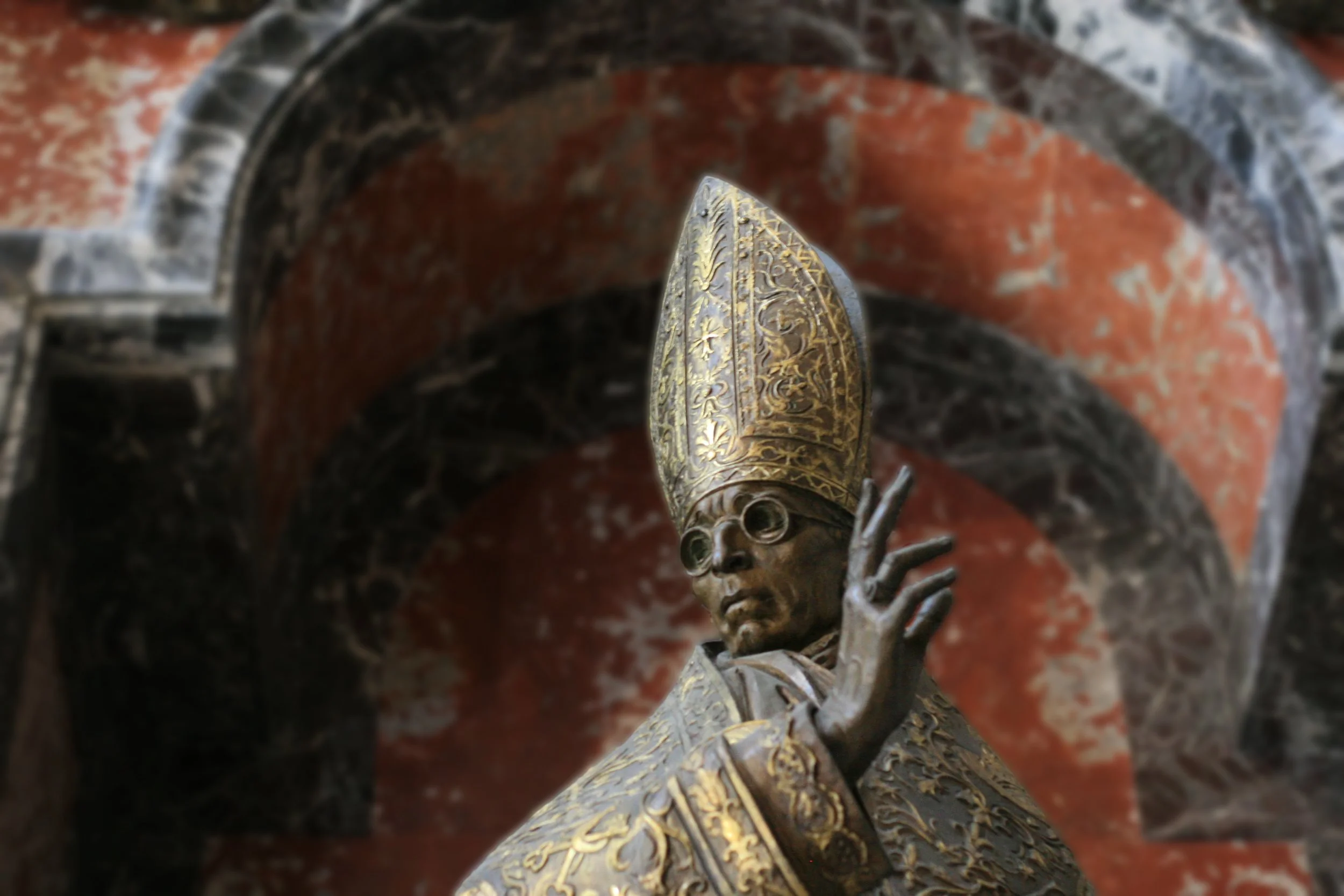
Statue of Pope Pius XII.
Ecclesiastical. More from historian Guiseppe Caprotti:
He [Hugh Angleton] also carried out the extremely delicate mission of organising the surveillance and subsequent transfer to the Vatican of Japanese diplomats accredited to the Holy See. With the Fifth Army’s spring offensive in northern Italy, Lieutenant Colonel Angleton travelled to each newly conquered city, gathering valuable and accurate business information from former business associates on factories, warehouses, supply depots and key personnel to be contacted by the military authorities. His profound knowledge of Italian business affairs, both in the export and import sectors, and his skill and discernment in bringing valuable information to the attention of the Allied military government, as well as his consistently sound advice on economic matters, were of great help to the officers of the Allied military government in carrying out their difficult mission in the industrial areas of northern Italy.’
Hugh Angleton also stuck it to Mussolini’s police force, which had effectively undermined mafia organized crime networks in Italy:
..his [Hugh Angleton’s] emotional stability must have helped him a lot when he collaborated in the military police investigation into the partisan bombing of Via Rasella (in which many German soldiers died), personally interrogating the notorious Quaestor of occupied Rome, Pietro Caruso, and when he assisted in supervising the recovery from the Fosse Ardeatine of the bodies of Italians killed in reprisal.
In Italy, a “quaestor” is a high-ranking police official. One of Mussolini’s social objectives was to break the power of organized crime in Italy— a goal he shared with NY Attorney General Thomas Dewey. Caruso (Trieste-focused, a locus of Galician Gang activity from the Hapsburg days) and the Sicily-focused Cesare Mori would have worked together to eliminate the type of organized criminal who worked with the Angleton family through the OSS:
Cesare Mori
Mori, who would gain the nickname the Iron Prefect (‘Prefetto di Ferro’) due to the ferocity of his anti-Mafia campaign, had distinguished himself as an exceptional police officer during the late-19th and early-20th centuries. However, he had found himself ignominiously transferred from the Italian metropolis to rural Sicily in 1903 when he got on the wrong side of a politician. His earliest encounters with the Mafia began here, and over the next decade and a half he was lauded for his successes.
After WWII, having re-established both the Sicilian Mafia’s and (via his son) the “Jewish underground’s” hold on Italy, Hugh Angleton got back to business. Hugh became president of the American Chamber of Commerce in Italy again. He was the macher who put Nelson Rockefeller in touch with Italy’s grocery kingpin Marco Brunelli in order to found several Italian supermarket chains:
…It was James Hugh Angleton, a key man in commercial relations between Italy and the United States, an art collector as well as the father of James Jesus, the first head of the CIA station in Rome, who spoke to Brunelli [an antiquities dealer] about the American tycoon’s idea of opening a chain of supermarkets in Italy [the future Esselunga] as he had already done in other parts of the world. Rockefeller, among others, founded IBEC in 1947, a company whose aim was to combine the goal of fair profit for investors with the philanthropic one of helping the poorest countries in the development of the basic economy, in order to improve their bleak living conditions…
Marco Brunelli was born in Milan on 2 December 1927. He co-founded the supermarket chains Esselunga (in partnership with Nelson Rockefeller, the Crespi family, Bernardo and Guido Caprotti) and Supermercati GS (in partnership with , Guido Caprotti); he is also the founder and owner of the Finiper group (now Finiper Canova, operating under the Iper la grande i brand through its subsidiary Iper Montebello). In addition, he is the owner of the Unes chain and has served as chairman of Carrefour Italia.
…The operation is not lacking in political implications – demonstrating how capitalist economics is able to provide more and better for the needs of the poorer classes than the Soviet economy can – and this is probably why James Hugh Angleton, a former espionage agent during the last war and father of the CIA chief in Rome, took an interest in the project.
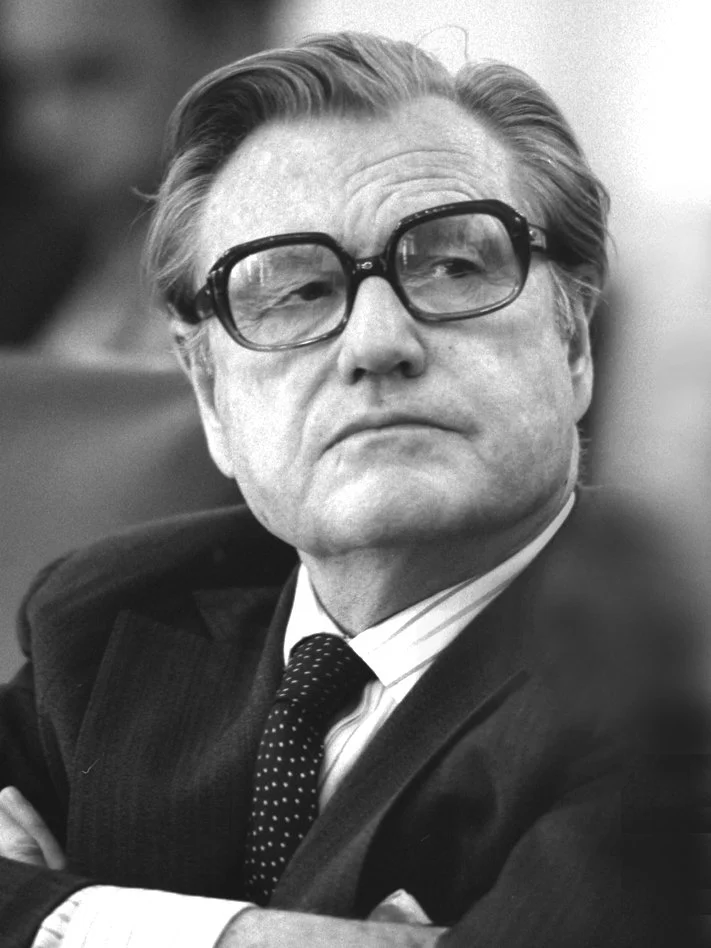
Nelson Rockefeller at a National Security Council meeting. Quiet! You’re safer because of him.
Readers, this happened at the same time James Jesus’ mob friends took over the US food supply systems, please see “James Angleton and the Mobbing of the US Economy”. Specifically, men like Lucky Luciano wanted to “go legit” starting with supermarket chains, a goal with its roots in the economic realities of NYC’s Italian ghettos.
What may be surprising to readers is that, despite all of Angleton’s success in Italy, Hugh just wanted to get back to Boise. In fact, until he could achieve the repatriation, Hugh brought Boise to him. The Angletons became something of a travel bureau for Boise’s “Warm Springs” set from 1953 until their final relocation back to Idaho’s capital in the mid 1960s. Of course, Jane Oppenheimer lead the way.
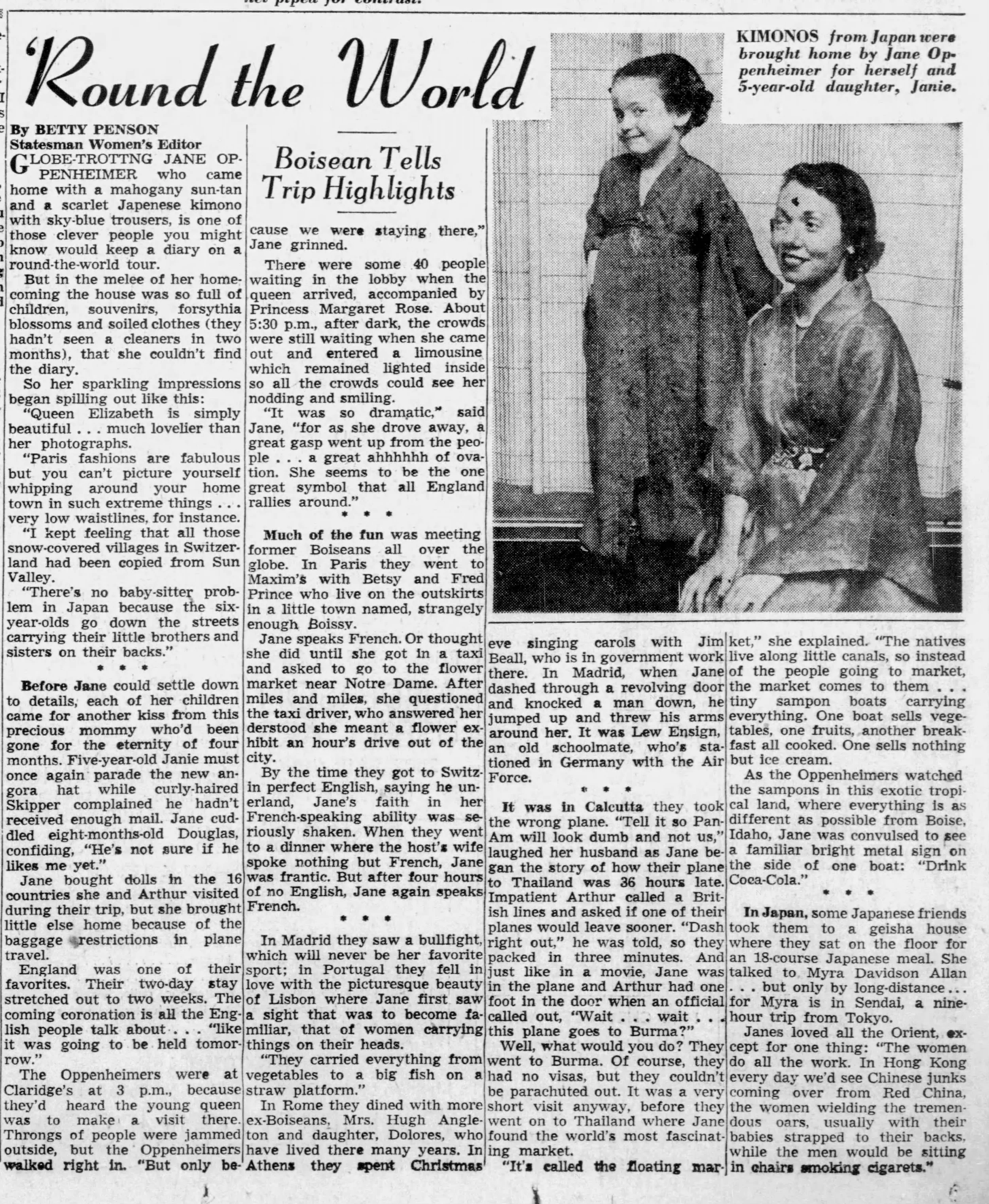
The Idaho Statesman, February 22, 1953.
And a few years later Hugh used those ecclesiastical ties to get the Davidsons (friends of Early Film actress Gloria Swanson from NYC) an audience with the Pope— which they missed and had to reschedule! Fortunately the audience wasn’t anything like a “religious ceremony”, but more like the cheering at a college football game. Read that article below. These people are weird.
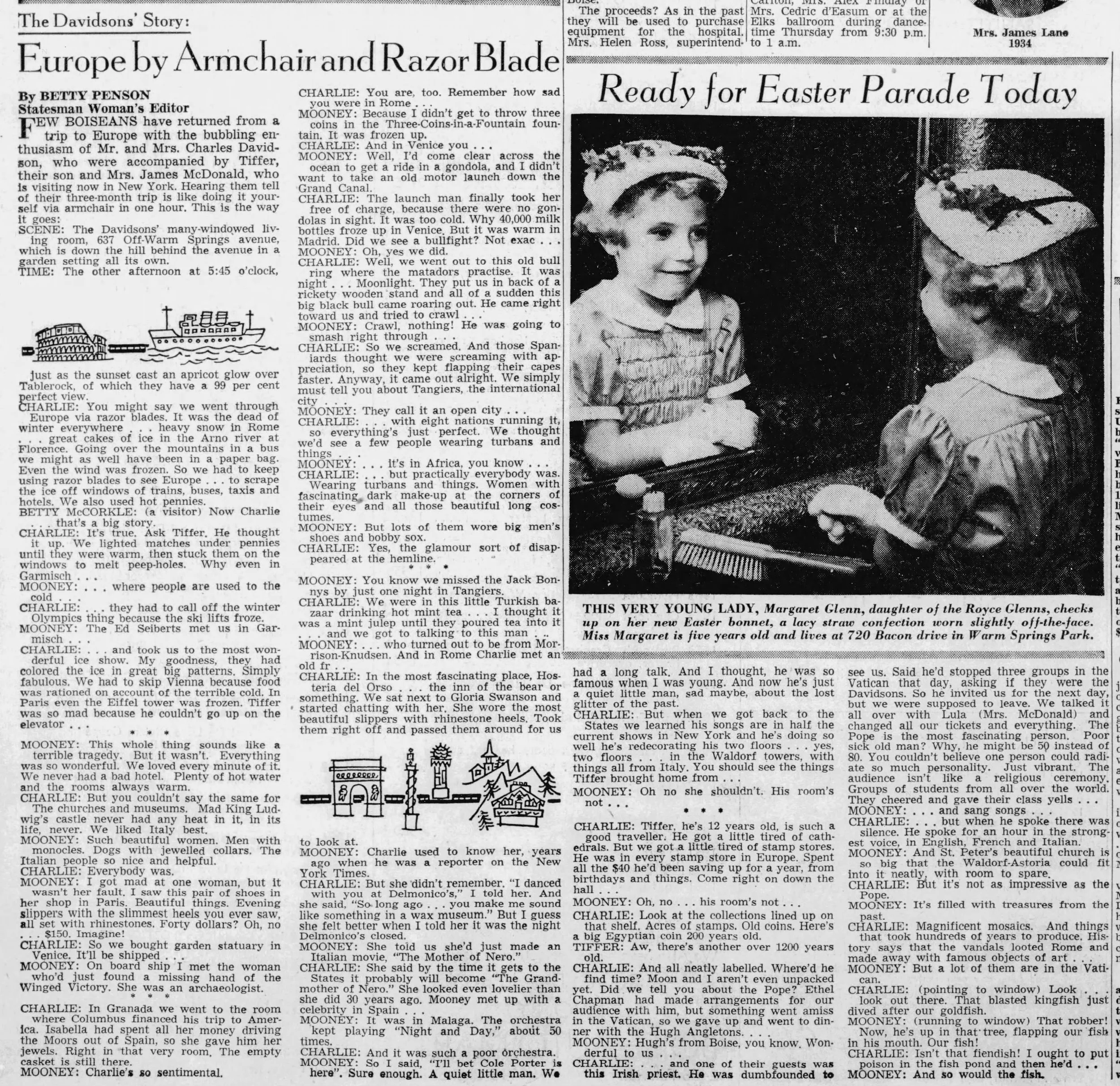
The Idaho Statesman, April 1, 1956.
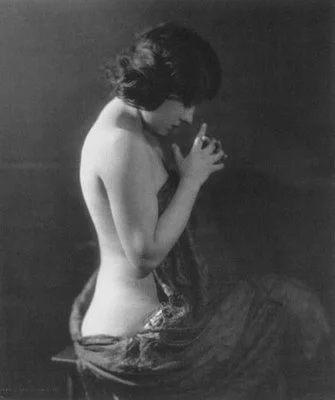
Gloria Swanson in 1919, as photographed by Flo Ziegfield Jr’s pornographer, Alfred Cheney Johnston.
Why the rush to get back to Boise? Well, Hugh Angleton wasn’t the highest-ranking OSS man in his family, he wasn’t even the highest ranking OSS man on Warm Springs Avenue. It turns out that OSS Major Arthur Oppenheimer Sr, Jane’s husband, held that honor.
Arthur Oppenheimer was born in New York City (son of a Hebrew Orphan Society inmate, apparently) and was a buyer for Bloomingdale’s Department Store before joining the OSS.
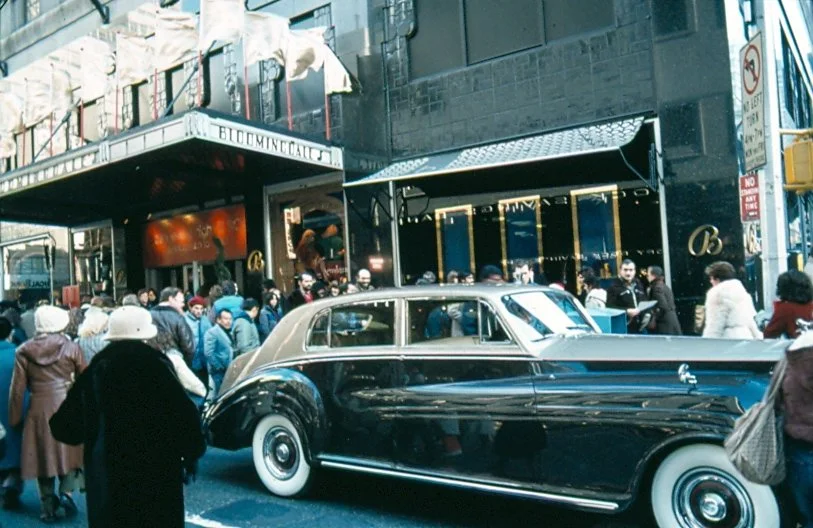
Bloomingdale’s store in NYC, Lexington Ave entrance.
Why would the OSS want him? Well, ritzy department stores were prime hunting grounds for Galician Gang groomers. Bordellos would open lucrative accounts with these stores as a method of debt-slavery for the prostitutes, who had to buy their own fashionable work clothes on credit. (The Lucy Duff Gordon model of business.) New York City was ground zero for these problems, but in the Midwest we had our own issues in cities like Boise and Chicago as well. The chances are pretty good that Mr. Oppenheimer had contacts with the Meyer Lansky set— or at least they trusted him because of his religious and ethnic background. From Mr. Oppenheimer’s obituary:
In 1945 [having joined the OSS], he [Arthur Oppenheimer] married Jane Falk, who was serving with the American Red Cross in the European Theater of Operations.
Before his enlistment into the military, Mr. Oppenheimer was employed as a buyer/merchandise executive for Bloomingdale’s in New York. Upon moving to Boise, in 1945, he bought into Falk’s Department Store and worked as vice president and general merchandise manager. After selling Falk’s Department Store to an Idaho chain in 1958, Mr. Oppenheimer established Oppenheimer Companies Inc., a food sales, marketing and processing company as well as a real estate investment company.
… Although very proud of his Jewish heritage- in 1975 he became and remained a very active member of the First Church of Christian Science.
Italian supermarket magnate Nelson Rockefeller would approve.
The next question on my mind is, why were the Falks’ running a department store in Boise, ID? According to Jane’s 2010 obituary in The Idaho Statesman:
The Falks were a pioneer family in Idaho. Nathan Falk, Jane's grandfather, arrived in Boise in the 1860's and established Falks Department Stores with his brothers several years thereafter. Leo Falk was responsible for developing the Owyhee Hotel, Egyptian Theater among others.
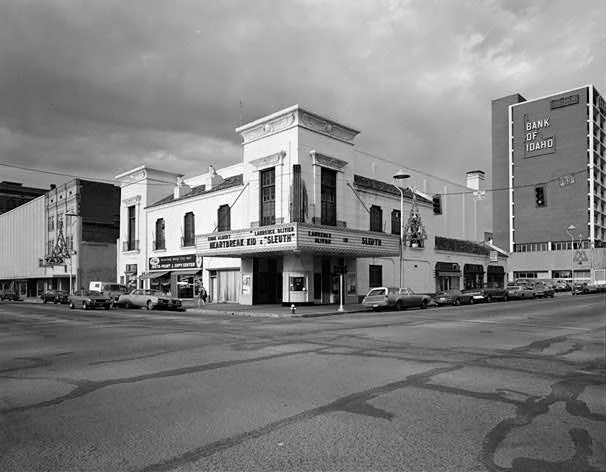
The Falk Family’s “Egyptian Theater” in Boise, Idaho.
Sadly, hotel and theater proprietorship were classic hubs of the Galician Gang network and the Falk’s wealth certainly suggests they hit a sweet spot in frontier Idaho. After the Civil War, Galician Gang networks were politically protected by successive Reconstruction administrations. Traveling musical acts like those that would grace the Egyptian Theater were well-recognized covers for White Slaving and hotels would provide convenient assignation locations for traveling actress-prostitutes like La Belle Otero or Sarah Bernhardt.
The Galician Gang’s sex trafficking and concomitant crime followed railway expansion Westward after the Civil War. From the US National Parks Service:
The Owyhee Hotel was well known regionally and a familiar resting place for travelers between Seattle, Portland, and Salt Lake City in the early part of the twentieth century. Located in the Lower Main Street Commercial Historic District in downtown Boise, the Owyhee’s rooftop garden was a popular gathering place, and the ballroom, which could accommodate up to 300 persons, was a favorite location for large gatherings, weddings, and special events. The Owyhee was part of the wave of development in downtown Boise that resulted after the construction of the Oregon Short Line rail passenger and freight depot and the establishment of the Rapid Transit Company, which opened a street car line on Main Street in 1891.
When the Angleton family did finally make it back to Boise, ID they were feted by the Oppenheimers, Falks and the rest of the “Warm Springs” set. Now we understand why.
Let’s move our gaze to the other side of Thomas Dewey, NY’s embattled attorney general and prosecutor of Lucky Luciano (but not Meyer Lansky). When Hugh Angleton was fighting Pancho Villa by way of Boise another up-and-comming young scrapper named Charles Ward was selling armored vehicles to Villa.
Armored vehicles were the cutting edge of infantry technology when Pershing led Angleton and the rest of his men into Mexico. There were a few companies that tried to get various US military contracts to make them, the leading contenders being Dodge Brothers (manufacturers of a chassis tough enough for undeveloped Mexico but only “armored” after-market) and the White Armored Truck Company, which had the Rock Island Arsenal manufacture the armor plating. The White trucks are the one Pershing chose to take southward and are the most likely candidate for the models that Ward sold Villa.
How does an armored vehicle fall off the back of a truck? Rock Island, IL has always been a gangland paradise, but was particularly so during the 1910s and 20s thanks to John Patrick Looney and his crew. (You’d have to be a Lincoln man to put an armory on Rock Island in the first place.) Looney, in partnership with mayor Harry W. Schriver and Irish mafia Police Chief Cox, sold protection for every illegal racket. Not just fencing stolen goods, but also gambling, running bordellos, etc. The local madame Helen Van Dale ran a franchise of 150 bordellos at her peak, making her by necessity a Galician Gang client. Selling purloined military goods was a regional specialty perfected by the Galician Gang: I wrote about the Goldman clan in Leon Goetz’s Mann Act Indictment. These same networks of Chicago junkyard/military resellers would partner with Twin Cities mafia offspring and CIA head Bill Colby to create video games, “Spycraft: The Great Game.” You can’t make this up.
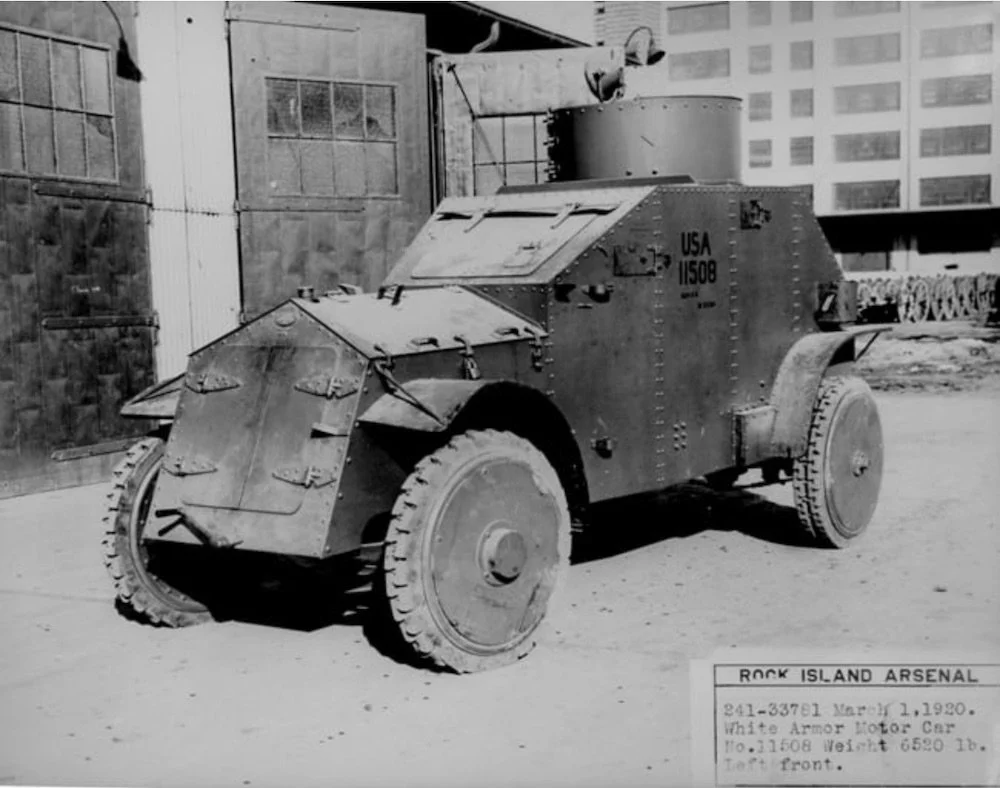
Our second Oppenheimer comes in when Charles Ward’s Mexican cash-cow had gone belly-up. Pinched for selling German-derived narcotics in 1922 (just like the Chicago Goldmans), Ward ended up in Leavenworth Prison where a connected Twin Cities lawyer named William H Oppenheimer tapped Ward to “protect” his recently convicted client, Herbert Huse Bigelow. Bigelow, like many Americans, refused to pay the income tax and was prominent enough for the FDR administration to make an example of him.
With the help of Oppenheimer, Charles Ward got control of Bigelow’s company, publisher Brown & Bigelow, as well as a large chunk of Bigelow’s money after the tycoon died in very suspicious circumstances. Ward would go on to control the Twin Cities’ “underground”; Farmer Labor Party politics; and even LaFollette’s Third Party for a season. Ward paid for the murder of Walter Liggett by Galician Gang thug Kidd Cann, according to Liggett’s widow. Despite all the yuck, Pope Pious XII commended Ward and FDR restored the ex-con’s citizenship privileges. I wonder why?
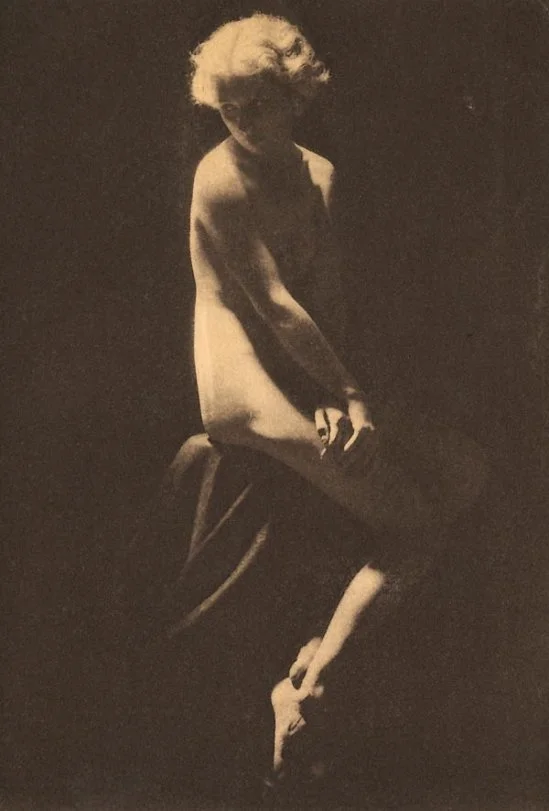
By the time Charles Ward got control, Brown & Bigelow had the pinup market cornered: “An old calendar published by Brown & Bigelow in Saint Paul, Minnesota issued in 1936. Photo by Earl Moran.”
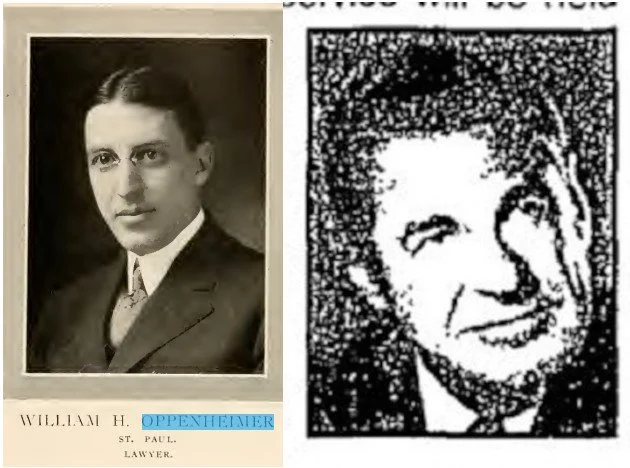
Who was this William H. Oppenheimer character and why was he tied into Ward’s Galician Gang network at Leavenworth? Oppenheimer was a mob lawyer of the caliber of Sir George Lewis in London, handler to Edward VII, Great Britain’s Blackmailer-in-Chief and king of the Old Bailey. In all seriousness, in the later decades of the nineteenth century Lewis ran an Epstein-like sexual blackmail ring staffed by recently immigrated Austro-Hungarian transplants. St. Paul, while a far cry from London, was still able to offer opportunities to gang members who knew how to exploit English Common Law.
Oppenheimer was in the business of building a firm that controlled all types of political corruption, take for instance his recruitment of Stan Donnelly. Fom “The View from the 17th Floor: Oppenheimer Wolff & Donnelly and Its 111-Year History” by Virginia Martin:
Stan Donnelly had a reputation that rivaled that of his father, Stan J., and grandfather, Ignatius, both known as “mighty orators.” In earlier years, Donnelly had hired out to small-town attorneys who did not like to try cases. He was a tremendously talented trial lawyer, said David Donnelly. Immaculate and elegant in dress and behavior, Donnelly’s booming voice and great presence had impressed “Mr. O,” [Oppenheimer] who told David Donnelly that his father was “the greatest trial lawyer I ever saw.”
Oppenheimer also wanted Donnelly because of his prominence among the leaders and politicians of the Irish community (sometimes called the “Irish Mafia”). The firm then was “deliberately ecumenical,” David Donnelly said, and partners tended to reflect the varieties of religious experiences in St. Paul: Episcopalian, Jewish, Catholic, Methodist, Presbyterian, Baptist, Congregational.
Stan Donnelly was a Roman Catholic with an occasional cavalier approach to the rules.
For information on CIA director William Colby’s “Irish Mafia” connections in the Twin Cities, read about his mother here.
William Oppenheimer ran the white-shoe law firm that serviced the O’Conor System, the political patronage system which protected madams like Nina Clifford. By the 1930s this system protected men like John Dillinger and Jake “The Fighter” Taran. These are the mobsters which FBI wunderkind Melvin Purvis would either prosecute or protect, depending on their utility to mobsters like Al Capone, John Factor and Franklin Delano Roosevelt.
William was the son of August Oppenheimer, a German subject who became a naturalized American in NYC in 1869.

August Oppenheimer’s naturalization record.
By 1870 August had made his way to Sparta, Monroe County, Wisconsin where he worked as a “dry goods merchant” and said he was from Bavaria. Sparta is a small town about half way between Minneapolis and Milwaukee. Sparta was a stop on the Chicago & Northwestern Railway, one of Chicago mayor William B. Ogden’s lines that gave birth to Abraham Lincoln and the Chicago Board of Trade.
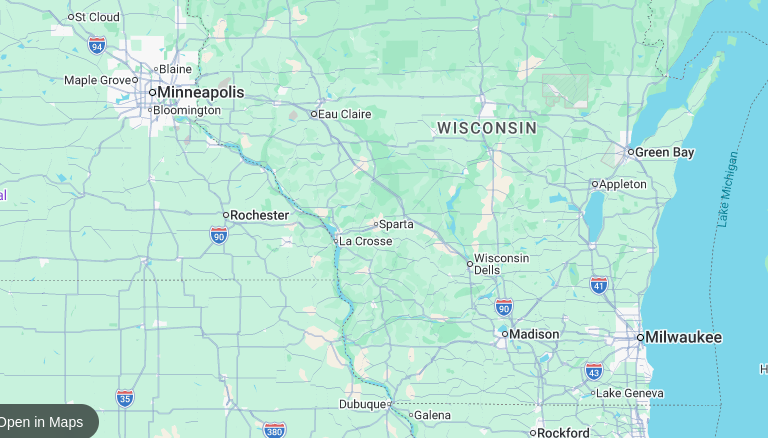
Sparta, WI.
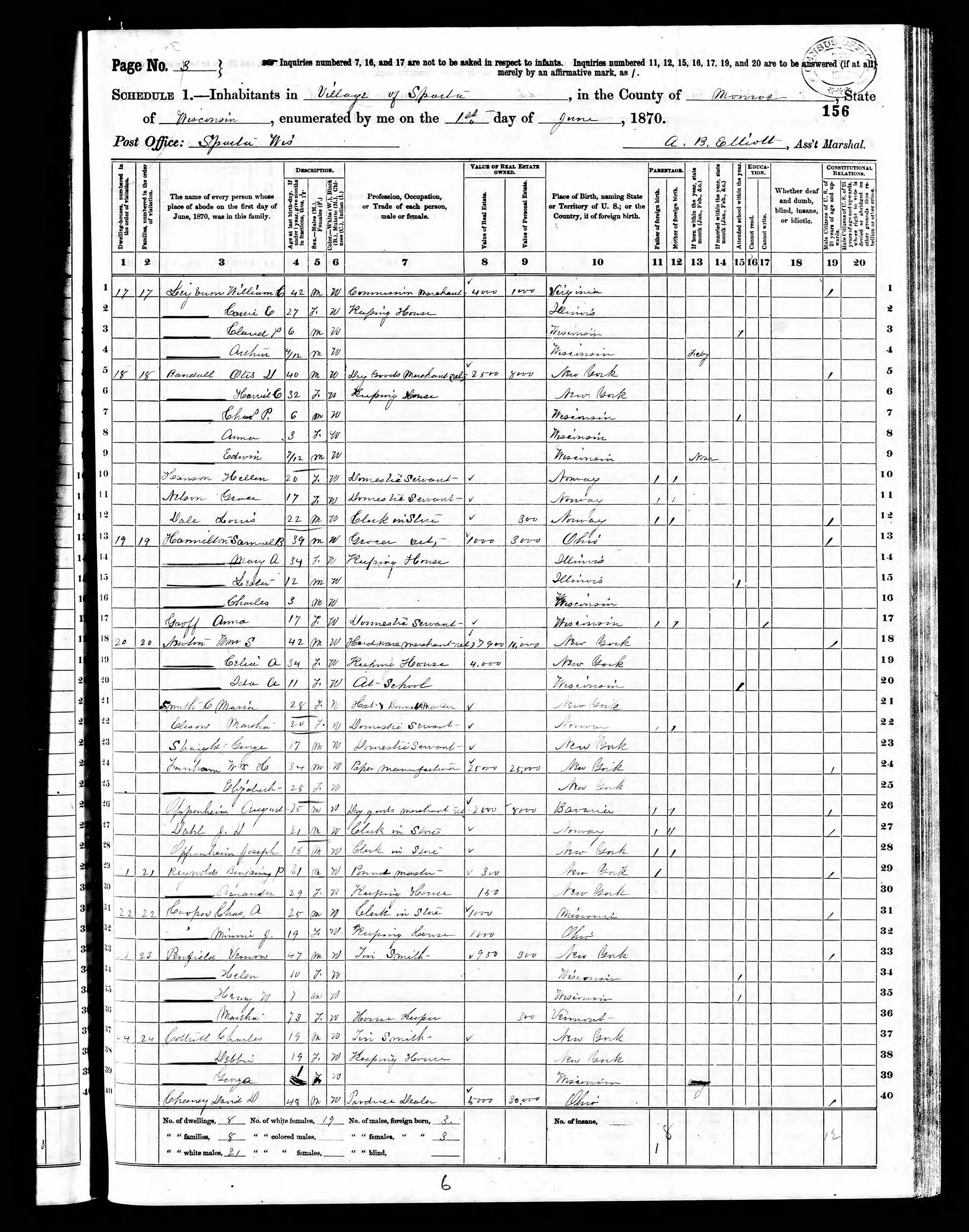
1870 US Census entry for August Oppenheimer.
Wisconsin didn’t work out and by 1880 we find August working as a cotton merchant in Dallas, TX. It was from Dallas that he took his infant son to St. Paul, MN.
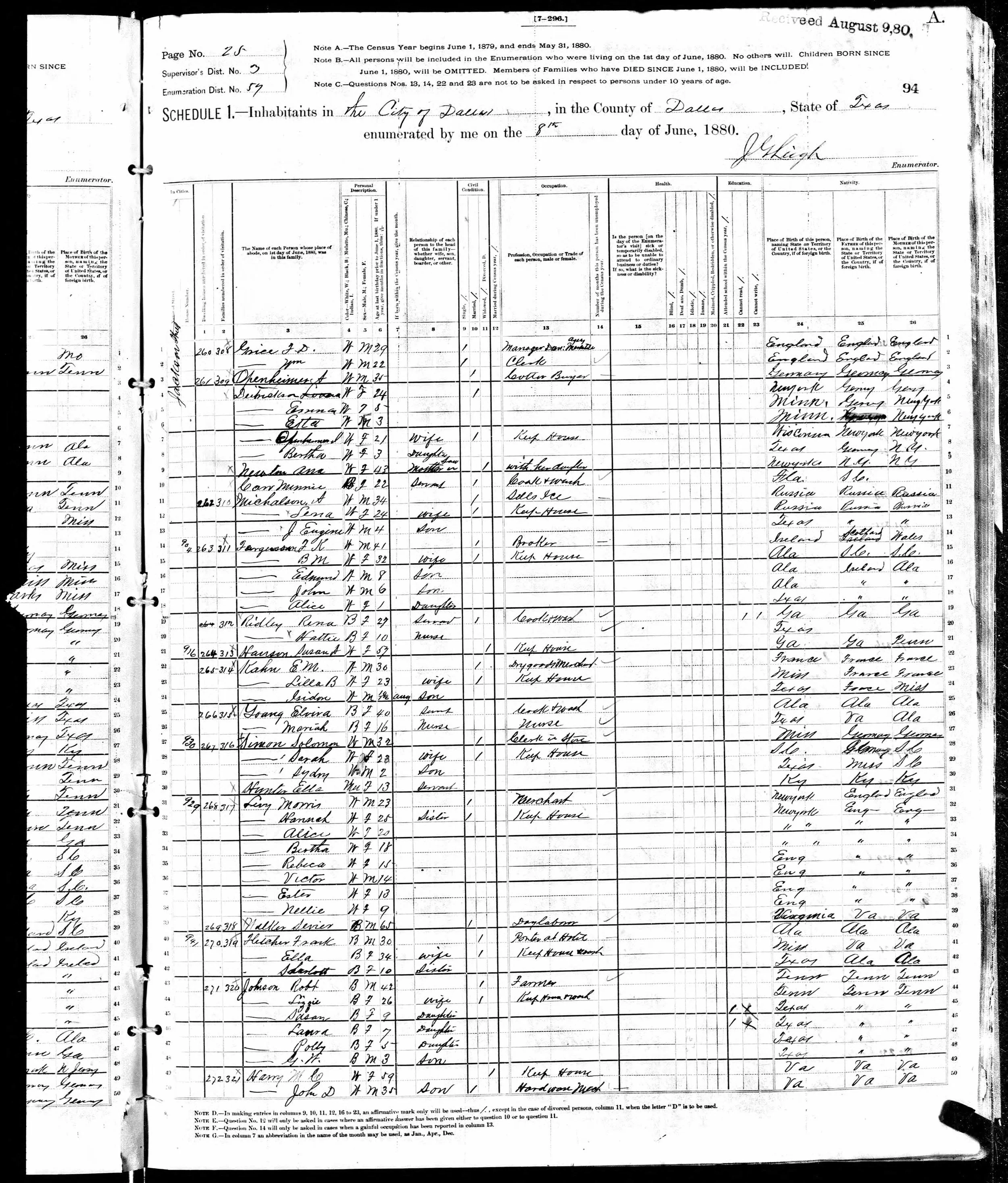
1880 US Census for August Oppenheimer.
This is where most histories of William Henry Oppenheimer begin: his being brought to St. Paul as a toddler. Oppenheimer was an unusually perceptive young man because, straight out of law school, he joined a publishing company at the beating heart of legal intelligence, Martin:
He [William H. Oppenheimer] graduated from the University of Minnesota Law School in 1904 at the age of twenty, too young to be admitted to the bar. He went to work as an editor for Keefe Davidson Company, a publisher of law books that was founded as a West Publishing Company competitor by John West after a major rapture between family members. (It later went out of business.)
What John West created changed the American legal profession: his publishing business was the first to put out a summary of all the decisions reached by the Supreme Court of Minnesota. Before that, lawyers had to comb scores of newspapers for a haphazard selection of case decisions. The judge who wrote the opinion provided the entry to West’s weekly. Suddenly, everyone buying West’s weekly knew what the law was, and more importantly, how it was being applied. This intelligence was useful to criminals and lawyers alike.
The experiment proved an immediate hit, and in 1877 it was renamed the North Western Reporter with expanded Wisconsin coverage.38 In 1879, this gave way to a new North Western Reporter (covering the supreme courts of Iowa, Michigan, Minnesota, Nebraska, Wisconsin, and the Dakota Territory), the first of the West regional reporters and the cornerstone of its National Reporter System…
When the American Bar Association subsequently saw a prototype and enthusiastically embraced it, “West Publishing Company [became] the nation’s acknowledged leader in indexing as well as reporting the case law of the country.”53 In time, West would increase the digest’s utility by adding “key numbers,” thereby giving every point of law its own permanent identifier.54
Some perspective for legal professionals.
Needing capital to expand, John West and his brother Horatio took on a partner named Charles Ames in 1882. Ames would be the company’s undoing. After a sudden disagreement in 1899, John was forced out of the company and set up another competing firm, Keefe-Davidson Law Book Company, with two former West employees as its face, William A. Keefe and Earnest H. Davidson. A baby-faced William H. Oppenheimer wiggled in as editor.
John and West Publishing had public squabbles detracting each others’ products. Former West Publishing employees brought lawsuits against John and for some reason Keefe-Davidson couldn’t get press advertising for its publications. On top of this John Jr., John’s son, committed suicide:
Distraught over the company’s [Keefe Davidson’s] failure, John Jr. suffered a nervous breakdown and hung himself at St. Peter State Hospital, a mental institution he had been admitted to for treatment.94 The circumstances surrounding his death were later recounted as follows:
After graduating [from Harvard in 1906], he entered the employ of a law-book publishing house in St. Paul, and soon became its secretary. Of a highly sensitive nature with a delicate sense of right and honor, the strain of a long fight against a “reorganization committee” for the rights of stockholders, which the committee was prone to disregard, broke his health completely.95
Hmmm. I’ll point out that at this time asylums were run as pork-factories for politicians’ friends— not safe places. The net result of these tragedies was that John West had to run to California and his company, Keefe-Davidson, closed in 1912:
The firm’s receivers were Herbert H. Bigelow (co-founder of Brown & Bigelow, a calendar manufacturer), Eli S. Warner (the general manager of McGill-Warner, a printing company), and William H. Oppenheimer (who at the time had a solo law practice).
So Herbert Bigelow and his duplicitous lawyer had a long and sordid history. When Charlie Ward had Walter Liggett killed for exposing Ward’s control of the Farmer Labor Party, East Coast communists— the type of Soviet agents who Walter Liggett had worked for prior to relocating to the Twin Cities in the early 1930s— began an intimidation and libel campaign against Mrs. Liggett. She was able to withstand this and achieve legal victories against the communists with the help of Thomas Dewey, NY’s crusading attorney general.
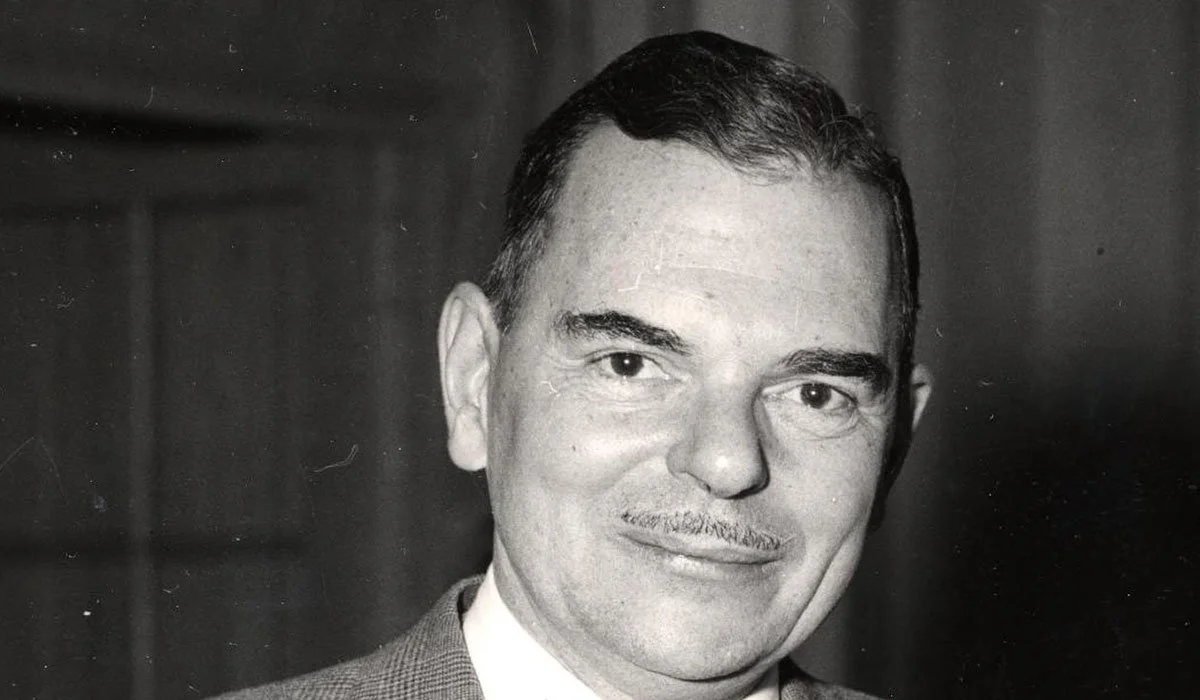
Thomas Dewey. The Herlands Report, which he had accomplished via one of Medalie’s minions, gives us the best information available on the ONI and OSS’s cooperation with organized crime during WWII.
A word on Mr. Dewey. Dewey was the protege of NY’s real legal kingpin, Judge George Zerdin Medalie (1883–1946), a Talmud scholar who called the shots on which mafioso got prosecuted in NY— much like Sir Lewis a generation before in London. According to Dewey’s autobiography Twenty Against the Underworld, Medalie staffed Dewey’s attorney general office with inexperienced recruits from prominent East Coast families and Jewish immigrant kids. (Sound like the OSS?!) Dewey’s office, according to Dewey, was very good at catching Italian mobsters but the Jewish ones tended to get forewarned or fragged by their own team before prosecution could begin. Dutch Schultz, a man with a ‘hard on’ for Dewey, is an excellent example of the later. Dewey seems to have gone along with this arrangement happily until the Naval Department asked him to destroy his gubernatorial career by pardoning Lucky Luciano so that Luciano could work with the Angleton family in Italy…
If you let the devil in the back seat, he ends up driving the car!