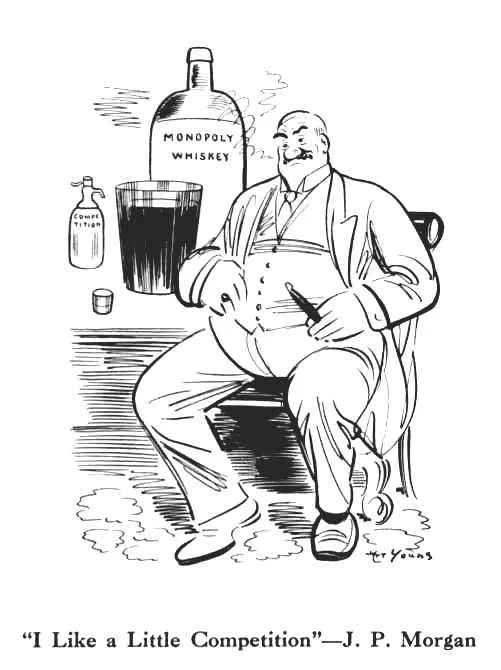
Early Film, Spies and the Liquor Trust
I’ve spent so much time writing about James Jesus Angleton lately that readers may wonder what happened to men like Otto Kahn or Crawford Livingston. Today, I’m going to show readers how Kahn and Livingston’s WWI era liquor investments fed into the creation of the CIA; the CIA’s devastating symbiosis with organized crime; and Angleton’s tragic career in counterintelligence.
I was unaware that an American “Liquor Trust” even existed until last May when I reviewed a portion of the Congdon Family papers at the University of Minnesota in Duluth. Chester Adgate Congdon was Angleton’s wife’s grandfather and supplied the Roosevelt Family with human capital for their industrial espionage network and the “Office of Naval Intelligence”. The Roosevelt network, through a few intermediary stages, turned into the “Central Intelligence Agency”.
In Chester’s correspondence, I found that he had a remarkable blow-up with the chancellor of his beloved alma mater, Syracuse University, over the chancellor’s criticism of Theodore Roosevelt and Roosevelt’s relationship with the denatured alcohol industry.
Chester really loved Syracuse University, to the point of obsession. He kept a massive book of newspaper clippings on the school: any time Syracuse U was mentioned in the press, Mr. Congdon lovingly pasted the article into a beautiful leather-bound portfolio.
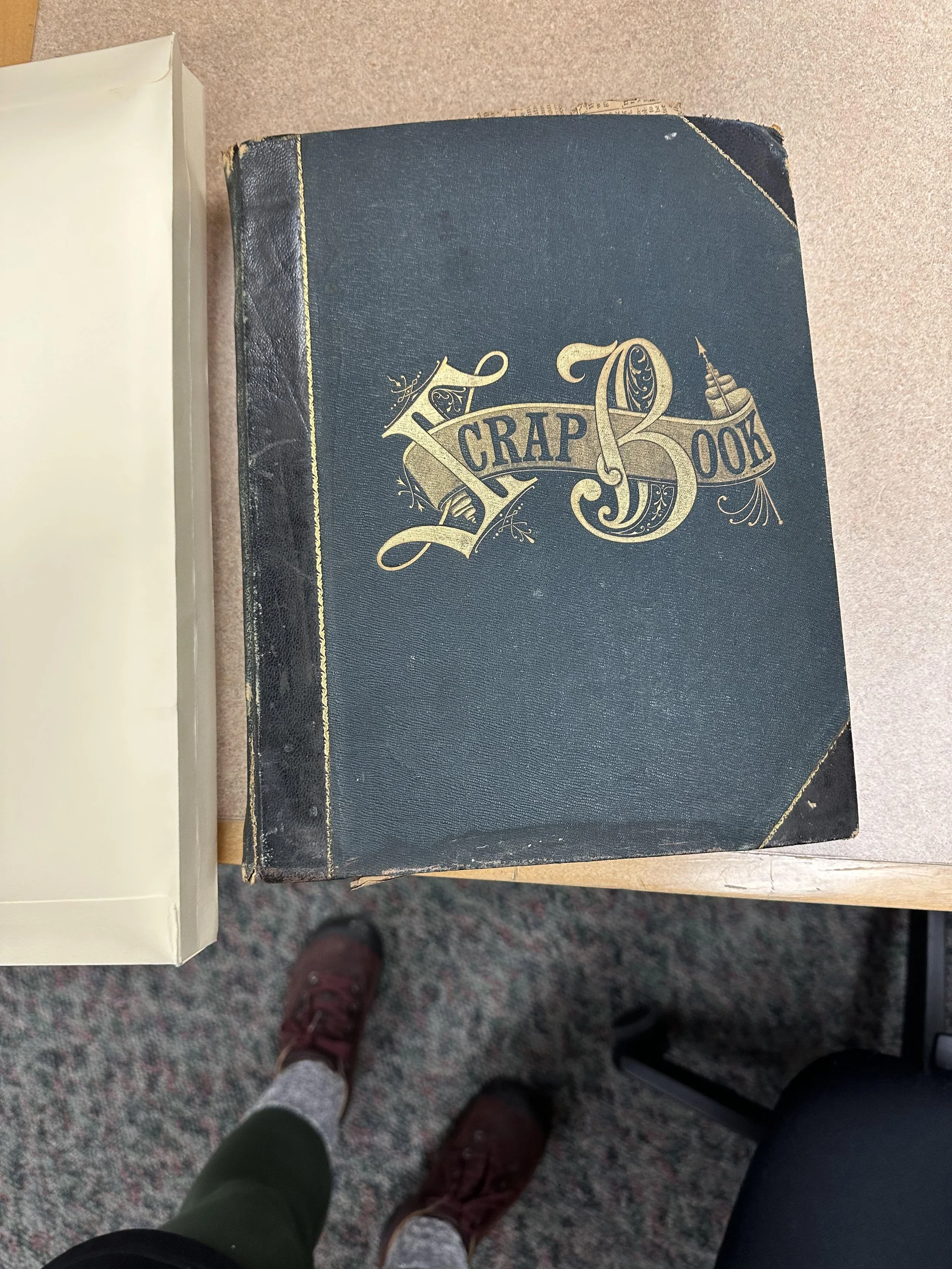
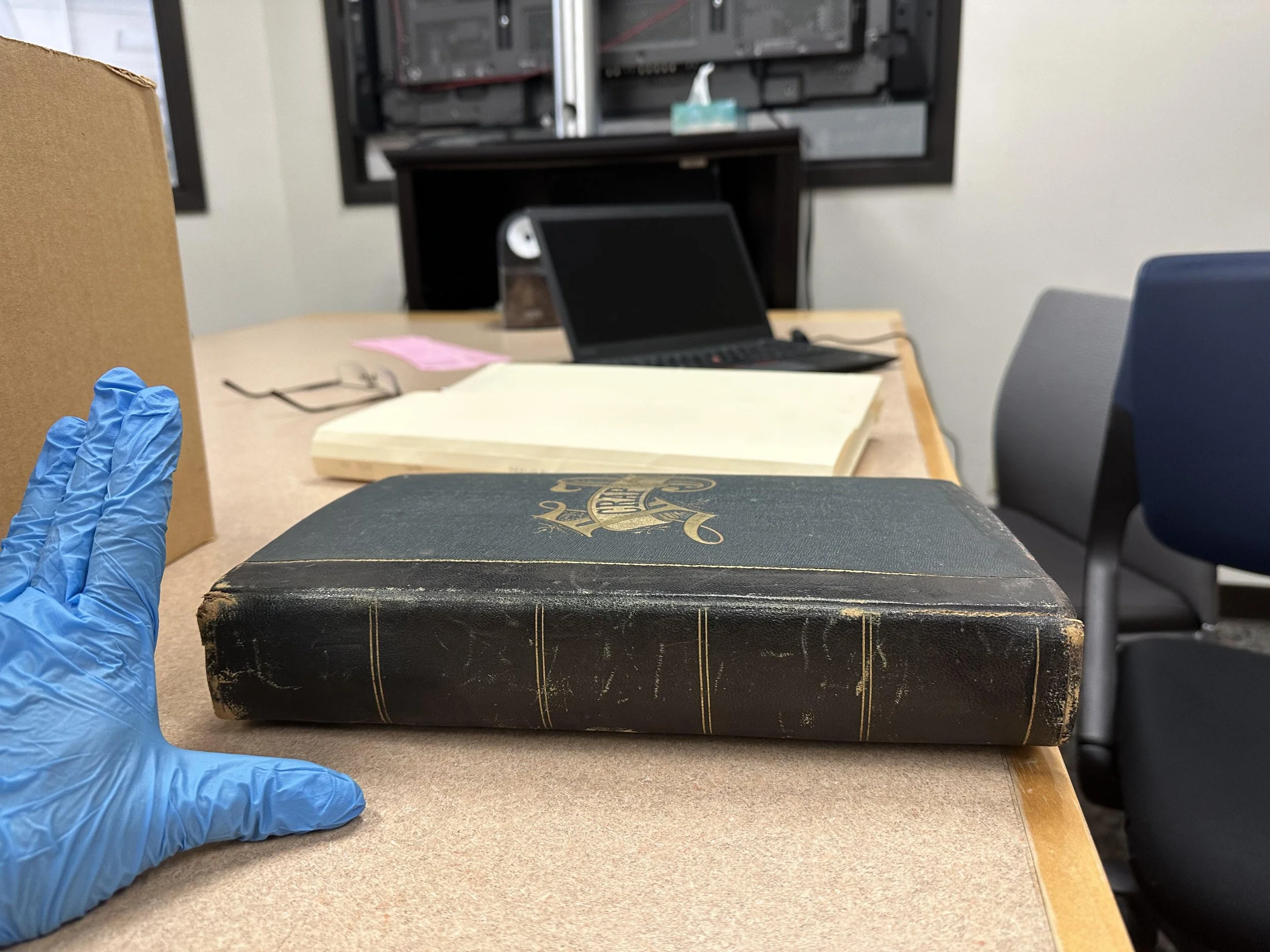
Decades of material span this portfolio’s pages. But suddenly in May 1906 Congdon sent the university a series of intemperate letters decrying an opinion given by Chancellor James R. Day. Day had expressed concern over President Theodore Roosevelt’s “autocratic government” regarding Standard Oil prosecutions. Standard Oil executives had been given immunity by Illinois Judge J. Otis Humphrey during a prosecution that alleged these executives took illegal railroad rebates— a perennial problem around Chicago. Judge Humphrey justified this action because the executives had previously volunteered company records to the federal Bureau of Corporations and were therefore personally protected from criminal prosecution by the 1903 Expediting and Immunity Acts. As a consequence, Theodore Roosevelt’s ability to target trusts which didn’t support him was undermined.
In a bid to preserve his power, President Roosevelt used his office to promote the idea that Standard Oil was guilty of taking illegal rebates before the trust was tried for said behavior. Chancellor Day had the temerity to suggest that the Executive Branch shouldn’t interfere with the Judicial Branch. Chester Congdon, a man who made money by day with the Guggenheim-Morgan syndicate, but spied for their competitors the Roosevelts and Phelps Dodge by night, wasn’t about to let his acquaintance Teddy be sullied. Here’s the article that set Chester off:
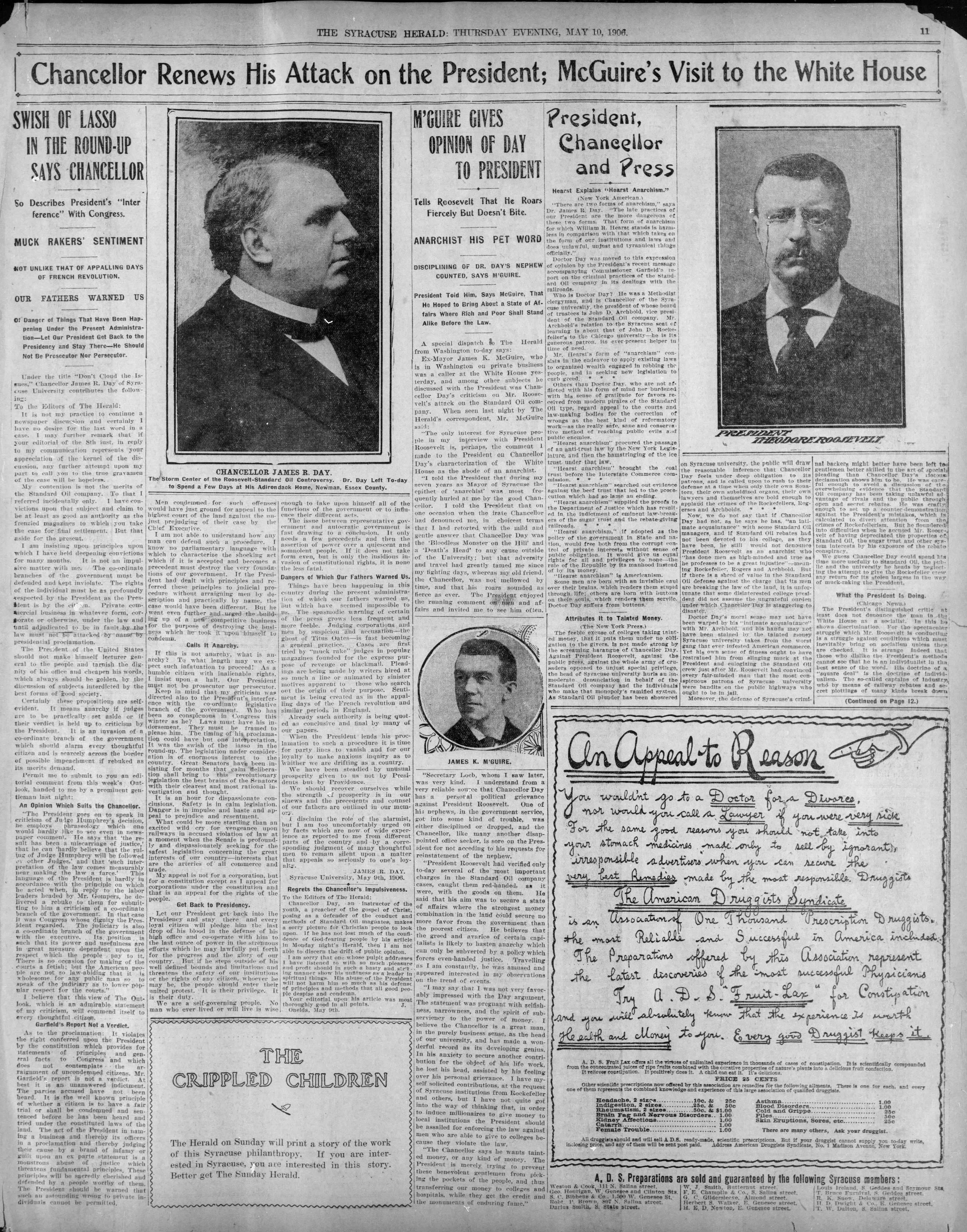
Syracuse Herald Journal, May 10 1906.
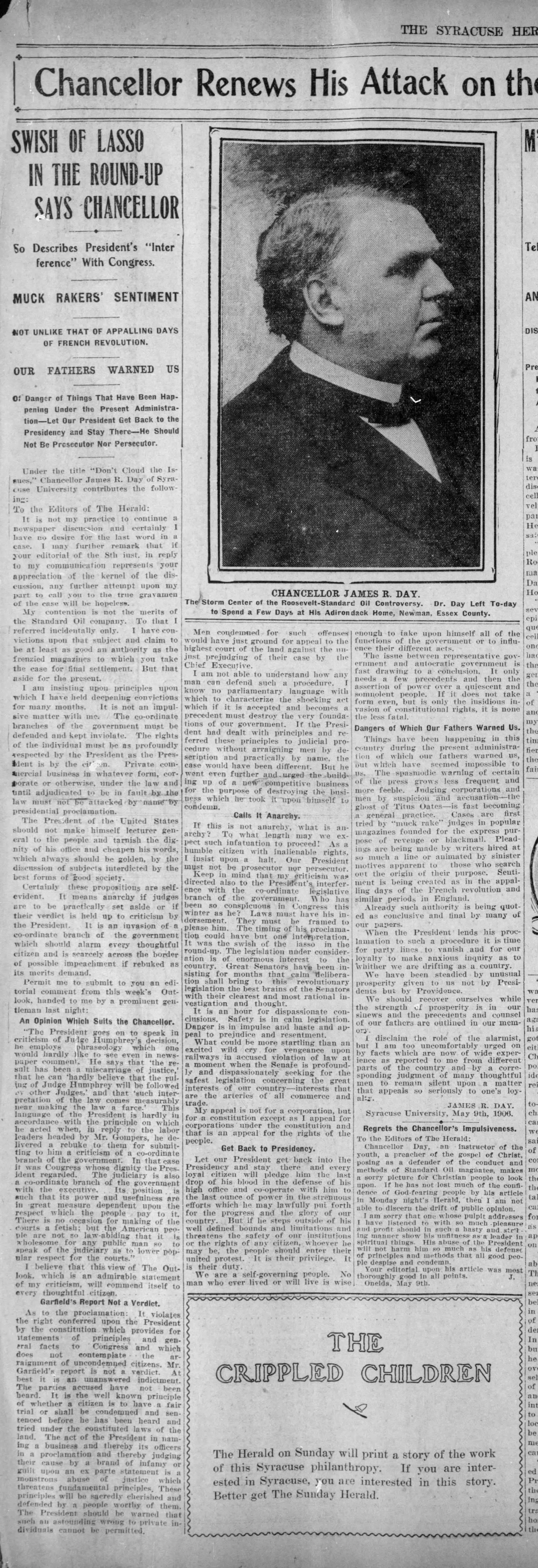
Syracuse Herald-Journal (NY) May 10, 1906.
“The co-ordinate branches of the government must be defended and kept inviolate. The rights of the individual must be as profoundly respected by the President as the President is by the citizen. Private commercial business in whatever form, corporate or otherwise, under the law and until adjudicated to be in fault by the law must not be attacked by name by presidential proclamation.
If the President had held with principles and referred these principles to judicial procedure without arraigning men by description and practically by name, the case would have been different. But he went even further and urged the building up of a new competitive business [denatured alcohol] for the purpose of destroying the business which he took it upon himself to condemn." — Chancellor James Day, Syracuse University 1906. Emphasis added.
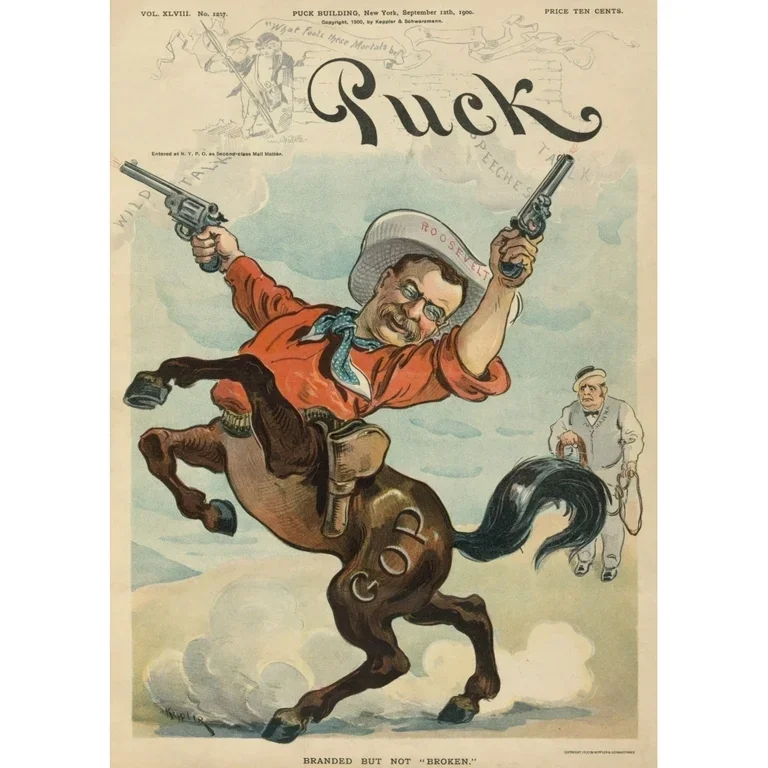
“Swish of Lasso” refers to Teddy Roosevelt’s unsavory reputation among Republican Party stalwarts.
As made apparent by Congdon’s selective newspaper clippings which deal with this Day/Roosevelt controversy, the following point was of particular consequence to our Duluth mining magnate:
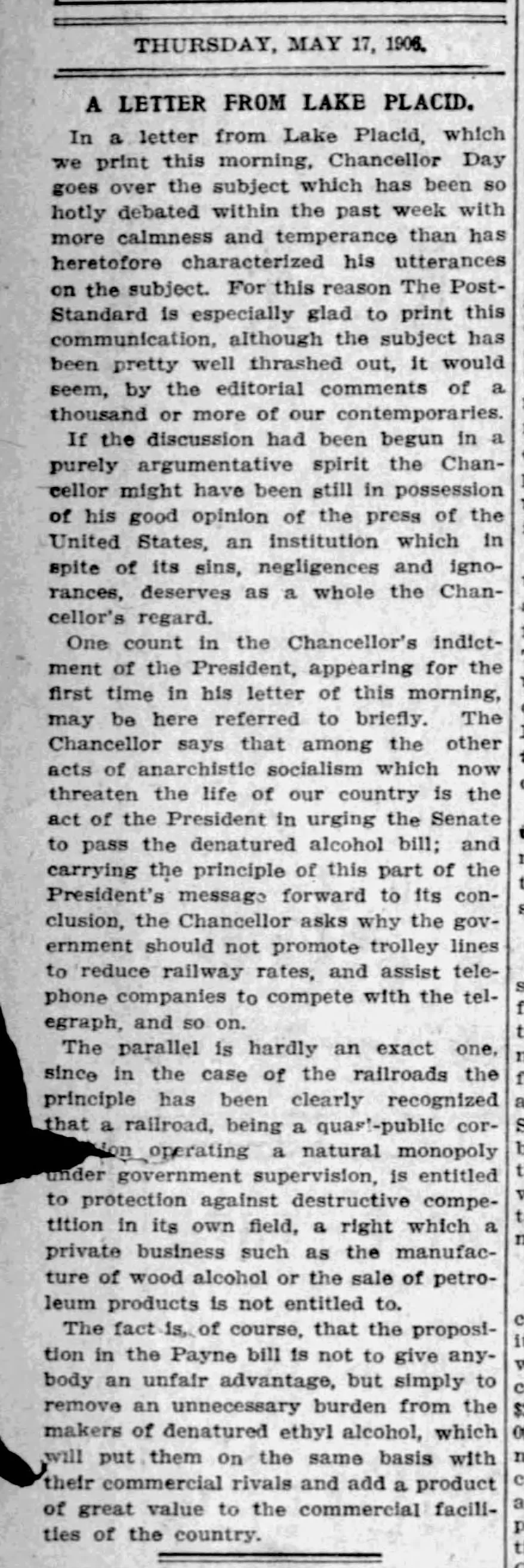
The Post Standard, May 17 1906. (Syracuse, NY)
Denatured alcohol?! As it turns out, denatured alcohol was a big deal in 1906. Theodore Roosevelt had just repealed a Lincoln-era tax on the fuel in the face of competition from newly-discovered oil fields in Texas. Prior to 1906, denatured alcohol went head-to-head with gasoline as the energy of industrialization: Henry Ford designed his early cars to run on both types of fuel. Ford wanted farmers to be free to chose their own fuel, even a fuel they could easily grow and distill without a middleman.
But Texan oil changed the equation in a bad way for the denaturated alcohol producer— yes I men “the”. From 1899 in the United States, denatured alcohol was produced by a monopoly which was called the “Liquor Trust,” but its real name was The Distilling Company of America (DCA). DCA was controlled by the money men andreanolen.com readers know from the Early Film Industry.

“Traction” means street car transport providers. Street car line development, maintenance and production was a notoriously corrupt undertaking in the late 1800s and early 1900s. The corruption came from Bossism: traction development was made a vehicle for kickback “boodle” money on a Robber-Baron scale.
On the bright side, it is a testimony to the quality of US government of the period that these crooks were brought somewhat to heel and that the public did eventually get functioning streetcar service. Most places in the world cannot achieve even that amount of rule of law. Certainly this situation no longer holds in some parts of the USA today, like California with its high-speed rail project.
NB NY lawyer Elihu Root would become Teddy Roosevelt’s Secretary of War and administrator of the colonial possessions Teddy won in the Spanish-American War.
While denatured alcohol had powerful investors behind it, the industry had taken a head-blow from Texas oil, and 1919 saw demand for denatured alcohol slump even further with end of the WWI effort. Don’t worry! Prohibition came in time to save the DCA’s bacon. Denatured alcohol is what the best-connected mafioso and Galician Gang operatives used to make liquor during Prohibition. From Paul Maccabee’s John Dilligner Slept Here: A Crook’s Tour of Crime and Corruption in St. Paul (Minnesota), 1920-1936 (p. 27):
The liquor syndicates (of Minnesota) discovered that the odoriferous process of creating moonshine from fermenting fruit in a still was inefficient. Instead, they could buy tax-free denatured alcohol from the federal government for “industrial” purposes and then redistill the poisonous mixture for sale to thirsty consumers.
U.S. attorney Lafayette French admitted privately that Minnesota had become “flooded with various forms of specially denatured alcohol under the designation of body rub,” thanks to a loophole in the Volstead Act that enabled drugstores in Minneapolis and St. Paul to legally import railway cars full of Formula 39 “body rub.” “Frankly”, wrote French, “ I believe that it is futile to furnish this office with a prosecution broom and ask us to sweep back the sea of body rub which the government, through its permits, allows to come into the district.”
Sammy “The Fighter” Taran was a typical mob redistiller. A Jewish prize fighter, Taran ran a multi-million dollar “body-rub alcohol” scheme that was protected by Prohibition agents, who would always destroy any evidence before Taran’s trials. (Maccabee, p. 28)
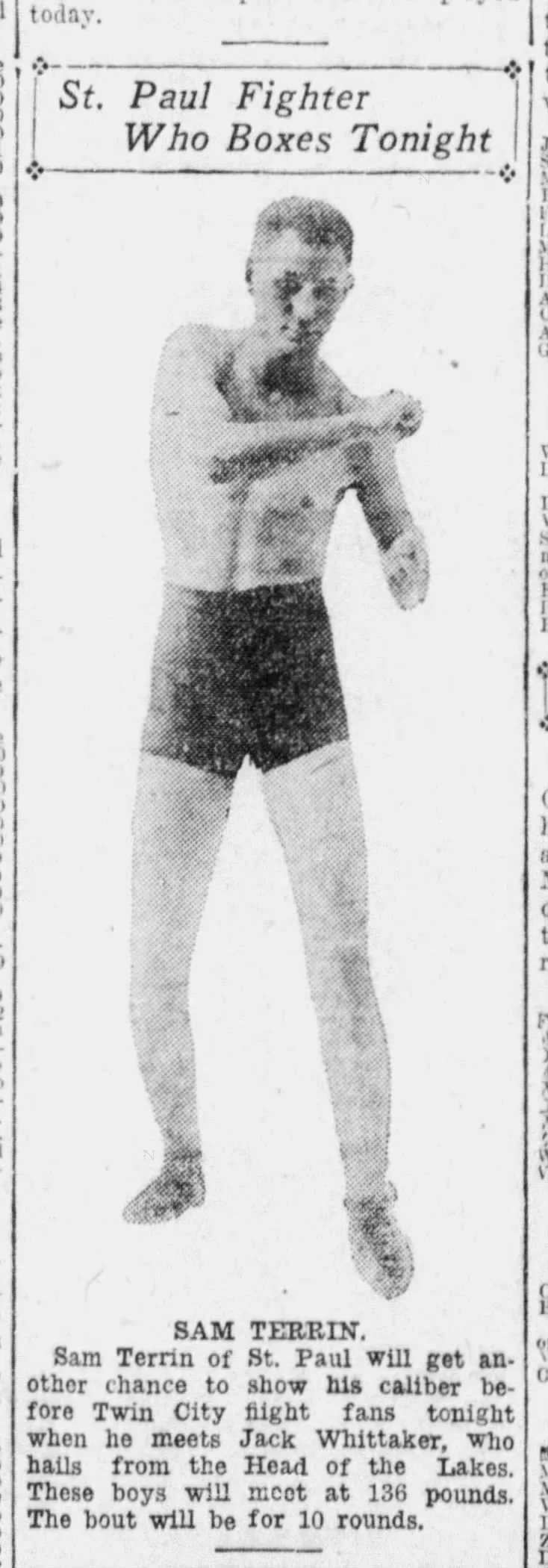
Star Tribune (Minneapolis) July 11, 1917. In contemporary newspaper press Sam Taran’s name was usually misspelled “Terrin”. (Or he changed his practiced spelling to “Taran” sometime after Prohibition!)
But of course the Midwestern Galacian crooks weren’t the only men in on the federal racket. Our dear old OSS friend Lucky Luciano was invested in redistilling too:
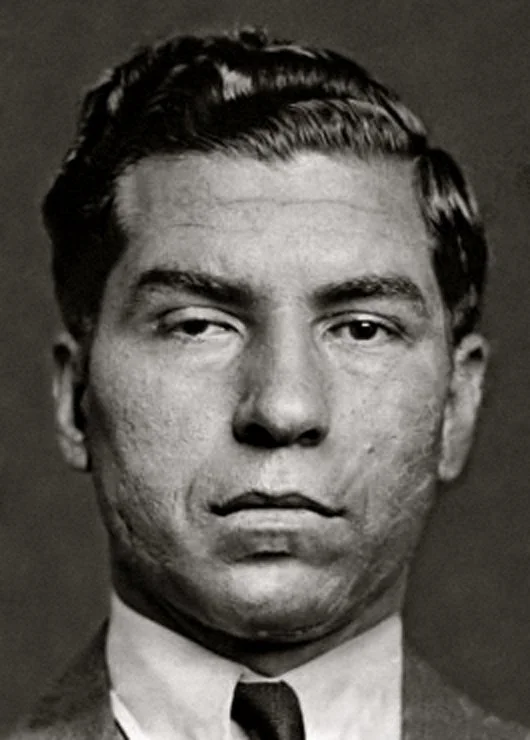
Lucky Luciano, a lieutenant in Arnold Rothstein’s NYC drug-smuggling gang, made money during Prohibition by redistilling DCA alcohol at the “Industrial Alcohol Company” of Brooklyn, NY.
Below is a 1956 article from the New York Times explaining Luciano’s “Industrial Alcohol Company” of Brooklyn’s WWI-era Air Force contracts. Airplane manufacture has a strange synergy with the drug trade. While Luciano’s factory made “lacquer to cover the wings of airplanes”, Luciano’s boss Arnold Rothstein had other business partners doing the same thing in Great Britain: Captain Alfred Loewenstein and the Dreyfus Brothers, Henry and Camille. Loewenstein and his captured chemists made big bucks selling “flame-resistant acetate lacquer coat for fabric used to cover airplane wings and fuselages” to the British Government starting in November, 1914. When you’re reading that clipping below, bear in mind that the Liquor Trust changed it’s legal name often, by 1925 it called itself “The National Distillers Corporation”.

The Liquor Trust changed its legal name to “National Distillers Corporation” in 1925.
Men like Lucky Luciano and Sammy “The Fighter” Taran actually bought denatured alcohol from the Liquor Trust via the Federal Government and had it delivered by train to their re-distilleries in New York and Minneapolis. Prohibition, via the Liquor Trust, made hard liquor a federal monopoly enjoyed by Bossism’s kingmakers… and the Roosevelt Family’s Wall Street cronies.
Because of the Liquor Trust’s astounding protection from Theodore Roosevelt and its connection to organized crime, it’s worth examining who controlled the DCA. The June 22, 1899 article above lists its financiers (“underwriters”) as NYC and Philadelphia “traction men”, who are, as I mentioned, also the Early Film men. A more thorough biography follows:
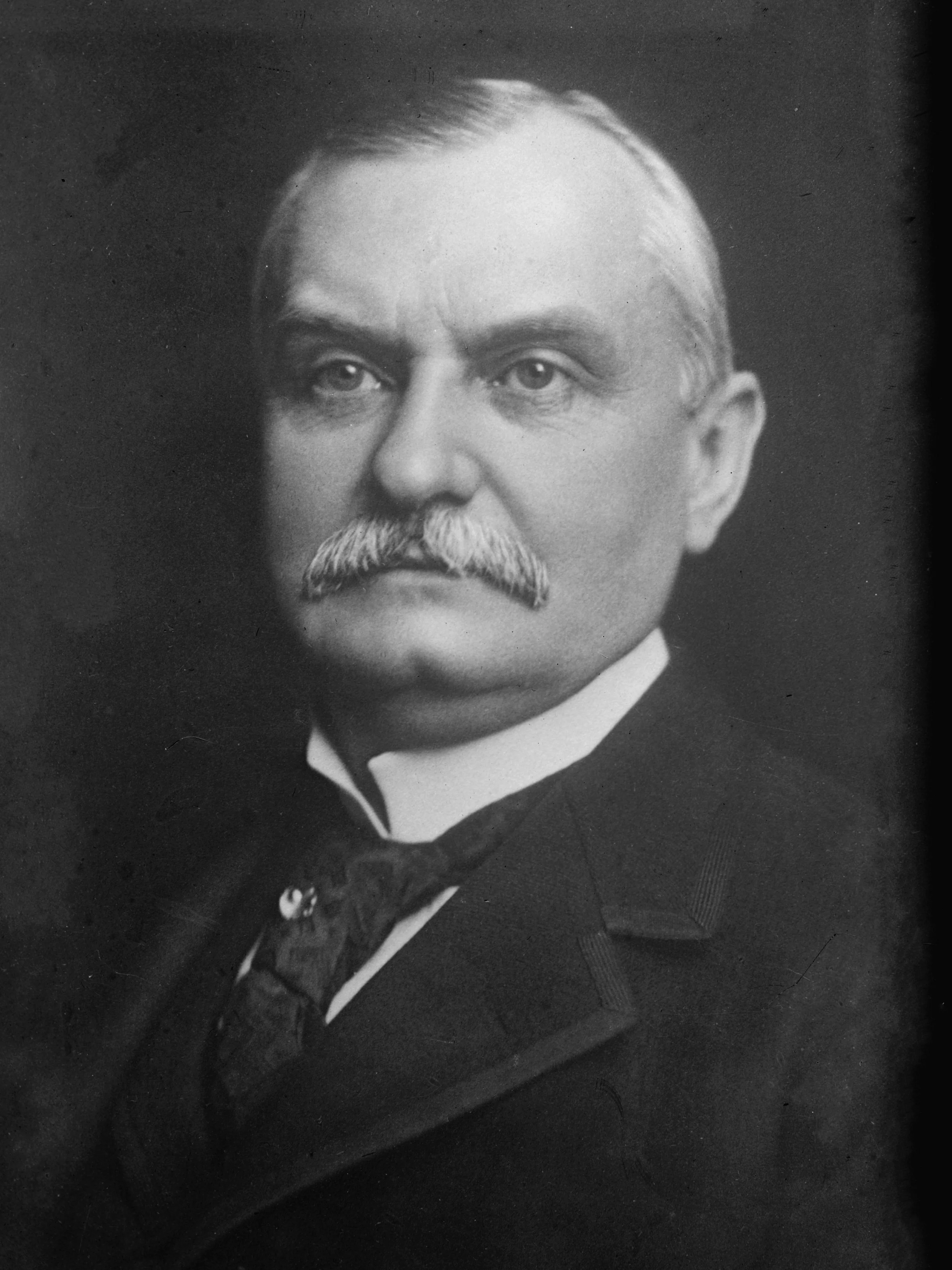
Thomas Fortune Ryan
Thomas Fortune Ryan. Andreanolen.com readers know this miscreant as Otto Kahn’s in-law and partner in the takeover of the Metropolitan Opera. Ryan was a Democratic Tammany Hall funder who controlled the American Tobacco monopoly, which I wrote about in Cigarettes and the White Slave Trade. Ryan was also the employer of Benjamin B. Hampton, an Early Film mogul who in turn employed Monroe WI’s very own British spy, William Wesley Young. Thomas Fortune Ryan bankrolled Monroe, WI’s film magnate and pornographer, John Freuler, who spearheaded the independent movie producers’ legal attacks on the Edison Trust and coordinated with the Wilson administration to do so. Ryan, as a board member of the Guaranty Trust Company, was also a beneficiary of Wilson’s dissolution of the Edison Trust. I’ll remind readers about Guaranty:
Guaranty's board of directors included two Guggenheim copper representatives (Daniel Guggenheim and William C. Potter); our old friend Thomas F. Ryan (Benjamin B. Hampton's old American Tobacco patron); James B. Duke, then chairman of the gently trust-busted (thank you, B. B. Hampton!) British American Tobacco; Albert Strauss of J. W. Seligman & Co. (the Humanitarian Cult Seligmans and Paul F. Warburg's stand-in at the Federal Reserve Bank); and J. P. Morgan's representative and Versailles Treaty éminence grise Thomas Lamont, among others. Thoroughly 'Teddy Roosevelt' interests.
Ryan’s tobacco business partner George Lorillard was one of NYC’s top whoremasters, alongside the repulsive Livingston family, from whom Crawford Livingston sprung.
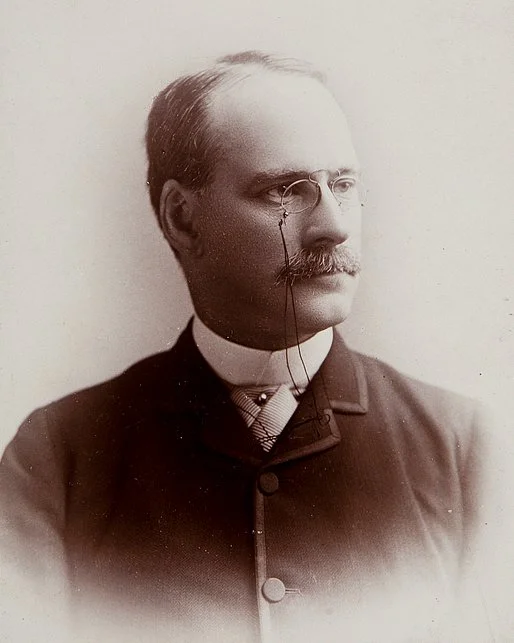
William Collins Withney
William C. Whitney was Thomas Fortune Ryan’s partner-in-crime capturing NYC’s “traction” franchise. Ostensibly an “anti-Tammany” political figure, Whitney was the foil to Ryan’s Catholic Boss buddies. The son of wealthy Yankee industrialists, Whitney was made Secretary of the Navy under President Cleveland and began what would become the juicy prize of White House occupancy for decades: sweetheart shipbuilding projects. Whitney’s brother, Herman Melville Whitney worked with Hayden, Stone & Co. to market his “Dominion” Canadian mining companies, while his sister Lilly married Charles Tracy Barney, who ran the Knickerbocker Trust which J. P. Morgan bankrupted to stop the Heinz Brothers, competitors to the Guggenheims. The Knickerbocker Trust shared management with the Empire Trust, the Edison Trust’s creditor. Empire lost out to the Guaranty Trust in the post-WWI war to take over the Paramount Pictures distributing company and control Hollywood. The Guaranty Trust funded Pancho Villa during the period he was buying hot armored vehicles from Charles Ward, who would shortly be running Minneapolis for the Galician Gang and bankrolling the “third party” movement of the Roosevelts and Lafollette. Small world, no?
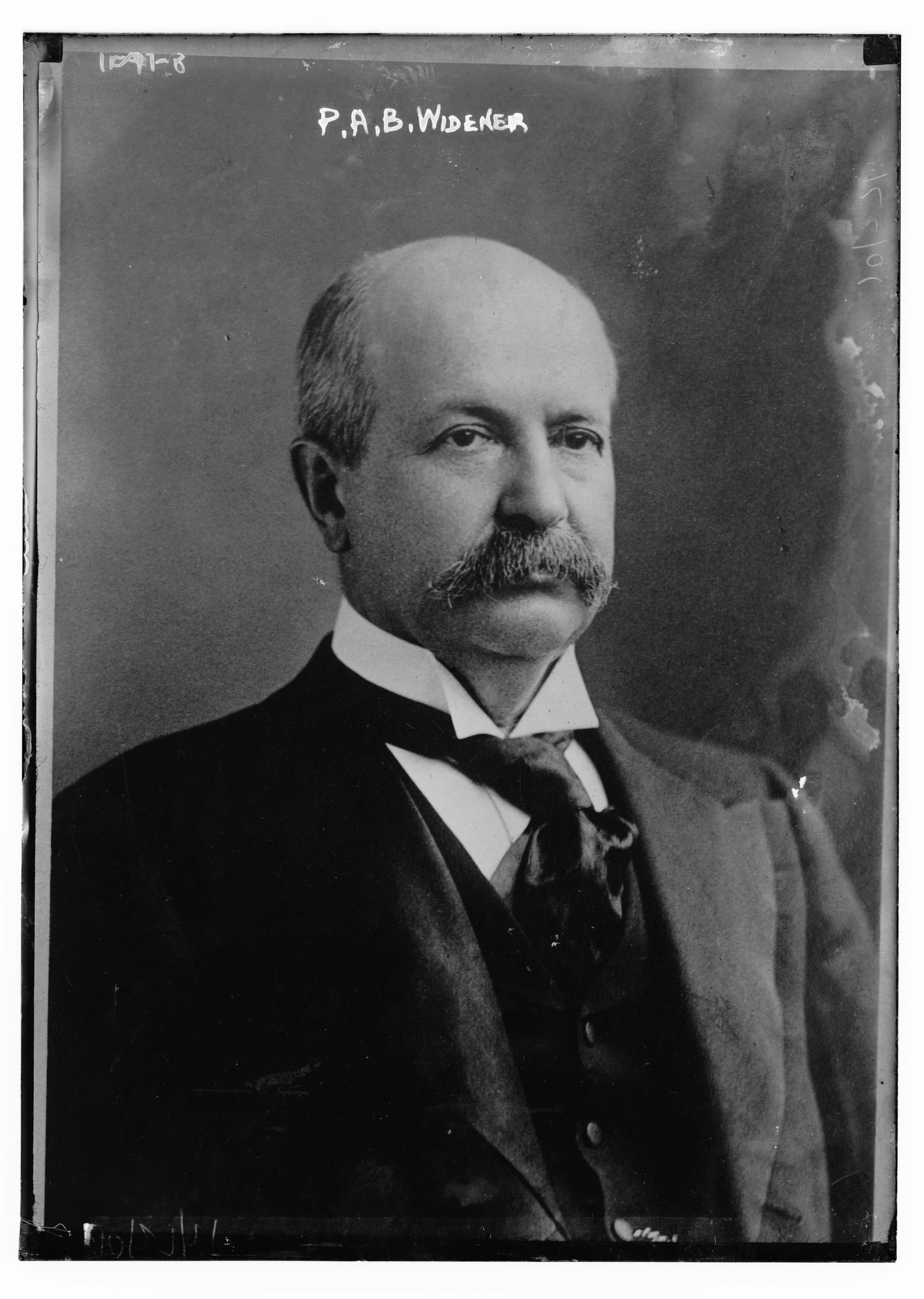
Peter Arrel Browne Widener was a butcher who became fabulously wealthy supplying meat to Lincoln’s Union Army during the Civil War, just like Chicago’s Beef Trust. William Lukens Elkins was Widener’s partner in the Philadelphia street car monopoly and a founding owner of Standard Oil alongside John D. Rockefeller. Another of Whitney/Elkins/Widener’s Philadelphia traction partners was Thomas Dolan, who had Philadelphia’s natural gas supply by the short-hairs.
Frederick P. Olcott was a ‘Gold Democrat’ (a pro-NYC financial community Democrat who stood against the silver-mining-backed Democrat politician and Kentucky Colony offshoot William Jennings Bryant) as well as an NYC stockbroker. Anthony N. Brady was one of the largest shareholders in Ryan’s Tobacco monopoly and controller of Albany, NY’s natural gas supply as well as Brooklyn’s traction service. Brady would partner with Widener, Whitney, Ryan and even once with Edison in various investment schemes. Hugh J. Grant had just finished two terms as NYC’s Tammany Democrat mayor.
The trustees of the Liquor Trust, that is the financial institution which holds the assets of the Liquor Trust on behalf of its underwriters, was something called “the State Trust Company which recently came under Metropolitan control”. The Metropolitan Trust Company was an investment vehicle set up by Union General Thomas Hillhouse. Hillhouse was the assistant treasurer of the United States in New York City, having been appointed by President Grant— that cotton smuggler who tried to edge out his Jewish underworld competitors during the Civil War. Lincoln smacked Grant down for this maneuver, signalling a shift in the criminal underworld. Historian Jonathan D. Sarna describes this in much wider social terms: “Jews moved from outsider to insider status in the United States, and from weakness to strength.”
So these are the men trying to bleed the nation through hard liquor, a vice industry. They were overwhelmingly men who profited from Lincoln’s administration. They were not the only participants, however.
Due to the secret participants, there was blood in the water within a year of the Liquor Trust’s founding. August Belmont Jr., son of the Rothschild’s American agent, had formed a “trust within a trust” inside the company, and was jockeying for control of the whole thing. (See NYT, Oct 14, 1900). It was the mysterious Chicago interests (almost certainly the Kentucky Colony), as voiced by one “Philip Kreiss” or “Philip Kreissel”, who put an end to Belmont’s takeover.

August Belmont Jr, dressed as a WWI soldier, from the War Records of the Knickerbocker Club, 1914-1918 (1922).
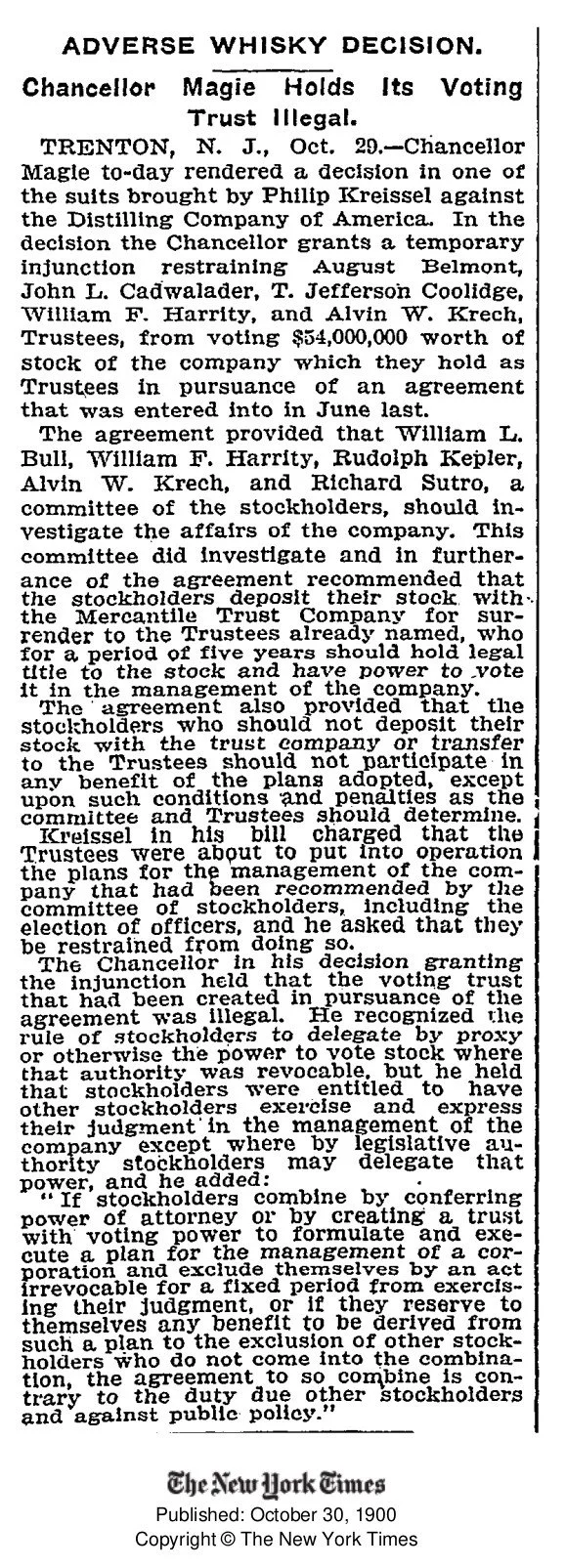
The men staging the Rothschild-coup alongside Belmont were William F. Harrity, chairman of the National Democratic Committee, and Alvin W. Krech. chairman of the Rockefeller-controlled Equitable Trust Company.
Who did the Kentucky Colony choose to intermediate with the Rothschilds? The identities of the parley commission are as follows: William Lanman Bull Sr. was president of the NY Stock Exchange and ran a banking house, “a Vanderbilt and Rockefeller house”, named Edward Sweet and Co. His family intermarried with the Livingstons, a daughter of which married rat pack member Fred Astaire. (For the relationship between dance halls and pimping, see “Duff Gordon Sherry”). Rudloph Keppler was a German businessman who served as president of the NYSE and participated in Samuel Untermeyer’s Pujo Committee “investigating” the banking trust. (Untermeyer then went on to make the banking trust more powerful than ever with the Federal Reserve Act 1913.) Finally Richard Sutro was a prominent Jewish financier (mostly of East Coast electric utilities) and sponsor of New York’s Ethical Cultural Society, as were so many of his Ringstrasse peers around the Humanitarian Cult. Strangely, the Sutros never bought a proper home in New York, but rather preferred to live at the Sherry-Netherland Hotel, which was owned by the duPont family (incubator for Silicon Valley’s Hambrecht & Quist) and the Astor family, who were also big into bordello properties alongside the Livingstons and Lolliards.
Readers are probably detecting a whiff of the “sex trade” around the Liquor Trust. Things really come out into the open in 1902, when we learn that Crawford Livingston is the whiz kid overseeing a reorganization of the Liquor Trust’s financial structure. This reorganization was designed to free up a millions in cash as “working capital” pending some nameless development in the captured market— probably Roosevelt’s repeal of the Lincoln-era tax in 1906. (See NYT September 20, 1902)
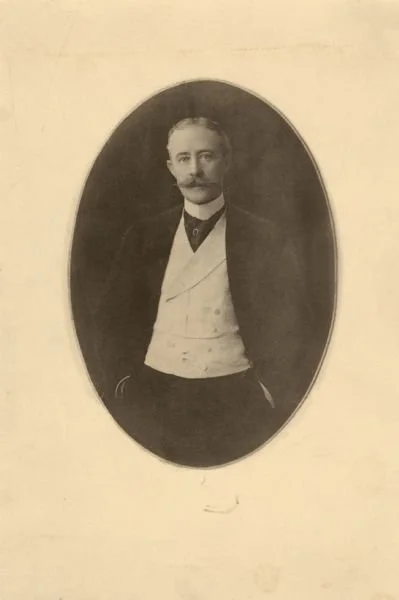
Crawford Livingston. His family were one of NYC’s most prolific bordello owners, mercenaries/Indian agents, as well as pirates. They were also Monarchists who only joined the 1776 revolution when they thought it possible that New Jersey would become their kingdom. I consider them leading figures of the English Mafia in the USA.
Readers may remember Crawford Livingston as Otto Kahn’s investment partner in Monroe, WI-native John Freuler’s Mutual Film company. Both Kahn and Livingston were representatives of Kuhn, Loeb and Company on Mutual’s board. Mutual Film did the legal heavy-lifting breaking up the Edison Trust and was the producer of pro-Pancho Villa propaganda as well as the iconic The Birth of a Nation. (The Galician Gang were big into selling Villa military supplies, see Charlie Ward. Zionist political activist and supreme court judge Louis Brandies had to be dragged away from the temptation of overseeing this legally-gray procurement trade by his superior on the bench, which he resented.)
Crawford Livingston was an early developer of St. Paul, MN and very active in banking there. He was contemporary with Chester Congdon, who also got his start in St. Paul, as did William H. Oppenheimer and Elbridge Colby.
"Today the names of Chauncey Griggs and Crawford Livingston live on in St. Paul in the Crawford Livingston Theatre, in streets named for Griggs and Livingston, and in the Burbank-Livingston-Griggs house still standing on Summit Avenue.”— Ramsay County History, Fall 1999.
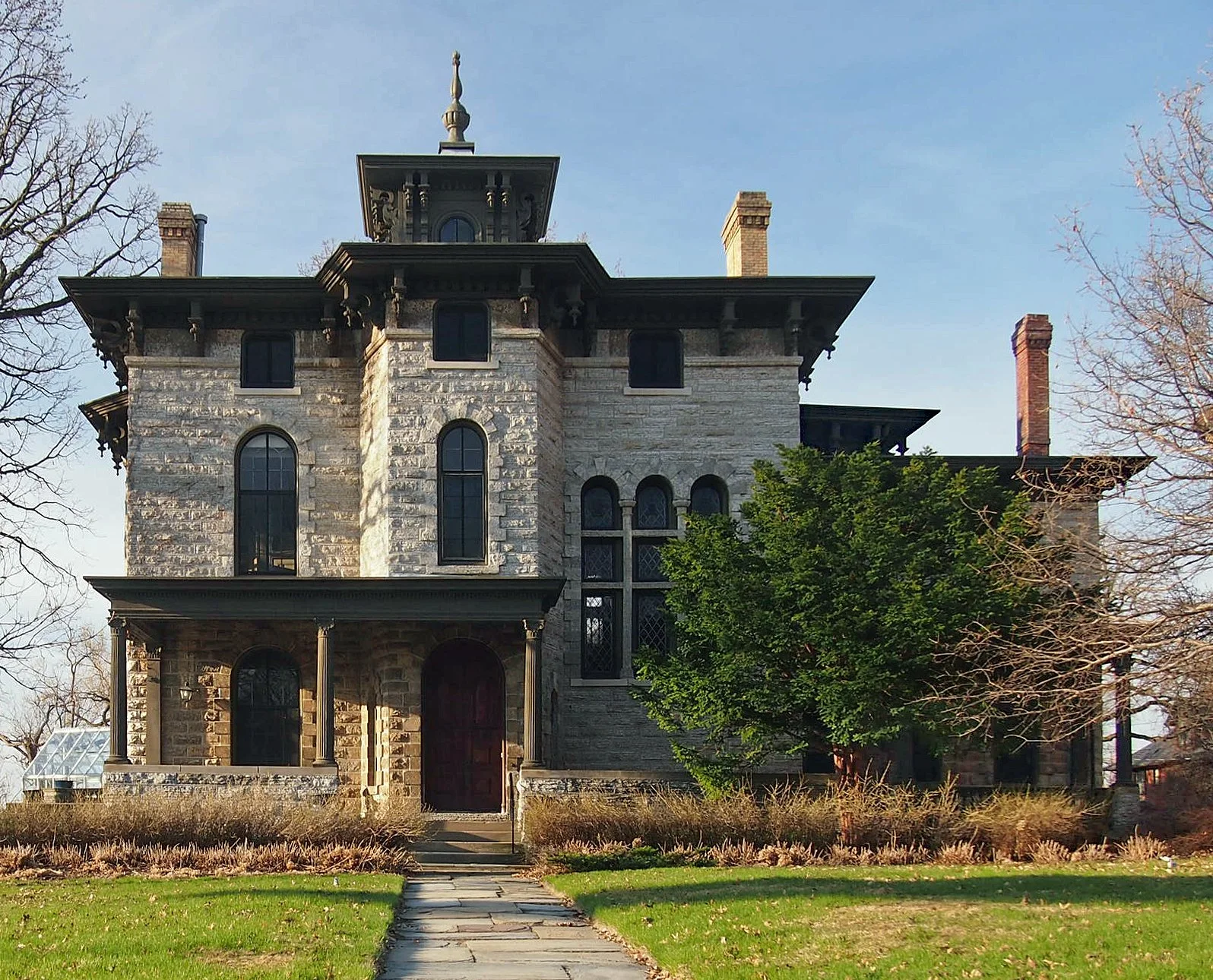
Crawford Livingston’s house in St. Paul, MN. This is the type of “Summit Avenue” luxury to which the Egans and the Colbys aspired.
Livingston was also interested in Northern Wisconsin at the same time Al Capone and Leon Goetz were: during the rollicking days of Prohibition.
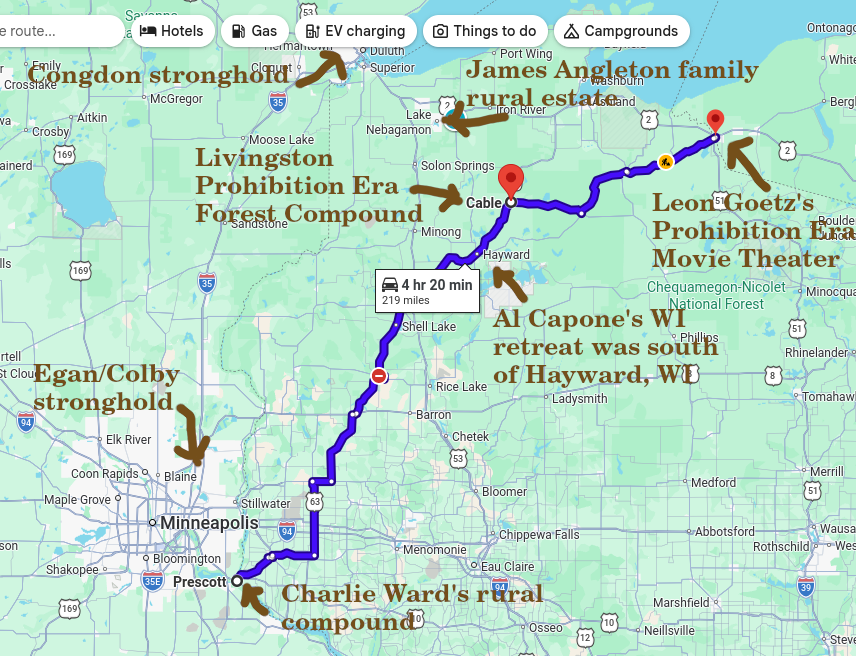
The Midwestern origins of the CIA become glaringly obvious when one considers were important people vacationed during Prohibition.

Forest Lodge was build by Crawford in idyllic Bayfield County, WI in the 1920s— if there were any profits from partnering with John Freuler’s porn-enterprise, they probably funded this palatial cabin. While the land had been in the Livingston family for some time, by building such a “cabin” Crawford was aping the old money in the area, like the Congdons and the d’Autremonts, who built very similar structures in Brule, WI decades before. When Crawford’s Xanadu appeared on the scene, Northern Wisconsin had been made famous as the 1928 “Summer Whitehouse” for the Coolidge Administration, much to the chagrin of the Congdons et alia.
Crawford Livingston reorganized the Liquor Trust by creating a separate company inside the trust structure for denatured alcohol production in the wake of Teddy Roosevelt removing the Lincoln tax. Within a year of Roosevelt’s legislative gift, Liquor Trust honchos were opining in public about how prohibition helped their trade. Consider this NYT article from 1907, by which time the Trust had changed its name to “Distillers Security Corporation”:
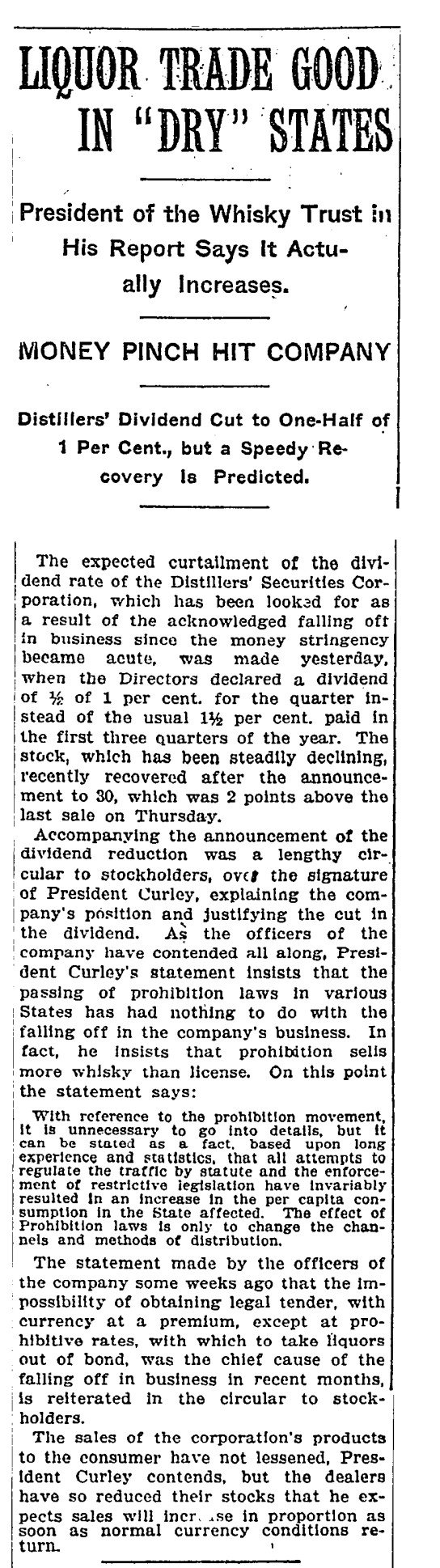
NYT, December 21, 1907.
As we know from Lucky Luciano’s Brooklyn slice of the trust, this denatured alcohol subsidiary did very well supplying the Allied air force until WWI was over. How interesting then that just as these profits were drying up those two-faced Rockefellers bought a controlling stake in the denatured alcohol subsidiary and the trust’s board kicked out Crawford. In his stead they invited in the American International Corporation. AIC was run by men who had been pro-German prior to 1916, when Theodore Roosevelt used Imperial German money to buy a newspaper for his “Bull Moose” campaign, a campaign which ensured the election of his patsy Woodrow Wilson.

AIC was Otto Kahn’s vehicle for profiting from both sides of WWI. As I wrote in Otto Kahn as an Austrian Intelligence Agent, Kahn made at least one crucial war loan to Austria Hungary at high interest rates, and chose to pick up French loans that the Anglo-British bankers declined. Because of Kuhn Loeb & Co. dupliciousness, pro-Anglo interests (chiefly Morgan interests) froze their one-time partners Kuhn Loeb out of some profitable ‘reparations’ deals at the end of the war, as well as other wartime financing. Kuhn Loeb & Co. did not enjoy the level of war profits they could have had given the prestige of their firm because of their double-dealing.
Otto Kahn took this loss of profit personally and responded by organizing a consortium of war-skeptic American businesses which would invest in the war indirectly and on both sides where possible. This company was called “The American International Corporation” (AIC), but they originally had planned to call it “The United Nations Corporation”. By “they” I mean AIC’s fathers, Otto Kahn, the British-German-Jewish financial magnate Ernst Cassel and National City Bank’s president Frank A. Vanderlip. Other investors included:
1) Armour & Co and it’s partner Union Pacific. At this time, Armour & Co was actually part of the “Beef Trust” umbrella company called “Central Trust Company”. This trust included Swift & Co. and controlled Union Pacific too. Kuhn Loeb & Co. money financed both the Central Trust and UP. Vanderlip’s National City Bank shared directors and management with Central Trust; Kuhn Loeb’s Jacob Schiff was a major Central Trust shareholder alongside Ogden Armour and the Swift clan.
2) General Electric/Westinghouse. GE was the ‘Morgan half’ to the “Electrical Supply Trust”, Westinghouse being the ‘Kuhn Loeb and Equitable Life Insurance half’. (Remember the Met’s James Hazen Hyde?) In reality, there was cooperation between Morgan and Kuhn Loeb through GE and Westinghouse: the two firms pooled their patents.
3) International Nickel. The American half of a Canadian mining joint-partnership. INCO’s American money came largely from the Hicksite Quaker Joseph Wharton, a co-founder of Bethlehem Steel— that steel concern which Woodrow Wilson didn’t want profiting from WWI shipbuildling contracts.
4) Anaconda Company. “Anaconda” was what was left over from the Amalgamated Copper Company, which had been part of John D. Rockefeller’s and Henry Flagler’s Standard Oil Trust. [Goetz historians will remember Flagler from Leon’s FL land speculations.] Standard Oil was broken up by Teddy Roosevelt in 1911, but Anaconda continued to be run for the Rockefellers by a wiley Irish duo, Cornelius Kelley and John Denis Ryan.
5) American Telegraph & Telephone, a.k.a “AT&T”. This Lincoln-era trust was a Roosevelt/Woodrow Wilson approved trust run by Theodore N. Vail, a D. C. political operative who married Post Office and Union Pacific Railroad interests, while making copper lines standard for the nation’s telegraph and telephone system.
6) W. R. Grace & Co. Originally an Irish chemical and shipping company based in Peru, it moved its headquarters in NYC at the end of the US Civil War. It specialized in chemicals for fertilizers and gunpowder. By WWI it was a shipping, crude oil and chemical conglomerate. The Graces were active in Catholic politics in the USA, like Thomas Fortune Ryan.
7) Robert Dollar Company. A Scotch-Canadian (like Max Aitken) shipping company which specialized in Pacific Ocean transport and US mail delivery. In the 1920s the Dollar family sold a portion of the firm to W. R. Grace & Co. In the run up to WWII, Franklin Delano Roosevelt seized the company’s shipping assets illegally, a situation which wasn’t ‘put right’ until the 1950s.
8) Stone and Webster. An engineering and construction firm which specialized in electrical utility management, and often shared interests with Westinghouse and GE.
These companies represent a consortium of Beef Trust, Lincoln, Ringstrasse and Irish interests. Certainly the Ringstrasse and Irish elements were not reliable for the Anglo sphere prior to 1916, but the presence of the Beef Trust, GE and AT&T surprises me. It would appear that the Roosevelts were not persuasive to the some of the other Lincoln Money heirs. Certainly by 1936 FDR felt he needed to make an example of AIC:

Waycross Journal Herald (Department of Education newspaper in Washington D.C.). November 30,1936
What more can we say about Kahn’s AIC? Co-founder Ernst Cassel was a family friend of Kahn’s and a particularly valued connection by Kahn’s powerful in-law Sir George Lewis. Vanderlip’s National City Bank was one of the old New York City banks big enough to compete with Thompson’s and Baker’s National Bank of the City of New York, i.e. Lincoln Counterfeiter Arabut Ludlow’s benefactors.
Goetz fans know the Armour firm from its sponsorship of the mysterious pro-Prussian film magnate Col. Selig in the 1890s-early 1910s. Much like Col. Selig, by the early 1920s Armour & Co.— now part of Central Trust Company along with Swift & Co.— experienced credit problems and the Armour family’s stock was sold to Frederick H. Prince, a friend of Joseph P. Kennedy Sr.. (Prince’s father was Boston’s DNC rep when Elder Ziegfeld worked his Prussian military band magic with Strauss.) Prince busied himself removing political opposition to the “Beef Trust” by buying favor with Franklin Delano Roosevelt:

Excerpt from Ferdinand Lundberg’s “America’s 60 Families”, Vanguard Press, 1937.
Shortly after AIC replaced Crawford at the Liquor Trust, the New York Times printed that Maury, Rogers & Auchincloss, a prominent New York Stock Exchange brokerage and investment house, had “issued a letter on the Distillers Security Corporation”. This suggests that there was financial trouble of some kind. The trust changed its name yet again to “US Food Products Corporation” and by 1921 a special consortium of bankers was convened to bail the trust out. While I can’t be sure who these banks were, they probably included Sanderson & Porter and the J. P. Morgan syndicate.
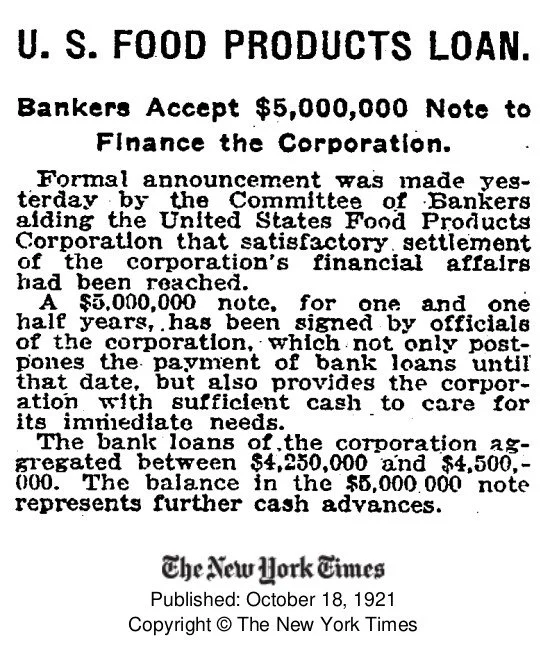
With these unamed bankers came a new president of the trust: Seton Porter. Seton was brother to the founder of Sanderson & Porter. Seton Porter dictated to Washington D.C. what Prohibition policies should be. From the work of Laura Fields of DramDevotees :
This [his appointment as president of the Liquor Trust] also made him [Seton Porter] president of the Kentucky Distillers and Warehouse Company, a subsidiary of US Food Products. He reduced the company’s expenses by moving the Whiskey Trust’s remaining 70,000 barrels of aged whiskey from 20-odd Kentucky locations into the company’s Elk Run Distillery warehouses. Also that year, Congress simultaneously passed the Concentration Act, which effectively forced the consolidation of all the whiskey in the country into 24-30 government-controlled warehouse locations, 12 of which were conveniently located in Kentucky…
Seton Porter was among the experts called to advise Congress on how to proceed with decisions regarding the liquor trade throughout the 1920s. General Lincoln C. Andrews, Assistant Secretary in charge of Customs, Coast Guard, and Prohibition admitted that Seton Porter’s recommendations were often applied to legislative decisions. In 1927, The American Spirits Manufacturing Company was restructured to become the American Medicinal Spirits Company, a name more suited to its purpose. That same year, the American Medicinal Spirits Company, which already controlled the Kentucky Distilleries & Warehouse Co., purchased another 5 major consolidation warehouse sites…. Seton Porter now controlled over 50% of the whiskey stocks in Kentucky and nearly 30% of the nation’s whiskey stocks. He would have the ear of the Treasury Department when the decisions were made as to who would be allowed to distill medicinal whiskey over the next few years. Porter’s influence within the Treasury Department and with the Prohibition Commission was quiet and conducted behind the scenes with the same men he mingled with in Newport, Rockport, and in New York’s clubs. When asked about the liquor trade during Prohibition, he would always side with temperance, while his National Distillers Products Corporation continued to climb in the stock market.
Sadly, the US Treasury Department was a very corrupt institution. At the same time Porter worked with the Treasury, the Treasury’s head of the Federal Narcotics Bureau, Col. Levy Gamble Nutt, was outed working with the nation’s top drug smuggler, Arnold Rothstein. (Lucky Luciano and Meyer Lansky’s mob boss.) The US Treasury had become the national clearing house for organized vice. More from the fascinating Ms. Field:
By the time Repeal seemed imminent, Seton Porter was ready. He called his old friend Harry Mason Day to help him corner the market in every way possible…
In November 1933, before Repeal became a reality, Seton Porter was part of a team of experts called the “code authority” which helped to draw up drafts for Roosevelt administration’s “Codes of Fair Competition for the Distilled Spirits Industry.” The Secretary of Agriculture and the President’s Special Committee for the “Control of Alcohol and Alcoholic Beverages” drew up a plan that would impose rigid Federal control on the whole liquor business until Congress was able to tackle the subject. The code’s main provisions were:
A Federal Alcohol Control Administration would rule the industry without benefit of any liquor representatives.
No additions to present plant capacities except by a certificate of necessity from the FACA and absolute control of production and distribution through a quota system.
Power to fix prices.
An agreement with the Secretary of Agriculture to pay “parity” prices established by him for raw materials.
The new codes drove America’s whiskey men to Washington to plead their cases and explain how unfair these regulations were. It had also been their understanding that the future of the whiskey industry would be decided by the states- yet here, the federal government seemed to be back in the saddle again. Perhaps the only person to completely benefit from the “code authority’s” plans was Seton Porter (and his National Distillers). He now controlled most of the whiskey in the country.
What Seton had set up was a variation of the scheme Herbert Hoover perfected as US Food Commissioner during WWI, a scheme which allowed Hoover’s political backers around Duluth, MN to reap enormous profits as middlemen during Europe’s food crisis. Chester Congdon’s papers contain materials printed for the benefactors of Hoover’s “charitable” plans. Chester died in 1916, however, when Crawford Livingston was still running things at Teddy Roosevelt’s beloved denatured alcohol monopoly.
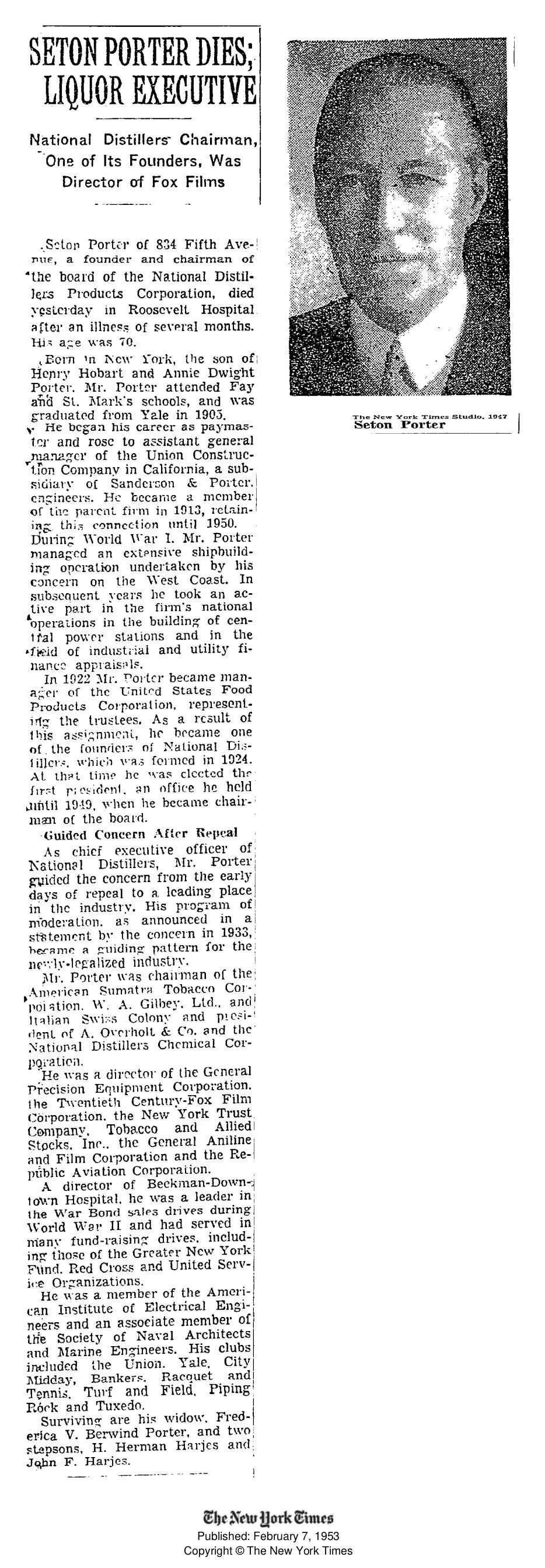
As one might expect, Seton became prominent in early Hollywood, too.
So readers, as you can see, Angleton’s ‘in’ with the nascent “Office of Strategic Services” was his wife’s family’s long-standing Roosevelt espionage contacts. In turn, these espionage contacts were built on Chester Congdon’s— shall we say— ‘interest’ in Teddy Roosevelt and Roosevlet’s protected liquor monopoly. This monopoly was mob-heavy and married to the creme of NYC’s financial community— the same people who worked with the notorious “Office of Naval Intelligence” and Charles Haffenden. People who would lead young Angleton to Meyer Lansky, Lucky Luciano and the mobbing of the US economy.