OSS in Turkey: Putting Names to "Cereus"
In the last two posts I’ve flushed out a rather ugly, but distressingly typical, “Office of Strategic Services” operation in Istanbul during WWII. For the first chunk of the war this office was run by a Chicago playboy named Lanning MacFarland, who was incompetent at espionage, but very good at lobbying for pharmaceutical companies. In Istanbul, MacFarland relied on a preexisting intelligence network, a lemon which he inherited from a British operation in Turkey (of which there were four in 1939). I argue that this network, code-named “Cereus”, was the old Ringstrasse journalist network. “Cereus” was the type of coin in which Col. Alfred Redl dealt.
Speaking of Redl, we can now put three real names to the flowery handles which the OSS assigned to these ‘Cereus’ characters. As it turns out, asset “CARNATION” was a relic of Archduke Franz Ferdidand’s cabinet of advisors. This is intriguing, because it was the Archduke’s newspaper, Die Zeit, which first exposed Redl’s treachery and ignited the “Young Vienna” firestorm around the Ringstrasse’s international journalist/spy networks, like that run by Moritz Szeps.
But before I go there, I’d like to point out that the lead agent in “Cereus”, the man who the British pointed MacFarland towards, remains a mystery:
Furthermore, [OSS] operations in Europe were conducted through an agent known as “Dogwood.” “Dogwood” was a Czech engineer who had previously been employed by British services in Istanbul and was subsequently transferred to the OSS by them. He assumed the role of chief agent for the CEREUS circle, a group of influential elderly individuals residing in Istanbul, and was responsible for managing all subsequent communications provided by the American Military Attache office and other units.
It’s interesting to note that the British were either not aware that “Dogwood” was unreliable or they had set MacFarland up to fail. “Dogwood” was an experienced spy and had excellent contacts with Hapsburg-aged “residents” in the Turkish capital, for example: “the president of an Istanbul-based firm, an Austrian businessman involved in radio, a wealthy Austrian with extensive social connections in Austria, a German economics professor who was a friend of Franz von Papen, another German professor with significant ties to German Junker families, and a Hungarian nobleman who managed an American oil company in Istanbul.”
On top of these Hohenzollern/Hapsburg connections, “Dogwood” was plugged into the head of the Turkish Intelligence Service, and seems to have been for a while. “Cereus” was a long-standing, professional network.
With all that in mind, let’s look at the first asset who I can name. Given the genesis of “Cereus”, it’s unsurprising that “CARNATION” was a news-man:
CARNATION: This individual is Chief of Official Rumanian News Agency “Ardor.” The Germans did all possible to have him dismissed. He was saved by Mihai Antonescu, who changed his views of the war when the U.S. entered. Antonescu has made Carnation his roving press agent; this job is in addition to his work as Director of “Ardor.” As Antonescu’s roving agent, Carnation has made repeated trips to Rome, Berlin, Stockholm, and lately to Istanbul and Ankara, where he will spend much of his time in the future. He is of an honorable family and a trained diplomat. Both he and the new Romanian Minister to Turkey, Cretzeanu, are strong supporters of Maniu. [From: Office of Strategic Services, Supplements to Lists of Code Names Used in Written Reports from Istanbul, Turkey, October 30, 1943, Istanbul, WN 21243–21244, CIA Declassified Records.]
“CARNATION”, the chief of the official Romanian news agency, RADOR (not ARDOR), was Vasile Ionescu. Given a source like Ionescu it is understandable how a noob such as MacFarland might have let his guard down. However, for any intelligence professional with an understanding of the history of the area, the RADOR affiliation, coming from someone like DOGWOOD, should have been a red flag.
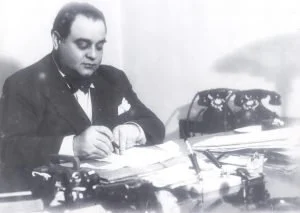
Vasile Ionescu
What sort of man was Vasile Ionescu? The current government in Romania, as part of the European Union, likes his “legacy” very much. Ionescu was a lawyer from a wealthy family who got control of radio propaganda in Romania by 1931, and he wasn’t going to share that power with anyone:
Over the decade [1930s], he [Vasile Ionescu] had an increasing influence on the way Romanian Radio was managed and perceived by the public. On September 5, 1940, Vasile Ionescu was appointed general manager of the Romanian Radio Broadcasting Society, a position he would hold until February 15, 1945, with an interruption during the Legionary Government. This was a period marked by political and social instability, but also by numerous challenges for the Romanian media. The role of radio in informing and mobilizing the population was important in those times, especially in the context of the rapprochement of war and internal tensions generated by extremist political movements.
You see, Romania fought on every side during WWII: they were neutral in 1939, until the Soviet Union started invading their territory; allied with the Axis from 41-44; then allied with the Allies from September 1944 after King Michael I decided to stage a coup and join Stalin. Vasile Ionescu was the type of man who got along with any government in power, unless it was “nationalist”:
Dealing with legionaries
One of the most difficult and decisive periods in Vasile Ionescu’s career at the helm of Radio took place in September 1939, after the assassination of Prime Minister Armand Călinescu by the legionaries. The Legionary Movement, a nationalist extremist group, tried to take control of Radio, seeing in this means of communication a propaganda tool vital to their plans.
Călinescu was a wealthy, Paris-educated aristocrat and a left-wing leader of the “Peasants’ Party” in Romania. He was close to both the French and British governments, a status-quo politician, who opposed both the communist and fascist parties in Romania. Prior to his assassination, Călinescu had hundreds of his nationalist Legionary political opponents murdered in police custody. Fortunately for international businessmen, Călinescu’s mouthpiece Vasile Ionescu was “firm” in the face of his boss’s death:
Ionescu, through his military experience and the firmness he showed, had a key role in annihilating this violent attempt to seize Broadcasting. His firm and rapid decisions have protected Radio from legionary infiltration, thus managing to keep the institution independent and functional in a critical period for Romania.
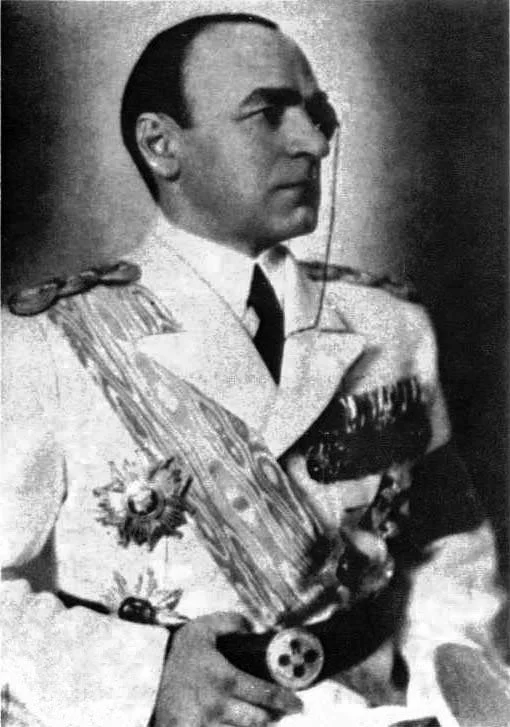
Armand Călinescu
When the OSS talks about Vasile Ionescu being “saved” by Mihai Antonescu, they mean that Ionescu retained his position when Ion Antonescu, a Romanian Army officer, became Prime Minister in coalition with the National Legionaries. Mihal Antonescu— not closely related to Ion— was a liberal politician who jumped ship when he saw the National Legionaries gain power. Ion made Mihai his Foreign Affairs minister and retained Mihai after the purge of the Legionaries a few months later. Vasile Ionescu settled into his new propaganda role well:
The leadership of the Radio during World War II
During the Second World War, the Romanian Radio Broadcasting Society had a crucial role in transmitting information to the public. Under the leadership of Vasile Ionescu, Radio functioned as a source of information and propaganda, but also of culture and entertainment for the population. In an era when communication was controlled and carefully supervised by the political regimes in power, Ionescu navigated with skill between the needs of the institution and the political requirements imposed by the leaders of the time.
However, the period of radio leadership was not without interruptions. During the Legionary Government, between September 1940 and January 1941, Vasile Ionescu was removed from office as a result of the strong influence of the Legionary Movement on the Government. After the collapse of the Legionary regime, he returned to the leadership of the Broadcasting [Society], continuing to manage its activity until early 1945.
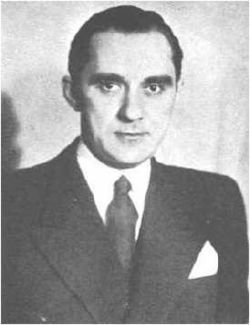
Mihal Antonescu
Here’s where the Archduke Franz Ferdinand angle comes in. I remind readers of the OSS report: “Both he [Vasile Ionescu] and the new Romanian Minister to Turkey, Cretzeanu, are strong supporters of Maniu.”
Maniu is Iuliu Maniu, one of the “United States of Greater Austria” scholars who advised Archduke Franz Ferdinand. Maniu was also one of the Peasants’ Party politicians next to aristocrat Armand Călinescu.
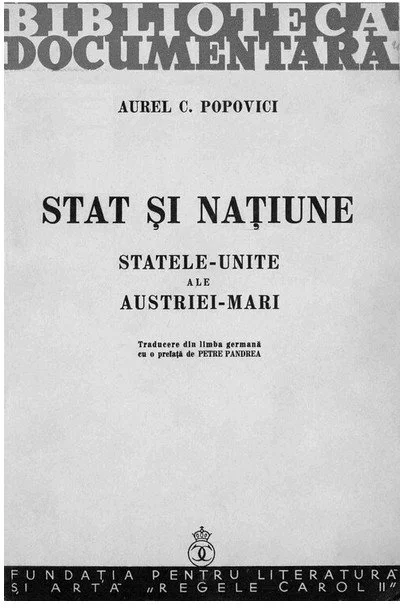
The cover image of Aurel Constantin Popovici’s book promoting the “United States of Greater Austria”
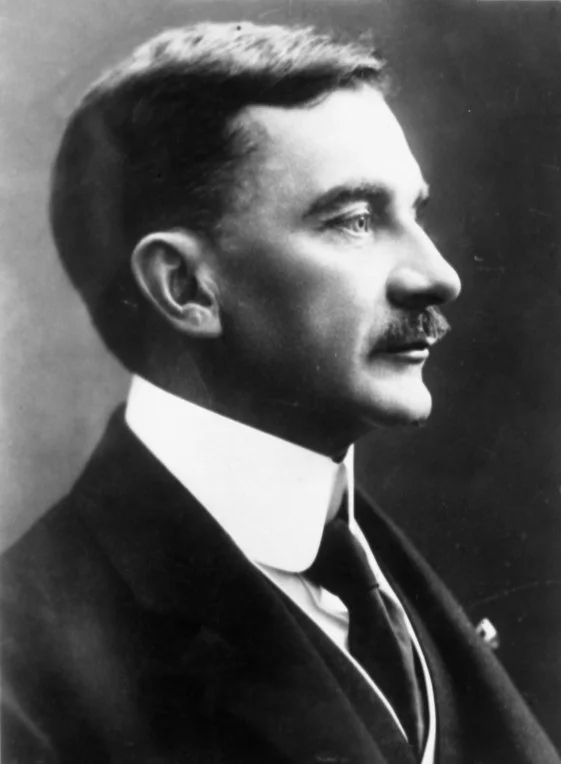
Iuliu Maniu
The “United States of Greater Austria” project was something sponsored by Archduke Franz Ferdinand from 1906, which is about the time he used (probably) Rothschild money to buy Die Zeit from its struggling Ringstrasse founder, the “Young Vienna” patron Friedrich Fritz Waerndorfer. [For the significance of this, see OSS in Istanbul: Alfred Redl and the Kentucky Colony.] Spy-watchers beware: Warndorfer was the patron of the “Die Cabaret Fledermaus”, a Ringstrasse gore and sex theater. Fledermaus’s de facto press agent Felix Salten, a famous Ringstrasse newspaperman, said Alfred Redl paid for sex from the Fledermaus’s leading (female) performers. This information was widely believed throughout Vienna’s editorial community because Salten was so close to the cabaret. Indeed, the military could supply little evidence of Redl’s alleged homosexuality.

Advertisement for the Ringstrasse’s flagship, if low-brow, sex show.
By 1906 Waerndorfer was the beating heart of the Ringstrasse:
Waerndorfer was the organizer behind post-Secessionist art ‘happenings’: he orchestrated Bahr’s press defense of Gustav Klimt; he decided which performers would appear at Cabaret Fledermaus (indeed Shapira states that it was likely Waerndorfer who gave Bahr the idea for Cabaret Fledermaus in the first place); Waerndorfer appointed Peter Altenberg as Fledermaus’s “court poet”; Waerndorfer green-lighted the Wiener Werkstätte’s public relations disaster involving the canabilization of Minne’s Kneeling Boy; and Warendorfer was a leading figure promoting the pedophilia-inspired cult himself. It’s difficult to envision how Vienna’s modern or avant-garde art ‘movements’ would have happened without the person of Fritz Waerndorfer.
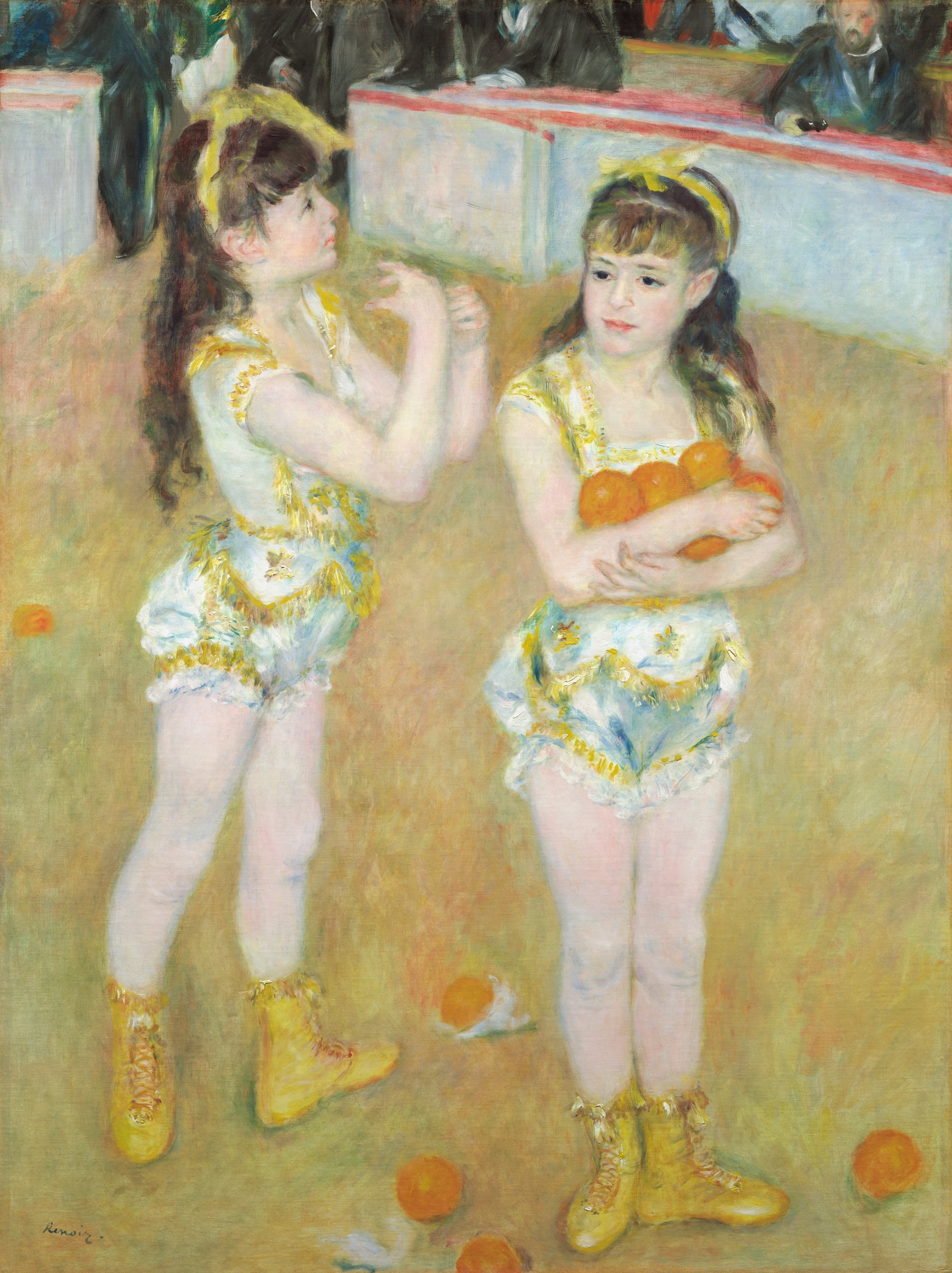
The Ringstrasse weren’t the only pedophiles flitting around the OSS. Bertha Palmer, The Kentucky Colony’s pre-1910 public face, travelled everywhere with this painting of two trafficked circus children, Francisca and Angelina Wartenberg. It was Kentucky Colony money that set up MacFarland’s employer, the Northern Trust Company.
When the Archduke bought out Waerndorfer, he cut out that beating heart and transplanted it into his own propaganda machine. Under Waerndorfer’s control, Die Zeit was aimed at wealthy military officers, the type of position to which the Ringstrasse sent its sons to increase their prestige. It was a publication that glamorized Fabian socialism, whoring, and the “dandy” lifestyle. After the Archduke bought Die Zeit, the paper changed tone to a pro-aristocracy agrarian-socialistic, some might say feudalistic, tone similar to that of the future Peasants’ Party in Romania.
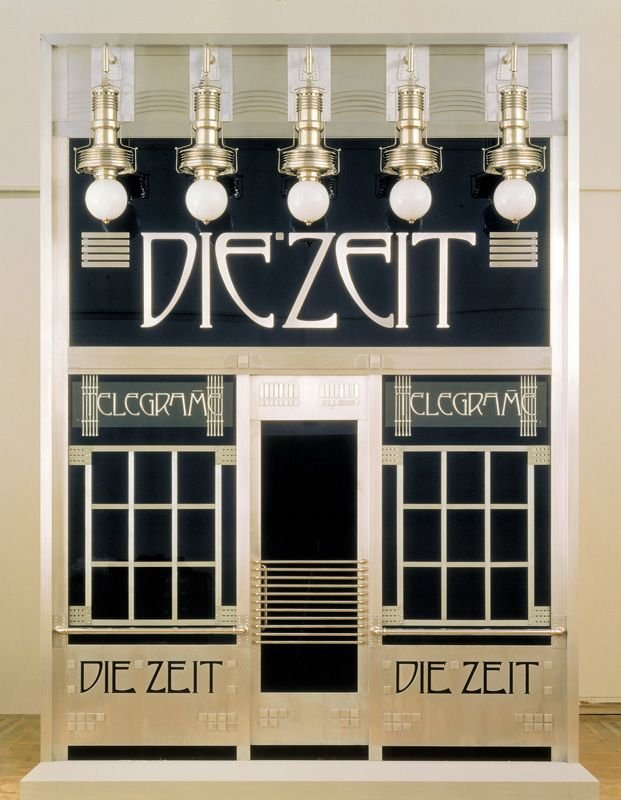
Waerndorfer’s/Archduke Franz Ferdinand’s Die Zeit newspaper was paired with an important information brokerage, the Die Zeit telegraph office. Waerndorfer had the whole premises specially designed with bespoke furniture. Read about the importance of telegraph offices to spy networks in Lincoln’s Bucket Shops.
The Ringstrasse didn’t like Archduke Franz Ferdinand. First of all, his “United States of Greater Austria” idea would delegate power away from the imperial capital in Vienna, pinching the lifeblood of the Ringstrasse. Secondly, the Archduke was making sounds that appeared to be critical of those Ringstrasse sons in the officer corps: the duke felt effete, dandy behavior was harmful to military virtue and he wanted a return to the days of real aristocrats leading the army. Finally, the Archduke was against war with Serbia, which was inimical to the Ringstrasse’s relentless economic march eastward. When the Archduke was shot, the last real political obstacle to the Ringstrasse’s WWI plans was removed. (Consider that the next time you hear of hapless teenage assassins.)
So hey, when you’re a politician who loses their sponsor, the easiest thing to do is call up your last employer, right? I’m pretty sure that DOGWOOD thought so. Given what we know about Ionescu, that “LICORICE” and “LOBELIA” were Romanian Secret Service men stands to reason. (I’m ignoring the OSS’s repetition of the “CARNATION” handle for a “Romanian press agent” named “Theodor Solecolu” because the biographical information provided earlier can only point to Ionescu. Maybe Solecolu was an agent for “Ardor”? lol)
Identifying Vasile Ionescu was easy, but my next target, “CITRON”, was not. CITRON was an “Italian newspaperman with an American wife”. I am less confident in this identification, but the smallness of Istanbul’s expatriate community helps me. Gilberto Primi seems to be the only man who fits the bill. According to historian Francesco Pongiluppi, Gilberto Primi was an “Italian-Levantine” author, journalist and owner/manager of two newspapers: “Il Messaggero degli Italiani and the francophone Beyoğlu Gazetesi”. Unfortunately, the only biography of this man of which I am aware is in Turkish, and written by Rifat Nesim Bali, a student of “non-Muslim minorities, particularly Jews, antisemitism, conspiracy theories as well as cultural and social change in Turkish society.” So more to come on that.
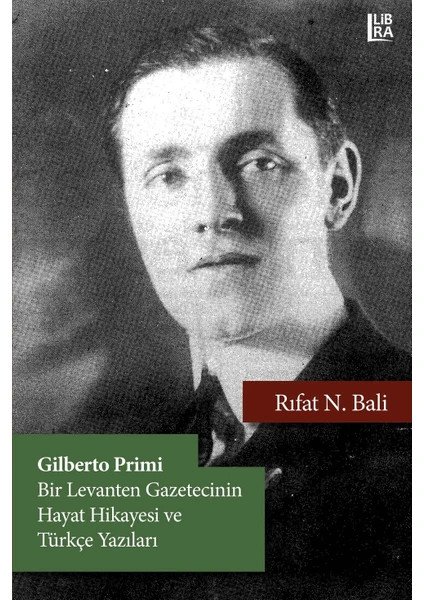
Gilberto Primi’s biography by Bali. The OSS notes ominously: “Publicly took political positions contrary to his own beliefs.”
Finally, I’m excited to bring you the name of one of the unhandled “Cereus” nodes. Historian Esra Çengel identifies a laundry list of Austrian subjects (well-connected, old, wealthy) in Istanbul who were working with “Cereus”. One of these was “a Hungarian nobleman who managed an American oil company in Istanbul.” Guess what? There appears to have only been one American oil company of note in Turkey, the Rockefeller’s Standard Oil subsidiary. This subsidiary, the Hungarian-American Oil Company, was run by Dr. Simon Papp.
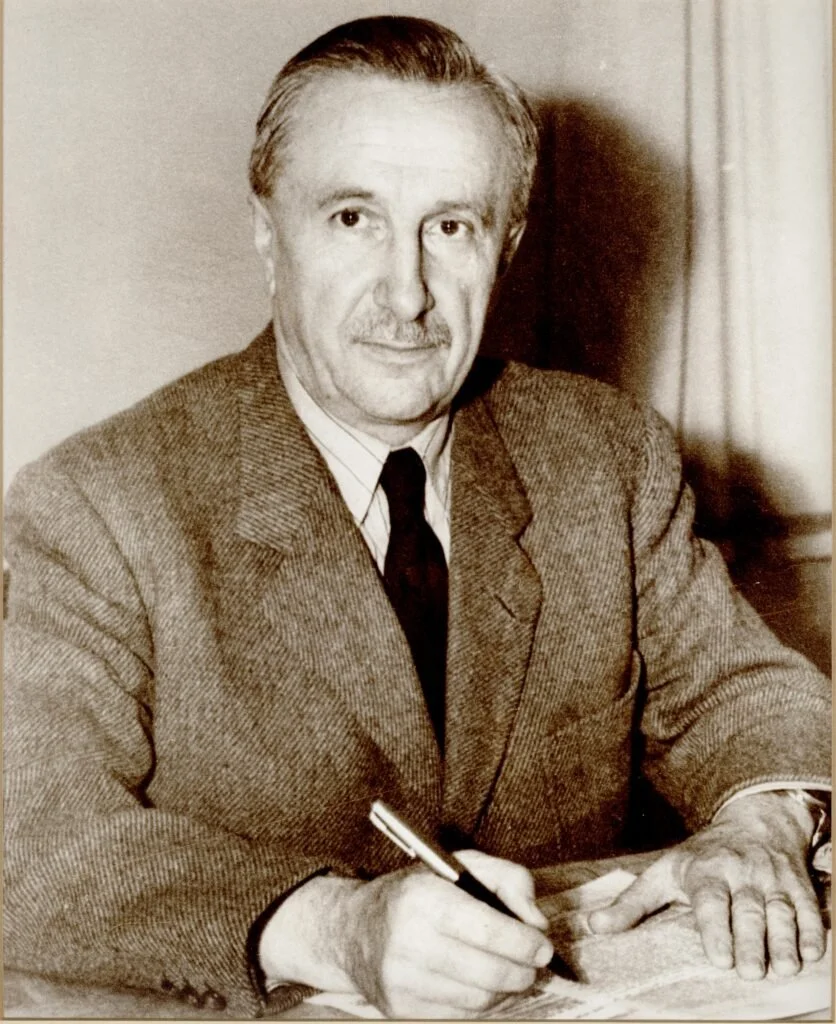
Dr. Simon Papp, shortly before his sentencing, in 1947.
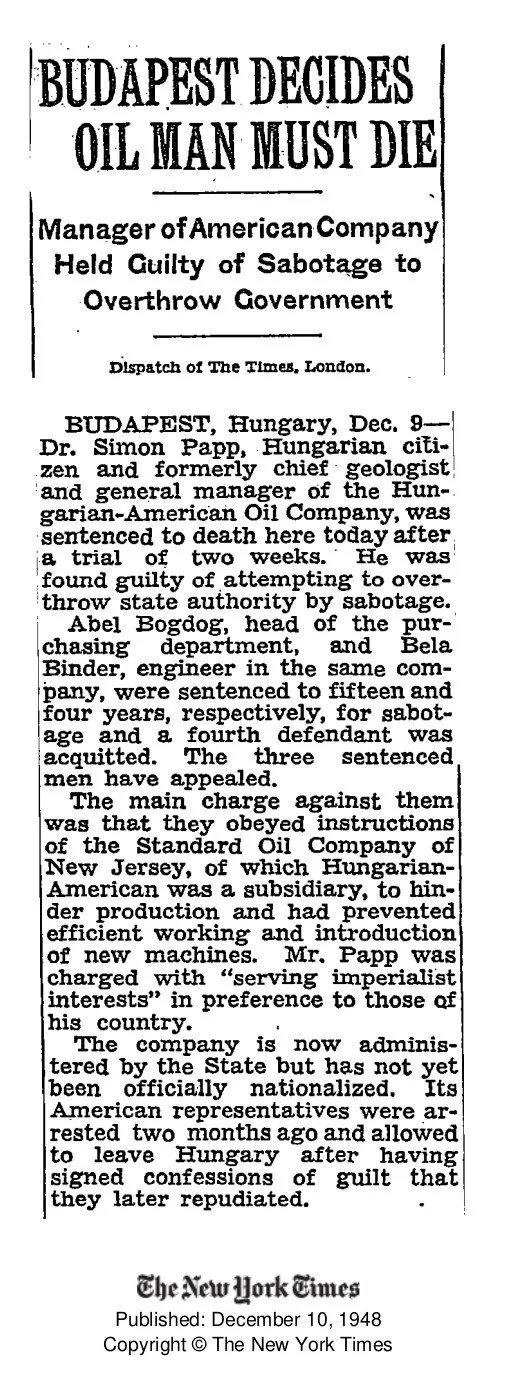
Did the Turks get him? According to the Corvinus University of Budapest:
In 1948, verified by fabricated charges, the MAORT [Hungarian-American Oil Company] facilities were nationalized. Dr. Papp was the main defendant in the MAORT trial, in which the authorities sought to prove that he and his colleagues sabotaged production and conspired to overthrow the political regime. He was sentenced to death, later commuted to life imprisonment. During his years in prison, he was repeatedly assigned to geological tasks in oil, coal, ore, and hydrogeology. Released from political imprisonment in 1955, he then came to know that his wife had already passed away. Until his retirement in 1962, he worked as a geological engineer at the National Oil and Gas Trust. He supplemented his humble pension with occasional lectures and papers.
The Rockefellers were all over intelligence in the 1930s and 40s, consider their help to the FBI and a foreign spy service, the British Security Coordination, from FBI.gov:
The RCA Building placed the FBI within a hotbed of foreign activity, both allied and enemy. The Rockefellers provided space in the same building at little or no cost to British Security Coordination, an intelligence agency/liaison service. It also hosted Italian, German, and Japanese tenants until the U.S. government detained them as enemy aliens when America entered World War II. And the Soviet Union had office space in the building as well.
Nelson Rockefeller, the family patriarch, was on level with J. Edgar Hoover as “Coordinator of Inter-American Affairs” (Chief spy in South America) and could dictate where the Office of Strategic Services operated. As we know, Rockefeller worked with OSS man James Jesus Angleton’s dad Hugh to corner the retail food market in Italy once the OSS had put the Mafia back into power. Poor old Dr. Papp may have been between a rock and a hard place with his “Cereus” involvement, he certainly took the fall for Nelson.
I’m done writing about “Cereus” and the Kentucky Colony for the time being. Next week, I hope to enlighten readers about the Pritzker Family of the Bahamanian “Castle Bank and Trust”. Stay tuned!