British Espionage in America: Brigham Young and the Spiritualists
Following the US Civil War, Monroe, WI’s Universalist elites shared many things in common with Brigham Young’s crew in the Utah Territory, particularly family surnames and a penchant for counterfeiting. Despite these commonalities, the Universalists had a sour attitude toward their Utah alters. Our newspaper, The Sentinel, never missed an opportunity to mock Mormons. What surprised me was the mean-spiritedness of these attacks: editors even laughed when a group of Mormon settlers were made sick by their drinking water after a cow had died in it upstream. Such bitterness suggests that Monroe’s Universalists had a troubled history with the Saints.
Monroe, WI’s Early Film history has its roots in cannibalizing Brigham Young’s grandson’s attempt to break into the move biz. Read all about it!
We do know that both Universalism and Mormonism have an ideological debt to Islam and its fusion of religious, political and military spheres. Neither Southern Wisconsin nor Utah are strangers to coercing people with dissenting views. Young’s attack against settlers at Mountain Meadows, settlers whom he suspected supported the Federal government, is a famous example. Likewise, Monroe earned a shocking reputation for mob violence against critics of Abraham Lincoln during the war.
This is where the Mormons and Monroe’s Universalists parted ways. Brigham Young, the Saint’s Mohammad-like leader, was a late adopter of Lincoln’s politics. Young had won a number of wealthy Missouri converts who owned slaves and saw no value in alienating Missouri’s powerful banking community. He joined Lincoln’s war only when it was obvious that sitting on the fence was no longer feasible, and the Lincoln Men distrusted Brigham Young for this. After the war, the goal of the Republican Party leadership was to reconstruct the Utah Territory in their own image by breaking Young’s sultanship and capturing his mineral resources. British mining investors and spiritualism played a big role in the Lincoln Men’s strategy.
In 1868 a British-born convert to Mormonism, William S. Godbe, left Salt Lake City with his newspaperman colleague, E.L.T. Harrison, for an extended vacation in New York City. Godbe was no ordinary Mormon. Godbe, a pharmaceuticals dealer, was one of the wealthiest men in the territory and a “friend and protégé” of Brigham Young. Godbe’s companion Harrison published the region’s first magzine, Peep O’Day, which was “mildly skeptical” of Young’s political program.
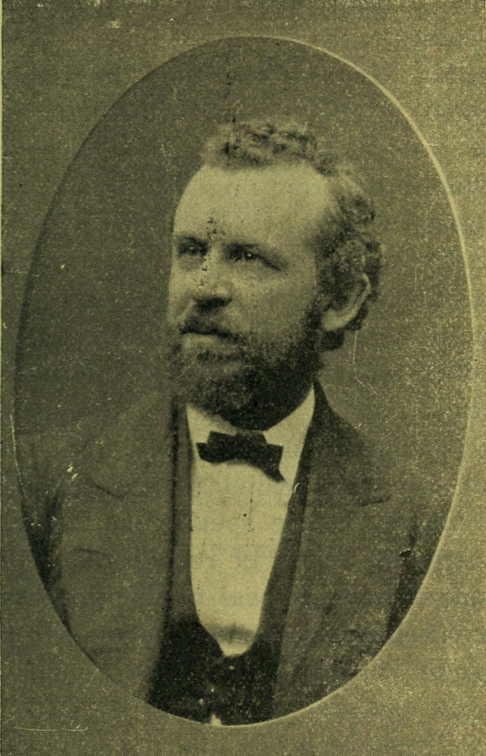
William S. Godbe, 1904.
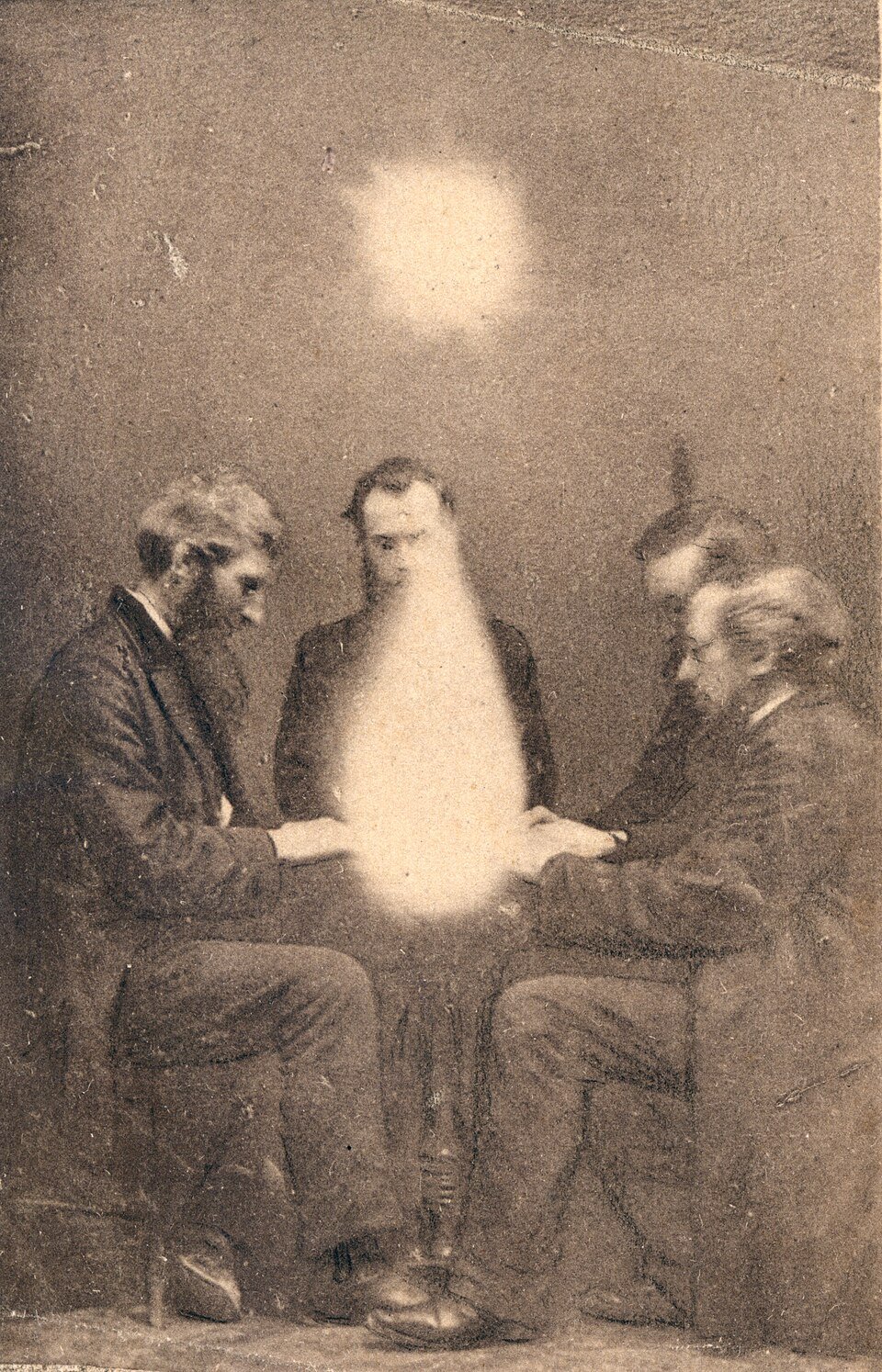
During this NYC sojourn Godbe and Harrison would meet with spiritualist Charles Foster for over fifty seances, which (the story goes) radically changed their religious beliefs and perception of Brigham Young. Foster’s spirit guides disclosed to Godbe how to break Brigham’s religious control and free up Utah’s mining resources for Lincoln-aligned investors. The Ether is remarkably materialistic.
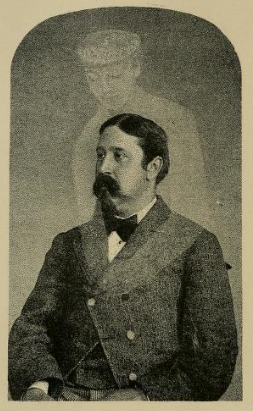
Charles Foster in one of his promotional spiritualist photographs.
What was really going on? Charles Foster was a famous mediumistic charlatan who had recently been exposed in the USA (1863) for faking his “pellet reading” act— an act where deceased persons’ names were written on rolled up bits of paper which somehow facilitated the spirit messages. This exposure didn’t dampen his popularity among Union soldiers like Richard Vance, who was skeptical of Spiritualism until he sought out Foster’s readings while posted in New Orleans in March 1873. Foster operated in the St. Charles Hotel, just like legendary Chicago gambling king Mike MacDonald, who in turn made the money flow for Lincoln’s underworld counterfeiting backers, the Kentucky Colony.
Previous to his 1873 session with Vance, Foster had “lived some time with the novelist, Bulwer, at Knebworth, England”. Bulwer was none other than the Lord Lytton, Edward George Bulwer-Lytton, Secretary of State for the Colonies for a short time in the late 1850s.
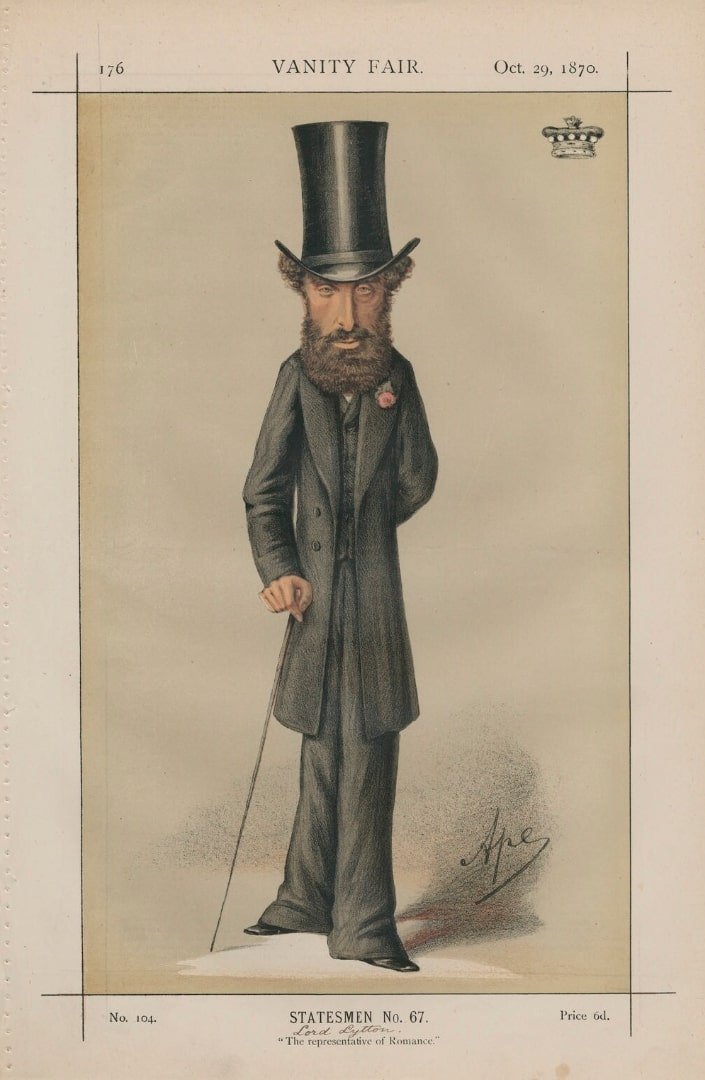
Caricature of Bulwer-Lytton from around the time of the Mormon op.
Bulwer was a cash-strapped aristocrat and follower of unorthodox investor guru Jeremy Bentham. Bulwer was squarely in the political camp of J. S. Mill, the British East India Company’s spymaster and Sigmund Freud’s patron. I wrote about both of these men with respect to Lucy Duff Gordon’s great aunt Lucie Duff Gordon and the colonization of London society by the Austro-Hungarian mob, the Galician Gang. Human trafficking for prostitution— something that neither Monroe’s Universalists nor Brigham Young were strangers too— was at the core of the mob takeover, see Otto Kahn and Sir George Lewis.
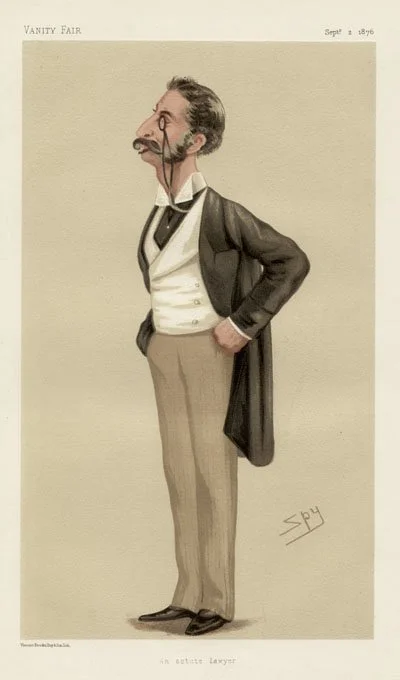
Caricature of Sir George Lewis, London’s blackmailer-king and sultan of the Old Bailey.
Besides hanging out with discredited spiritualists like Foster, Bulwer, a poet and novelist, was close to Benjamin Disraeli and publisher John Murray, heir to a book empire with ties to German intelligence and “reform” politics. Bulwer, while nominally Conservative, was a consummate reformer, voting for expanding the franchise and decreasing taxes on newspaper magnates. Such policies tended to empower London’s “unorthodox investor” class who were represented by Disraeli. Bulwer was also very good at sniffing out mineral resources: he tapped Richard Clement Moody to civilize British Columbia, one of the most important mining regions in the world even to this day. (I remind readers that during this time, the 1870s, the branches of the “unorthodox investor” Rothschild family had committed themselves to cornering non-ferrous metals markets.)
So having lived at the expense of Bulwer for a while, Charles Foster found himself in a position to channel divine messages which would blow up Brigham Young’s resistance to mineral extraction in his Utah kingdom. When Young’s camp was finally subduded (1890s), it would be Lincoln Men from Boston, the Rothschild clan and their satellites the Guggenheims who benefited from the Mormon’s mineral wealth.
Armed with Foster’s spiritual weapons, Harrison and Godbe returned to Salt Lake City and set up a “remarkably homogeneous” group of men to fight Brigham Young. These men were all British-born merchants who had grown skeptical of their Mormon faith. This is how historian Ronald Walker of the Utah History Encyclopedia describes the “Godbeites’” grievances:
The immediate irritant was Brigham Young's economic and social blueprint for the territory, which called for cooperation, unity, and the subjugation of public and private resources to the Mormon commonwealth. His countermeasures to the coming of the transcontinental railroad also increased their concern. While favoring the railroad, Young understood that it might destroy his ideal Zion. Accordingly, he urged wage deflation to preserve home industries, prohibited trade with non-Mormon merchants, and continued his sanctions against precious-metals mining. Godbe and his coterie were dismayed. They believed such measures were impractical and wrong-headed. They prevented Utah's cultural and economic integration with the East.
The Godbeites used Spiritualism— the belief that the spirits of the dead can communicate with the living via guru-like mediums— to undermine Brigham Young’s religious authority. Spiritualism was the ideal vehicle for “devaluation of the Book of Mormon and Doctrine and Covenants, and the rejection of a personal deity, the literal resurrection, and the doctrine of the atonement.” Godbe started up his own “Church of Zion” to replace the LDS.
The Godbeites used this heady mix of ghosts and gold to found the Utah Territory’s first non-Mormon political party: The Liberal Party. The Liberals were consciously modeled on Great Britain’s reforming Liberal Party. While numerically small, the Liberals punched above their weight among transient miners and published a very influential newspaper which would eventually become the Salt Lake Tribune:
The group's [Godbeite’s] direct and indirect bequests were many. Their independent journal, the Utah Magazine, was successively transformed into the Mormon Tribune and, later, the Salt Lake Tribune. As a result, the tradition of an independent non-Mormon press became a Utah reality. Their "Liberal Institute," perhaps Salt Lake City's largest hall during the 1870s, provided a forum for a stream of nationally and internationally renowned lecturers, who in conservative Utah spoke of "liberalism," "radical reform," and even "free thought spiritualism." Similar though smaller centers were established in Beaver, Cottonwood, Jordan, Logan, Mount Pleasant, Park City, and Ogden. Godbeite T.B.H. Stenhouse wrote a seminal Mormon and Utah history, Rocky Mountain Saints (1873), while his wife, Fanny, outraged by polygamy, penned the influential anti-Mormon tract, "Tell It All": The Story of a Life Experience in Mormonism (1872). Godbeites also challenged Brigham Young's prescriptions for a regulated economy and the avoidance of precious metals mining. Finally, the Godbeite Liberal party was Utah's first opposition political organization. Wrested from its founders' control and radicalized, it challenged the Mormon establishment from the early 1870s to the eve of Utah statehood.
You can’t kid a kidder, though. Brigham Young had been with the Latter Day Saints movement since its beginning and remembered a time when Joseph Smith Jr. himself profited from divination scams. Brigham reminded church followers that divination was illegitimate beyond that practiced by the elders of the church. (Divination at all is antithetical to Christianity.)
On the political side, Brigham responded with his own version of the “Liberal Party”: the “People’s Party” and its paper, The Deseret News. Since most miners were single men, Brigham pushed for women’s sufferage and significantly increased the Mormon voting majority, crushing the Liberal Party almost everywhere. The Liberals in turn had Mormon men struck off voter rolls for polygamy, which secured them a handful of electoral wins. Both parties dissolved in the 1890s when Mormon leadership resolved their differences with Lincoln’s political heirs.

People's Party flyer for the 1876 Salt Lake City municipal election.
I feel compelled to mention that spiritualism wasn’t the only battle Brigham Young and his camp faced. The Lincoln Men who came to town tried to undermine the Mormon leaders with sexual blackmail too, to which the Mormons responded in kind. It’s almost comical to watch these two gangs, men cut from the same cloth, attack each other with the same gangland weapons from the pages of their respective newspapers. Because Salt Lake City’s police force was entirely Mormon, the bordellos which serviced Mormon elites, like Belle London’s establishment, had protection, while the Lincoln men’s dens were more vulnerable to raids. (See Nichols, “Prostitution, Polygamy and Power”, 2002. P 65)
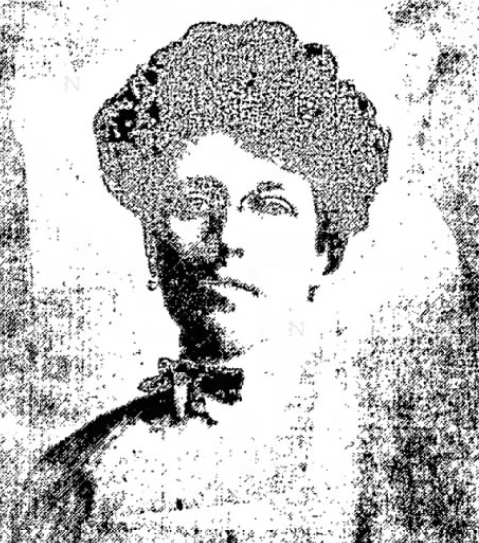
Portrait of Belle London from the Salt Lake Herald-Republican, May 20, 1909, Page 1
It’s interesting to note that with the Lincoln “Gentiles” came a wave of Black and [East] Asian prostitutes who were run by Black madams, such as Nellie Davis of Franklin Avenue. (Davis was convicted of kidnapping for sexual exploitation but wriggled out from the charge.) A similar pattern was evident in Chicago (Mushmouth Johnson, who ran the Chinese as well as Blacks) and later in Springfield, IL where an influx of Black police officers mirrored growth in Republican-protected Black organized crime, which in turn lead Irish mobsters (Democrat Party) to instigate “race riots” in the early 1900s. Omaha, NE’s 1980s “Franklin Scandal,” which targeted Republican Party leaders using pedophilia-based sexual kompromat, had similar Black police/trafficking antecedents.
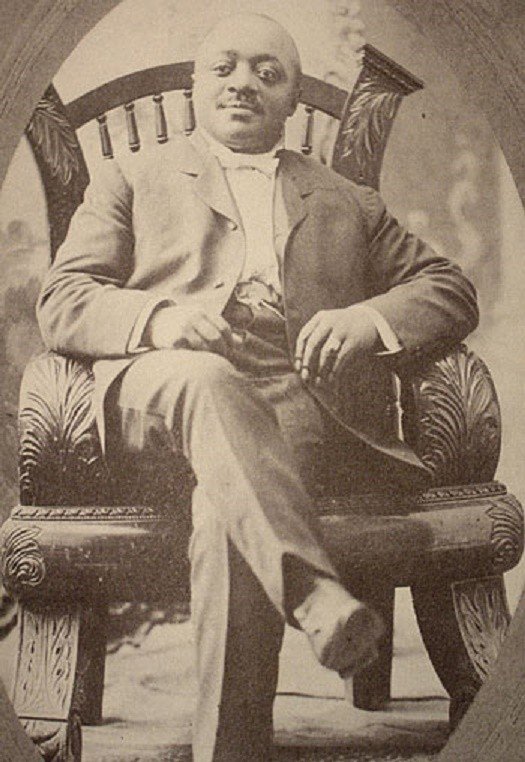
Mushmouth Johnson, the Kentucky Colony’s black vice lord after Lincoln’s war.
After the Civil War both Mormon and “Gentile” leadership profited from prostitution and human trafficking; both tried to use it to control the mining industry. One almost feels sorry for Mormon leadership at this point, because the Lincoln camp had such an advantage staffing federal law enforcement agencies with their henchman. By the 1890s the Saints and Federal Government had learned to live together and “Mormon Mafias” would eventually form in first the FBI (1930s), CIA (1940s) and likely other federal institutions by the mid twentieth century. These days the LDS has a comfortable place in “permanent Washington” and their D.C. temple occupies a commanding place along the Beltway.
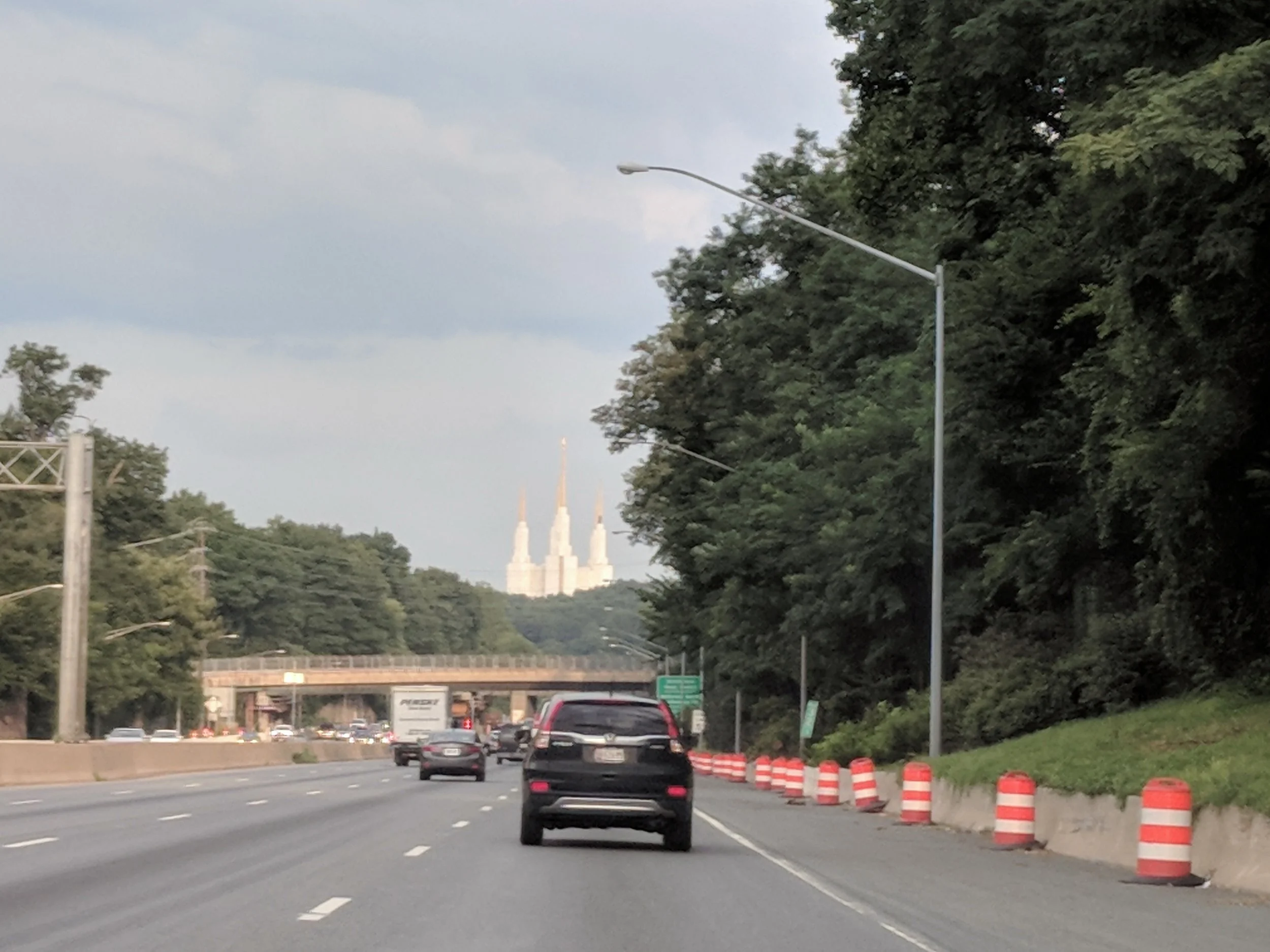
“Surrender Dorothy”: View of the Washington D.C. Temple from the Capital Beltway.
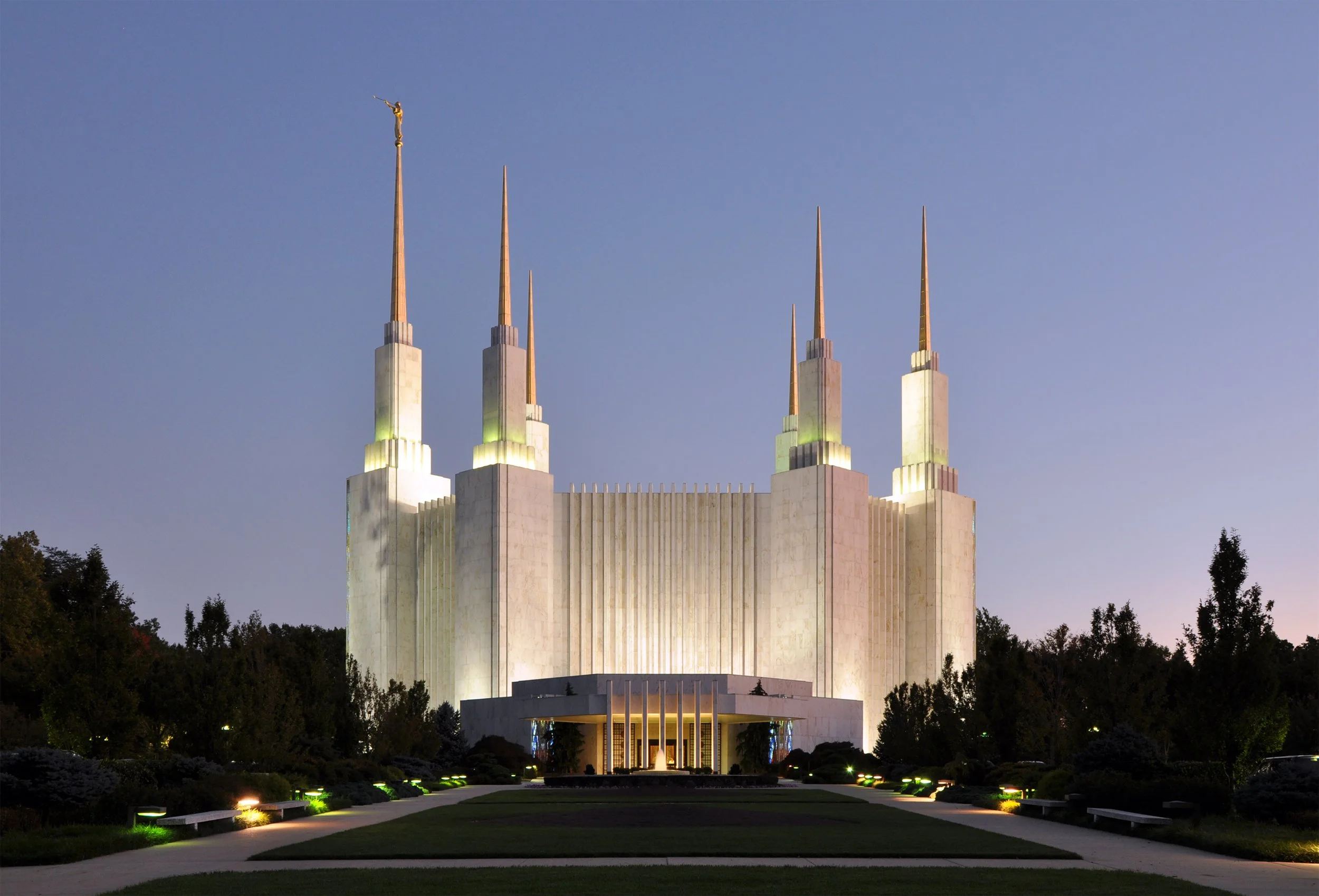
Washington D.C. Temple at dusk in Kensington, Maryland, USA. Joe Ravi. CC-BY-SA 3.0
There is an interesting footnote to this story. Salt Lake City area historian Edward D. Olsen has written an autobiography about his experiences growing up in a haunted house. His mother’s side of the family were former Spiritualists in the Netherlands (Holland) who immigrated to Utah after WWII; his father, who passed suddenly when Olsen was a young child, was from a Mormon family.
In the 1960s Olsen’s mother bought the haunted house, an old 1890s-era brick building, from an LDS bishop named McPhee, who had been renting it to an East Asian organized crime ring. (Probably Joseph H. McPhee, bishop of the Twenty-Fifth Ward.) The bishop sold his property to Mrs. Olsen on condition that she evict the tenants. Mrs. Olsen achieved this only to have her young son Ed find a cache of Western-style occult paraphernalia in the attic, which she recognized as Spiritualist artifacts. Regardless of one’s opinions on the afterlife, Olsen’s book offers a fascinating insight to the history of Salt Lake City after the Second World War.